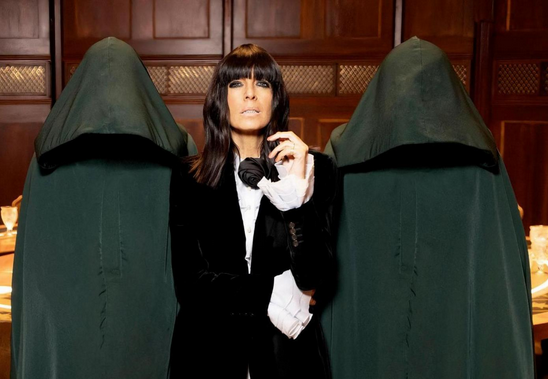
Critical thinking skills, not just alliances, may be the secret to surviving The Traitors, according to an English language expert who says the hit show's drama reflects lessons found in school texts like Macbeth and Lord of the Flies.
Despite being works of fiction, the mistakes caused by the hysteria that swept through the pages are still taking place on our TV screens today. With charismatic characters shielded by cliques, herd mentality, and emotive language all commonplace at both The Round Table and library.
But the key to fighting this, if you're thinking about applying for the next series, could well lie in sharpening your critical thinking skills to an A-Level standard. English expert Douglas O’Neil from Kelvinside Academy said the ability to question assumptions, see through persuasive language, and resist the pull of groupthink isn’t just useful in the classroom, but could be the ultimate advantage to take down The Traitors.
Catch the charismatic characters and cut through the cliques: Douglas shared: “Many books, like Macbeth and Lord of the Flies, share very similar themes to the hit TV show, The Traitors.
“They see the dominance of charismatic figures over the more meek and weaker individuals, who then use this to create a clique, which, once around them, they can use to exert powers over others. The cleverest traitors are the ones that are good at doing this, so they hide their actions and that, to me, is essentially the key ingredient to winning the game. To have people on your side.”
Think for yourself and don’t fall into a herd mentality: “You need to think for yourself, and this is something that I would say the vast majority of human beings basically don't do,” revealed Douglas.
“It's something actually, as an English teacher, I think is one of our most important tasks to try and teach students: how to be critical and independent thinkers. To win, The Faithful have to question everything. It’s easy for people to not only lead you with their own charisma, but through rhetoric. That’s essentially the use of language to persuade.
Again, that’s a large part of the curriculum, persuasive writing, persuasive talking, and almost, as I call it, the defence against the dark arts. They essentially need to learn how to not be manipulated by people that use these techniques.”
Keep an eye out for emotive language:
Douglas warned: “What the good Traitors do is use emotive language.
“This is essentially appealing to emotions rather than reason, and that is the easiest way to persuade people to do what you want. We're easily led by our emotions because our emotions are essentially not rational. We just get a feeling, ‘I just feel that he's the traitor, I just know it, I just feel it’.
“But you're not really basing it on anything other than an emotion and that emotion could have been caused by a smile that somebody gave you, or a certain word that has positive connotations that you just associate with that person.”