
In mourning of Hollywood’s “most famous Yorkshireman” and Trekky legend, Sir Patrick Stewart
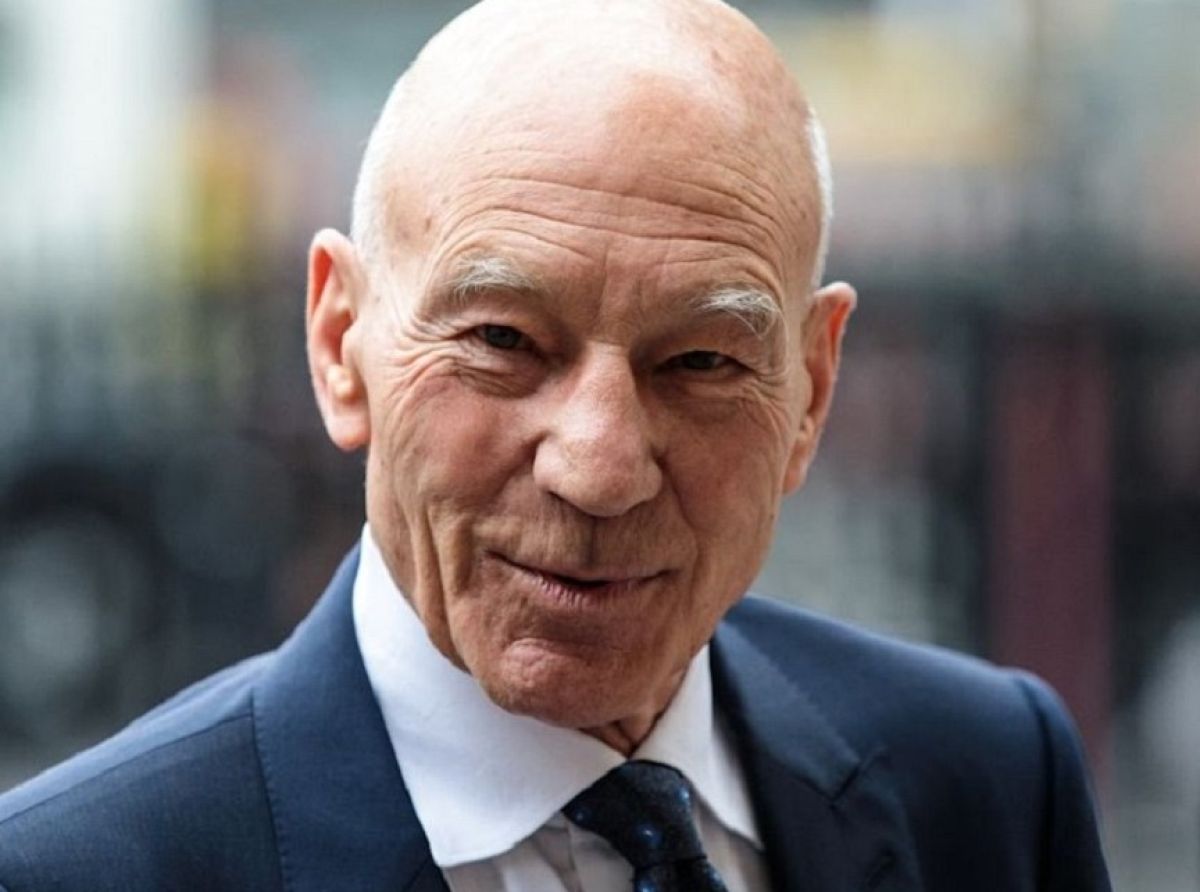
A stage and screen great who balanced Hollywood stardom with an equally stellar career in classical theatre, Sir Patrick Stewart was able to move effortlessly from Shakespeare and Dickens to the command of the USS Enterprise and his famous in X-Men.
In a career that spanned seven decades, he received multiple awards, a star on the Hollywood Walk of Fame and a knighthood from Queen Elizabeth II, he was one of the world's most versatile actors, who was able to mastered both comedy and tragedy, science-fiction and historical drama. The Yorkshire-born star’s love of drama developed at school when he was introduced to Shakespeare, before encouraging him to perform.
His first public performance was in a local church production of Cinderella – which was a welcomed distraction from the turmoil of his home life. Once named the third greatest Yorkshireman after Michael Palin and Sean Bean, he never lost touch with his roots - keeping a house in God's Own Country, and remaining a lifelong supporter of Huddersfield Town football club. Leaving school at 15, he worked as a journalist and obituary writer on the Dewsbury Reporter, as well as developing his love of drama at the local theatre.
"I used to recite Shakespeare from memory," he once said.
"I just learned all these big speeches." After his editor told him to choose between journalism and acting, Stewart walked out. But, with determination, he won a scholarship to the Bristol Old Vic and later joined the Royal Shakespeare Company, where he played a variety of roles across the company's repertoire.
He then made his TV debut as a fireman in a 1967 episode of soap opera Coronation Street. His Broadway debut came in 1970 as Snout in Peter Brook's critically acclaimed production of A Midsummer Night's Dream. Over the next two decades, he appeared in a variety of television roles without threatening to become a major star – until, in 1974, he played Lenin in the BBC drama series The Fall of Eagles – then going on to be a Roman soldier in I, Claudius and a Soviet spy in Tinker, Tailor, Soldier, Spy and Smiley's People. In 1984, he left the RSC and moved to the National Theatre.
By then in his mid-40s, he had only ever been unemployed for three weeks, but was rarely cast as a main character. He had landed a number of supporting film roles: including playing Guinevere's father in Excalibur, a warrior-minstrel in Dune, and a riding instructor in Little Lord Fauntleroy. He was also the voice of a small character in the animated film of Richard Adams' novel The Plague Dogs.
Describing the first half of his career as "sound but never spectacular", the role of Captain Jean-Luc Picard eventually came, after a revived Star Trek franchise was looking for a successor to William Shatner's legendary James T Kirk. He had hoped to find a sexy, hirsute Frenchman to play the role - but chanced upon Stewart giving a lecture to his wife's Shakespeare class in Los Angeles. He knew nothing about the original Star Trek and his great friend, Sir Ian McKellen, tried to talk him out of taking up the role.
"Everybody told me it would be a flop," he recalled. But, the then-called "unknown British Shakespearean actor" signed a six-year contract, firmly believing that “the show wouldn't last”.
His Star Trek success, however, limited the roles that Hollywood was prepared to offer him. "No director wanted to cast this grand, deep-voiced, bald English guy," he once said.
"Because everybody knew he was Picard and couldn't possibly be anybody else." He eventually took the role of Professor Charles Xavier in the X-Men film franchise, essentially playing a telepathic Picard in a wheelchair. Alongside his work in America, he won critical acclaim opposite Harriet Walter in Antony and Cleopatra in 2007.
That year, he, somewhat belatedly, also played Macbeth for the first time. In 2010, Stewart was awarded a knighthood for his services to drama. In 2009, he again teamed up with Sir Ian in ‘Waiting for Godot’.
His deep and authoritative voice made him much in demand for voice-over roles - including a reprise of his role as Captain Jean-Luc Picard on Star Trek video games. He also voiced a host of TV commercials both in Britain and the US.
He was 89.
