La Casamance Private Hospital highlight hydrogel that protects the rectum from high doses of radiotherapy during this Movember
For nearly two years, the La Casamance Private Hospital in Aubagne has been one of the only centres in the Bouches-du-Rhône department to offer a cutting-edge technique to men undergoing radiotherapy for prostate cancer.
This injection of a hydrogel spacer between the prostate and the rectum has already benefited 140 patients. Thanks to this technique, doctors expect to reduce severe rectal toxicity from less than 5% to almost zero. The rectum is attached to the prostate. When the tumour is irradiated, the rectal wall inevitably receives some of the dose. Most often, this has no lasting effects.
However, months, sometimes years, after the end of the treatment sessions, some patients experience rectal bleeding or pain. In severe cases, these complications require hospitalization, and sometimes argon laser treatment. "It frightens patients, it generates consultations and colonoscopies," observes Dr. Emmanuel Gross, a radiation oncologist who practices at La Casamance.
Injected between the two organs, the gel separates them by about ten millimetres and "moves the high-dose iodises away from the anterior wall of the rectum," explains the radiation oncologist. The rectal dose is thus systematically reduced. For him, this is "a bonus."
A ten-minute procedure, guided by ultrasound
At La Casamance Hospital, four urologists perform the procedure on an outpatient basis, under brief general anaesthesia without intubation, similar to a colonoscopy. The injection is administered transperineally, using ultrasound guidance. "This ultrasound device allows us to locate the plane between the rectum and the prostate and to inject under ultrasound guidance, for greater safety," explains Dr. Xavier Breton, a urologist. A robotic arm holds the probe. This equipment represents a significant investment for the hospital.
The hydrogel is absorbed within six months, with very few side effects. It has been covered by French national health insurance since 2023, with a dedicated CCAM code for the procedure (JGLJ060) and a DRG (Diagnosis Related Group) code for the hospital stay. Doctors offer this procedure when feasible, which is the case for the majority of patients. However, it is not always performed; it depends on the individual's medical history and anatomy.
Towards a treatment four times shorter
Another advantage, this time for radiation oncologists. "It's a gel that is now opaque, allowing them to better locate the prostate,” notes Dr. Breton.
“On their radiotherapy equipment, the prostate is more easily identified and better isolated from the rectum." Dr. Gross announced: "This will optimize stereotactic prostate radiotherapy, which will be implemented soon." This technique concentrates a very high dose on a small volume, in just a few sessions.
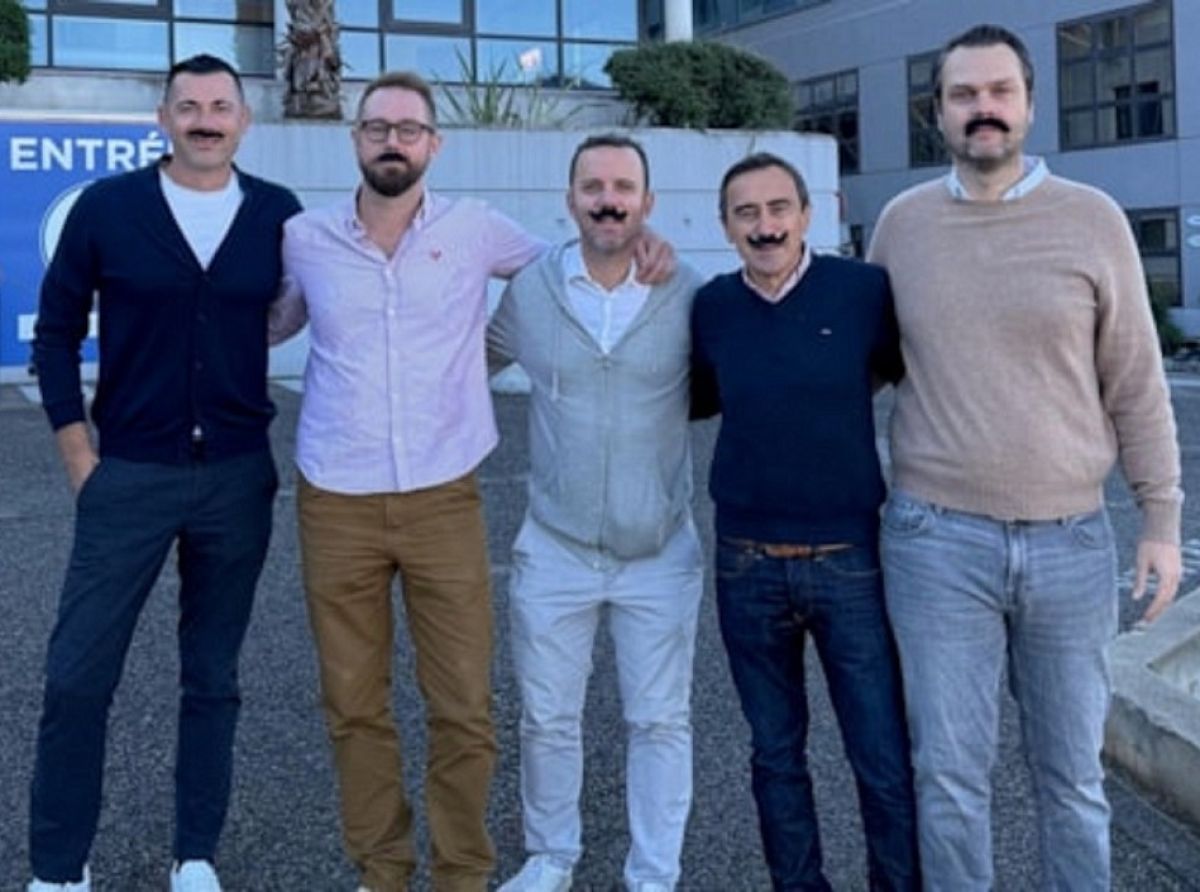
The treatment could thus be completed in one week, compared to nearly four weeks today. Its implementation is planned for 2027. "The team at La Casamance Private Hospital in Movember colours. From left to right: Marc Fournies, hospital director; Dr. Jean-Baptiste Terrasa, urologist; Dr. Emmanuel Gross, radiation oncologist; Dr. Xavier Breton, urologist; and Dr. Jeremy Fallot, urologist."
Almaviva Santé is a healthcare provider with a presence in the Île-de-France, Provence-Alpes-Côte d'Azur (PACA), Corsica, Rhône-Alpes, French West Indies, Canada, and Italy. It operates technical facilities for surgery, medicine, obstetrics, imaging, radiotherapy, dialysis, rehabilitation, psychiatry, and home hospitalization. Almaviva Santé manages 58 facilities where 11,000 professionals use their skills to provide healthcare to the population.