
A donor with three family members needed lifesaving transfusions donates plasma is promoting one year of plasma donations for medicines. Donations for medicine started at the centre in New Street in the city centre on April 7 last year.
Over the past year, nearly 3,000 plasma donations have been made in Birmingham by more than 1,100 people.
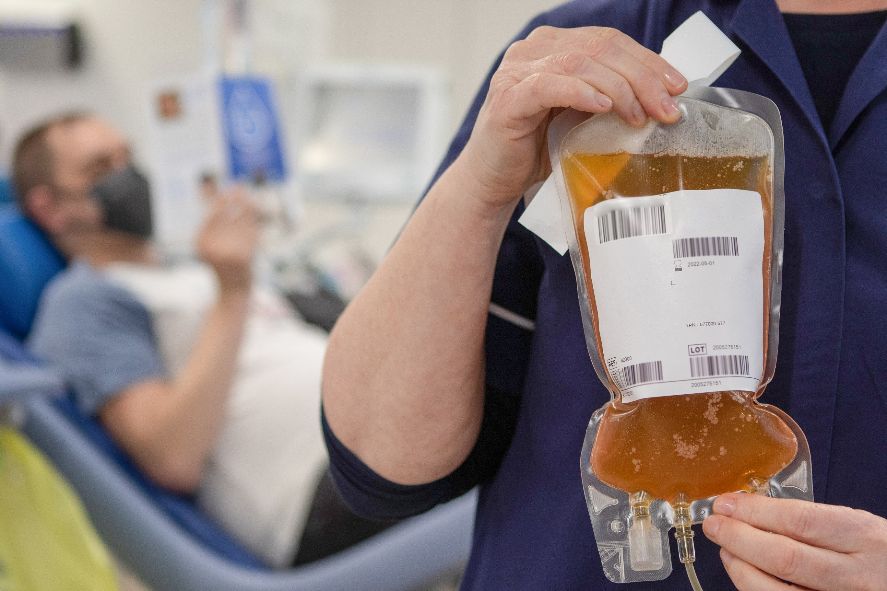
The plasma will be made into medicines called immunoglobulins, which boost or stabilise the immune systems of people with rare, life-threatening disorders.
Stephen Brown, 37, from Longbridge, donates plasma after three members of his family received lifesaving blood or plasma transfusions. His son suffered multi-organ failure, his cousin lost a leg in a farming accident, and his grandfather had bone marrow failure.
“When my son was ill, they could have stripped my body for anything they wanted. It was someone who donated who saved my son’s life.
“So I am just happy to do whatever I can. I am going to continue as long as I am able.” His son Jack, now aged 11, suffered multi-organ failure when he was two years old, as a result of streptococcus pneumonia-associated haemolytic uremic syndrome (HUS) (pneumococcal HUS).
A bacterial infection was causing blood vessels in his kidneys to become inflamed. Jack was treated at Birmingham Children’s Hospital, receiving both blood and plasma.
“He had kidney failure, his lung collapsed, his liver was failing – Jack was in critical care for three weeks,” said Stephen. “It was a very scary time.”
His grandad Randolph received blood transfusions during the last two years of his life when his bone marrow was failing. Stephen, an accountant, used to donate blood, then first donated plasma for coronavirus research, and then switched to donating plasma for medicines when it restarted a year ago.
“I love it. I feel like I am repaying a debt for my son. I feel like I am saving my son’s life again, that’s how I feel. I feel like donation is my duty – that’s the only way I can describe it.”
“I just wanted to give something back. The ladies in the donor centre explained how it helps people which is really interesting.
“The plasma donation itself is fine. I’d given blood for years, so I knew it was not uncomfortable. I just think with donating, that you never know when you might need it yourself, and it helps other people when they need it.
“I will keep donating for as long as I can.” Plasma donation to the NHS restarted last April after more than 20 years.
Plasma from UK donors could not be used for immunoglobulin medicines between 1998 and 2021, one of the precautions put in place against variant Creutzfeldt-Jakob disease. The restriction was lifted by the Government in 2021.
Because of the ban, the UK has relied on imported immunoglobulin. Donation to NHSBT will now create a domestic supply and bolster the supply chain. The plasma is being stored, ready to be made into immunoglobulin when a full manufacturing and supply chain is in place.
Kim Douthwaite, manager of Birmingham Plasma Donor Centre, said: “We’re grateful to Stephen and everyone else who has donated over this incredible first year. Plasma donation is new to most people, so try it if you can – you’ll help save lives.”
Plasma can be donated in Birmingham, Reading and Twickenham. A machine gradually filters a donation out of your blood. Plasma can also be recovered from blood donations.