

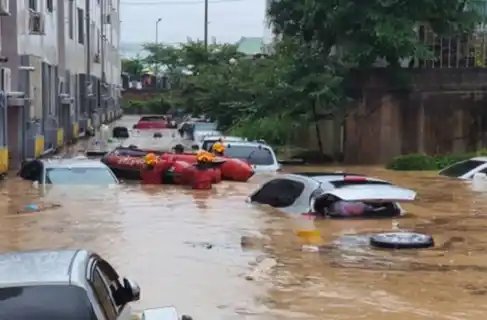
Officials have said that over 450 people have died in Indonesia, while Sri Lanka have suffered the worst natural disaster there since the tsunami in 2004.
Following what is being said to be the latest example of the impact of the climate crisis on storm patterns and extreme weather, authorities in Sri Lanka, Indonesia and Thailand are finding hundreds of missing people after more than 900 died in devastating floods and landslides across the south of Asia.
As the worst natural disaster to hit the island in two decades since the devastating 2004 tsunami that killed about 31,000 people there and left more than a million homeless, heavy tropical storm has overwhelmed parts of south-east Asia, leaving thousands of people stranded without shelter or critical supplies. In Sri Lanka, the death toll from floods and landslides caused by Cyclone Ditwah has risen sharply to 334, at the last count, with many more still missing and low-lying areas of the capital, Colombo, under heavy water.
After declaring a state of emergency, President Anura Kumara Dissanayake vowed to build back with international support. “We are facing the largest and most challenging natural disaster in our history,” he said in an address to the nation.
“Certainly, we will build a better nation than what existed before.” In Indonesia, officials said more than 442 people had died and a further 402 were missing as authorities attempted to reach some of the hardest-hit areas of Sumatra island, where thousands of people were stranded without critical supplies.
At least two areas of Sumatra Island were still unreachable on Sunday, and authorities said they had deployed two warships from Jakarta to deliver aid. Associated Press reported that some people were struggling to find food and water after deluges triggered landslides, damaged roads and downed communication lines.
Videos on social media showed people scrambling past crumbling barricades, flooded roads and broken glass to get their hands on food, medicine and gas. Some waded through waist-deep flood waters to reach damaged convenience stores. The weather conditions and the lack of heavy equipment also hampered rescue efforts.
Aid has been slow to reach the hardest-hit city of Sibolga and Central Tapanuli district in North Sumatra. In Sungai Nyalo village, about 60 miles (100km) from Padang, flood waters had mostly receded on Sunday, leaving homes, vehicles and crops coated in thick grey mud.
In Thailand, where at least 162 people were killed in one of the worst floods in a decade, authorities continued to deliver aid and clear the damage. Relief measures rolled out by the Thai government include compensation for households that lost family members.
But there has been growing public criticism of Thailand’s flood response, and two local officials have been suspended over their alleged failures. The annual monsoon season, which typically occurs between June and September, often brings heavy rain, causing landslides and flash floods.
This year, a tropical storm has exacerbated conditions, and the tolls in Indonesia and Thailand rank among the highest for floods in those countries in recent years. Authorities had not yet begun clearing roads, residents told Agence France-Presse, and no outside assistance had arrived.