Colors: Blue Color

In what is said to be her first Easter message, Her Royal Highness The Queen said; “We need Easter”.

“Coronaavirus will not overcome us”, she continued.

While celebrations this year wound being very difficult for so many people this year, Her Royal Highness said: “We need Easer as much as ever”.
Referencing the tradition of lighting candles to mark the occasion, she said: “As as death can be – particularly those suffering with grief – light and life are greater”.

It comes as the number of people to die from coronavirus in the UK hospitals reached 9,875.

Speaking from Windsor Castle, Her Royal Highness made referents of many religions having festivals celebrations of light overcoming darkness which often features the lighting of candles.

This Easter speech comes a week after her special speech to rally her commonwealth during the Covid-17 pandemic.

She said: “They seem to speak to every culture, and appeal to people of all faiths, and none.

“They are lit on birthday cakes and to mark family anniversaries, which we gather happily around a source of light.

“It unites us.

As head of the Church of England, she continues: “As the darkness fall today, just before Easter Day, many Christians will light a candle together.

“In churches, one light will pass to another, spreading slowly and then more rapidly as more candles are lit.

“It’s a way of showing how the good news of Christ’s resurrection has been passed on from the first Easter by every nation until now”.

Wishing everyone, of all faiths and denominations, a blessed Easter, she said; “May the living flame of the Easter hope be a steady guide as we face the future”.


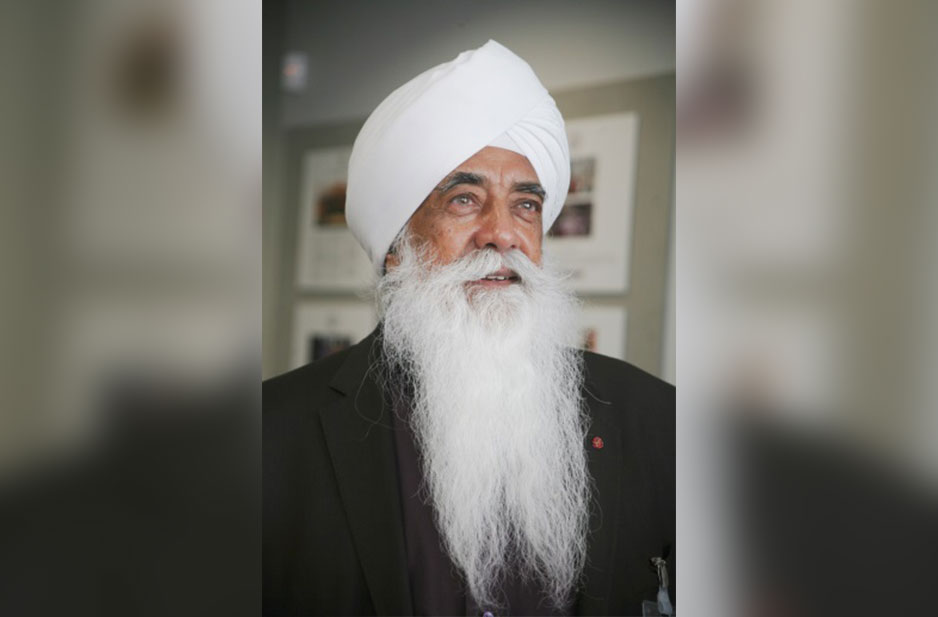
Waheguru Ji Ka Khalsa, Waheguru Ji Ki Fateh 

In these times of self-isolation and social distancing we must pray; we must pray alone and also find new ways of using technology to pray together. We are seeing Gurudwaras, Mosques, Churches, Temples, Synagogues and even people’s homes being used as makeshift sacred broadcasting studios. Whilst we may be physically isolated, we should remain spiritually connected in prayer and remembrance. As Sikhs we are compelled to be always optimistic and in the current climate we would encourage all to be positive where possible and be there for each other.

Today, humanity faces an imposing array of global issues. A pandemic, economic meltdown, abject poverty, food scarcity, political upheavals, social and societal challenges, oppression, apathy, extremism, terrorism and exploitation are all driving a climate of uncertainty and fear. With schools and workplaces closed and UK charities stretched to their limits in ways that are akin to humanitarian projects in the developing world, April this year is very different to previous years.

During these challenging times we must remember all those on the frontline who are serving humanity and those who have lost their lives or lost loved ones to the pandemic. The frontline workers are demonstrating enormous strength of character and values; despite the tsunami upon them, they bravely serve all.  Let us express gratitude to the government, to healthcare staff, volunteers and key workers in all areas who are helping to combat the coronavirus outbreak.

On the 30th March 1699, 321 years ago, a unique model of a good human being was created.  This model was enshrined in the order of Khalsa, with the Panj Kakaar (5Ks) and the Dastar (turban) marking its distinct identity.  The Khalsa’s birth was on Vaisakhi day, the first day of the month of Vaisakh, which coincides with the blossoming and rejuvenation of nature in spring. The Khalsa was established to set free the human spirit, to bring about a rebirth through a spiritual re-kindling which would ignite in people’s hearts and minds the virtues of utter humility, compassion, forgiveness, steadfastness, selflessness, altruism, truth, commitment, contentment and love.

The Khalsa was to embody Guru Nanak’s message, that peace-building starts with establishing peace within ourselves.  To establish such peace, we need to live in a state of constant connection with God.  Our spiritual disconnection spells death and destruction.  ‘Akha jeeva visray mar jao, akhan aukha sacha naa…’  – one is only truly alive and awakened when one is connected and attuned to the Infinite Creator.  The Khalsa embodies a commitment to lead a God-conscious life and to serve creation.

To the faithful, Vaisakhi, is a time of great religious significance, to inspire and to build up faith, to widen our orbit of human relationships and to foster virtues and values which enrich human lives.  It is a time for turning a new leaf, for being spiritually reborn, by taking the Khalsa initiation known as amrit sanchar.    It is also a time for joyous celebrations, reflections and resolutions, a time for expressing gratitude, a time to commit to being benevolent and ever-ready to make sacrifices, as well as a time for exercising an abundance of compassion, forgiveness and love for all. All of this should enable us to engage and deal with life and society with renewed depth of character, wisdom, courage and vision.

May Vaisakhi inspire us to dream of – and make possible – a better world, which is one of the greatest challenges of our time.  May it remind us too that, whilst strength may come with power, only love – which touches human hearts and minds – gives true authority.  May we better understand that it is not holding on to power that it important.  More important is the way that power can be lovingly exercised to discover that in diversity there is unity and that in unity there is strength.  As humanity now faces an unprecedented common threat, may we firmly realise that together, we all have a shared responsibility.  May we remain hopeful, knowing that, in our global village, we have unprecedented opportunities to share knowledge and ingenuity for the common good.

Finally, at Vaisakhi, I am impelled to remind myself and my brethren that we need to be authentic Sikhs and discard hypocrisy.  We need to reflect upon the primary goal of life, not just the desire for wellbeing, for pleasures and individual freedoms alone.  We need to realise more than ever that we are all inter-dependent and interconnected.  It helps us to remember that, from a spiritual perspective, we are not alone in managing our lives – ‘Guru mere sang sada hai nalay’   – for the Guru is always with us, by our side, continuously there to help, guide and direct us.  As the Guru’s Sikhs, we are required to serve the Creator and God’s entire creation to the best of our ability.  Let us wish happiness, prosperity, success and peace to all people of this world without exception:

Nanak naam chardi kala, tere bhaanay sarbat da bhalla.’

May the qualities and characteristics of the first Sikh Vaisakhi resonate within our human minds today in the 21st century, individually and collectively, for the universal good of all.

Bhai Sahib, Bhai Mohinder Singh Ahluwalia OBE KSG 

Spiritual Leader & Chairman, Guru Nanak Nishkam Sewak Jatha  


Twins born during India’s countrywide on-going lockdown have been named Corona and Covid.

The boy and girl siblings were born to parents Preeti and Vinay Verma at Dr Bhim Rao Ambedkar Memmorial Hospital in Raipur in Chhattigarh state.

A delighted Preeti said: “I was overwhelmingly pleased with the delivery – given that it followed several days of difficulty.

“Because of that, my husband and I wanted to make this memorable”.

She went on: “The coronavirus proved to be dangerous and life-threatening, but the outbreak also made people instil good habits into themselves”.

The couple, who originate from Uttar Pradesh, now reside in Purani Basti, in the city.

With the first one set up and now in full operation, the NHS Nightingale Hospital Birmingham is now ready and open to provide up to an originally 500 beds – which is, eventually expected to expand to a total 4,000.

Set to open at the National Exhibition Centre, on the outskirts of the city, the Nightingale will be taking patients for across the city and the wider West Midlands region in the fight against the fast-growing Covid-19 outbreak.

With the NHS Nightingale now up and running, it is designed to take coronavirus patients from 23 Midlands hospitals.

Dr David Rosser, chief executive of the University Birmingham NHS Trust, which is leading the hospital, said “We would prefer that these beds be needed as little as possible.

“So, as such, we urge the public to stay at home and help NHS staff to save lives.

“Patients will only be admitted when our existing hospitals start to reach full capacity and, presently, they are coping very well with the demands”.

Other temporary hospitals have already been set up in London, Manchester, Bristol and Harrogate.

Another NHS Nightingale Hospital is being built in the north east – in an industrial unit in Washington, Tyne and Wear.

A prominent and well-respected businessman became the latest victim of the deadly coronavirus pandemic that is causing so much hurt and pain throughout the world today.

Nazir Awan, who was the chief executive of Awan International, died after recently falling ill at his home in Sutton Coldfield, in the West Midlands, before tragically passing away at town’s Good Hope Hospital.

A native of Pakistan, he was one of the first people who settled in the UK, from that country, to set up business in Birmingham after creating Awan International – which sold well established branded named products before he went on to start up his property business, Awan Real Estate Limited, again in the city.

A father of two, his son, and business partner, Amer Awan, said: “He was a towering figure who touched so many hearts.

“Our surname (Awan) means to help others. I feel hugely proud to be his son and very blessed for him to be my father”.

Founding member of the IAB (Institute of Asian Businesses) he was also on the board of Save the Children as well as being dedicated to helping to improve the lives of people living in Birmingham’s inner-city.

Kalid Mahmood, Labour MP for Birmingham Perry Barr, said: “My thoughts and prayers go out to Nazir’s family during these trying times.

“This virus doe not discriminate

Equally deeply saddened, Councillor Majid Mahmood added: “I am deeply saddened by this tragic news.

“A kind hearted individual, he was a fighter to the end who will leave a lasting legacy in the city”.

“He died on a day that is incredibly special in the Islamic calendar, which, I solace, is solace from his family and friends”, Amer added.


Following criticism of high-handed town and city councils throughout the UK, the government have urged them to keep their local parks open throughout the coronavirus pandemic, unless it’s impossible to do so.

Housing and Communities Secretary, Robert Jenrick, has revealed that he had intervened in the controversy over the thousands of visitors who are flocking to open green spaces as the warmer weather becomes more regular as we get ever closer to the Easter Bank Holiday.

Jenricks said that he recognised the plight of people “who live in flats without gardens, cramped accommodation, who desperately need these open spaces”.

He said that he had enormous sympathy with local authorities and that closing parks and open spaces should be absolutely the “last resort”.

He added that local councils should be ‘very judicious’ in making that decision.

Due to the increasingly sunny conditions that people are experiencing – with temperatures expecting to rise to around 24C, Mr Jenrick implored people to stay inside despite the warm weather and impending Easter period.

He did, however, say that there were no “immediate plans” for greater restrictions after warning that outside exercise could be banned.

“It would be very unfortunate if we had to do so and make it harder for people, particularly people who live in flats in towns and cities, to get the exercise that they deserve and need”, he said.

“But an exit strategy that’s sustainable will also have to be accompanied by much greater tracing than we are able to do today.

About whether it is acceptable to sit and enjoy the sun while exercising, Health Minister, Matt Hancock did clarify that sunbathing was against the rules.

The government’s Communities Secretary, Robert Jenrick, has said that closing parks and open spaces throughout the UK during the coronavirus lockdown “should be an absolute last resort”.

He said that local councils should be judicious in taking such a step.

A statement from Downing Street stated that the overwhelming majority of the public are following the social distance rules and other relevant measures although one council in London did close a park in their borough saying that thousands of people did flout the guidance laid out due to the warm weather.

The West Midlands Police and Crime Commissioner, David Jamieson and West Midlands Police are working with key partners from across the Criminal Justice System to ensure that the early release of prisoners is done safely and minimises the risk to the public.

On Saturday 4 April 2020 the Ministry of Justice announced that up to 4,000 "low-risk" prisoners would be released early as part of efforts to tackle the spread of coronavirus in jails.

The meeting convened by the PCC includes partners from West Midlands Police, the Prison Service, Probation Service, Public Health England, local authorities and third sector organisations.
Inmates with two months or less still to serve will be released on temporary licence in stages.

The selected low-risk offenders will be electronically tagged and can be recalled at the first sign of concern.

The PCC and West Midlands Police are keen to ensure that those who are released from prison continue to receive support with substance misuse, they are able to obtain secure accommodation and they are able to receive rehabilitation support to reduce reoffending.

The West Midlands Police and Crime Commissioner, David Jamieson said: “We are living through unprecedented times and we must do everything to slow the spread of COVID-19.

“I am determined to ensure that the early release programme does not put the safety of the people West Midlands at risk, therefore, this meeting is key to ensuring partners are effectively working together and have clear lines of communication.

“The early release programme will prevent thousands of prisoners and prison staff being infected whilst in prison and this will help reduce pressure on the NHS”.

Superintendent Jane Bailey, deputy head of Criminal Justice Services for West Midlands Police said: “I want to reassure the community that those who are being released early will be subject of electronic monitoring. 

“We are working closely with the prison service and other partners, to link prisoners released early to support and services in the community to prevent any reoffending.”

Her Majesty’s Prison and Probation Service said: “This announcement sets out plans to bring a cohort of people into scope for release who are within two months of their release date.

“Their release will be subject to a number of very strict criteria which will exclude many from being eligible.  Those who are will be released under Release on Temporary Licence ….until they reach their automatic half way release point when they will become our statutory cases, subject to licence supervision in the usual way across the Probation Services.

“To ensure they have the support they require to resettle into the community, those released will receive ongoing Through the Gate support on the key resettlement pathways as they would have received in custody.

“We are working closely with prison colleagues, the police and a range of partners to ensure co-ordinated arrangements are in place to manage the pre-release risk assessment processes and ensure the resettlement support is in place across our area.”

Arron Owen from Cranstoun, the organisation commissioned by the PCC to provide Arrest Referral Services and drug testing in custody said: “In preparation for the early release of many prisoners across the country, it is important that prison and community treatment teams plan a smooth transition for those using drugs and alcohol.

“Continuity of care is essential to protect the service user, families and wider communities. Business as usual is not appropriate in the context of the Covid-19 crisis and both prison and community teams need to work even harder to safeguard as many people as possible.

“Together, we need to ensure there is no disruption to substitute prescribing, that the life-saving medication Naloxone is issued to all drug using prisoners upon release and that treatment continues throughout this extraordinary period”. 

Cranstoun continue to deliver Arrest Referral Services within the custody suites of West Midlands Police. This ensures drug and alcohol using offenders are offered the opportunity to access treatment in this difficult time.

jesus1

From the desk of Rev. Dr. Toni Luck

10 April 2020

Good Morning beloved. Peace and grace be unto you on this blessed Good Friday.

I don’t know about you but I have often been puzzled about calling today Good Friday. As a child, I
often asked the nuns why was this day good when Jesus had to die. I asked our parish priest, Father
Burns; I asked my mother, Aunt Tillie, what is so good about this day when Jesus was hurt and
scorned and had to die. As grow ups do to children’s honest queries, far too often I must say, they
smiled and would say,” it just is so, or Jesus died for our sins” So what? from a child’s
perspective; and often even from our adult senses, we do ask so why and what is so good about that
anyways?

Then when I got a bit older, around 11 or so, Father Nolan came to our Parish, he was young and as
I remember quite handsome, and very funny, not so stiff and not at all a fuddy-duddy. I liked him
immediately, so I asked him about this dilemma that I faced about “good” Friday. He said two things
that have stayed with me forever and ever even till today. I must say that neither of his answers
made any sense to me at the time and in fact made me angry at God for one of the answers and sad
for Jesus because he was supposed to be God and yet he did not seem to know what “joy” was. And
even more I became suspicious that Father Nolan really did not know anything about this matter
because his answer to me was “because it pleased the Lord to bruise Him” and that was good for us.
And then he added, “for the joy that was set before him, Jesus endured the cross” another thing
that was good, for us. Well I was indeed a smart little girl and neither of these answers made any
sense to me at all, nor did they make me happy or satisfied.
And I did wonder where did Father Nolan get those strange ideas from. You must remember that when
we grew up we had a catechism, but the full Bible in those days was reserved for the priests. So,
while Father Nolan was handsome and kind and very smart and funny, it seemed to me, that day he was
really dumb. Of course, I had to go to confession to confess that I thought a Priest of God was
dumb and of course he was the one hearing confession and after he laughed out loud, I was surely
forgiven and did not even have to do any Hail Marys that day for my
“transgression” of calling a Priest dumb.

However, his words and those thoughts resonated with me for many years and when I met the Lord
personally almost 30 years later and read the Bible for myself and became acquainted with the story
and its intentions, I began to rise in love with the Man from Galilee, finally understanding what
it meant “for the joy that was set before him...... he endured...” It is to this truth that we come
to today on this Good Friday and the whys and hows of our eternal life.

Every so often during the year I consider the events of this day of 2000 plus years ago, and more
so at this time of the year. I go over and over in my mind every single detail of this day. So, I
hope you will please come with me for a moment:

"I am poured out like water, and all my bones are out of joint." Psalm 22:14


Fixing our eyes on Yeshuah, the pioneer and perfecter of faith. For the joy set before him he
endured the cross, scorning its shame, and sat down at the right hand of the throne of God.
Hebrews 12:2

Yet it pleased the LORD to bruise Him; He has put Him to grief. When You make His soul an offering
for sin, He shall see His seed, He shall prolong His days, And the pleasure of the LORD shall
prosper in His hand. Isaiah 53:10

The events began at the Passover dinner that Wednesday night, wherein Yeshuah (aka
Jesus) broke bread with his disciples one last time, and then he did a most magnificent thing, "he
took the towel" That's right he laid aside his garments, wrapped his nakedness with a
towel, filled a basis with water and began to wash the feet of his men, and dried them with what?
Well the towel that was wrapped around him, that's what, so there he was before his men, even
Judas, on his knees, bare, open, vulnerable as he prepared himself for the cross.

After dinner we follow him to the Garden of Gethsemane. He has been all night in agony so much so
that from his brow fell large drops of blood onto the stone where he was praying. Then, he spent
the early morning at the hall of Caiaphas, (remember early morning is still dark) he had been
hurried from Caiaphas to Pilate, from Pilate to Herod, and from Herod back again to Pilate.

Yeshuah was beaten so badly that it tore his flesh, he was bruised, he was spat on, he was
slapped, his whiskers were taken out one by one, oh the agony of it all – yet for the joy set
before him! There’s so much more, he was laughed at, scorned. The very people who had thrown
palms at his feet just a mere 7 days before, we now asking for his blood, his death, his denial,
his torture.

As we follow him down the Via Delarosa, we see that he has but little strength left after being up
all night being scourged and ripped apart, and yet neither refreshment nor rest were permitted him
while Sin, Evil and Hatred, scorn and lust were all eager for his blood, and therefore led him out
to die. Loaded with a rugged wooden cross that weighed 30 kg which he carried for

almost a kilometre, Yeshuah being so weak from all the pain inflicted upon him, bleeding, kept
falling along the way and having to constantly pick up the cross again and again, until by God’s
merciful grace he was helped by Simon of Cyrene. Having reached the “skull” the place of
crucifixion, a crown of three-inch piercing thorns complete with the sap which adds to more
discomfort, were plunged deeply into his head. And then the most heinous act of the Roman Empire –
crucifixion, a tortuous death to say the least.

At the time crucifixion was the "worst" humiliating excruciating death and only the worst
criminals were condemned to be crucified, often left to hang completely naked. Yet it was even more
dreadful for Yeshuah, for unlike other criminals condemned to death by crucifixion, Yeshuah was
nailed to the cross by His hands and feet, rather than tied as was the usual practice... Each rusty
nail was 6 to 8 inches long. The nails were driven into His wrist, not into His palms as is
commonly portrayed. There's a tendon in the wrist that extends to the shoulder. The Roman guards
knew that when the nails were being hammered into the wrist, that tendon would tear and break,
forcing Yeshuah to use His back muscles to support himself, so that He could breathe –oh for the
joy that was set before him!

Both of His feet were nailed together. Thus, He was forced to support Himself on the single nail
that impaled His feet to the cross. Yeshuah could not support himself with His legs for long
because of the excruciating pain, so He was forced to alternate between arching His back and using
his legs just to continue to breathe. Beloved imagine the struggle, the pain, the suffering, the
courage, the love, the compassion, the obedience. Yeshuah endured this reality for over 6 hours.
Yes, over 6 hours! Can we even imagine this kind of torture and suffering? - yet for the joy that
was set before him he endured....

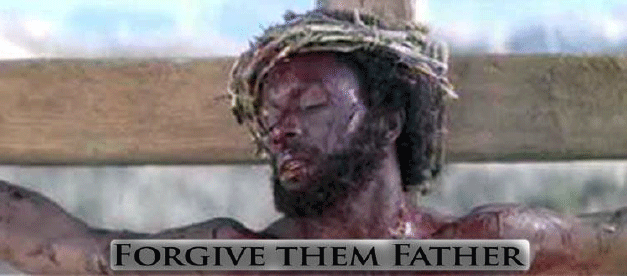
To make sure he was dead, a Roman soldier used his lance and pierced his side, at that point He
was simply pouring water from his wounds. He had no more blood to bleed out, as he had poured it
all out for us, only water poured from His wounded side. He had poured out 3.5 liters of blood
(the amount of blood the adult human body holds, just a bit less than a gallon.).

At each remembrance of the details of this day, my soul does weep deeply. And then I remember what
Father Nolan told me many years ago: that it pleased the Lord to bruise him for me, for you, for
the world. And for the joy set before him he endured the cross for me, for you, for the world, and
I am somewhat comforted. But even though I know that the first day of the week, Sunday morning
with its rousing victory is coming, I nevertheless find myself at the foot of the cross on that
Good Friday because at that moment that is all that I have. And as I watch Our Savior not just
take our sins, but become sin, I cannot see joy yet, I see sorrow and pain. What was this joy, and
what pleasure did God get in this bruising. It is amazing the answers to these questions that all
find their foundation in a Love so great we can hardly take it in.

We often question why sin was allowed in the world in the first place. Why God did what he
did, why it could not have been different? However, regardless of our burning questions, we are
yet confronted with the truth that the sovereign God demanded the payment for the sins of all his
people; and Yeshuah stood forward, and to the utmost paid whatever we owed, and He paid it in
blood. It seems that it is WE who are the JOY that was set before him, our lives, our future, our
destiny. We must, today on this Good Friday, be so relieved and grateful to acknowledge that the
sacrifice of Calvary was for us. Moreover, we must remember that this was not a part payment; it
was not a partial exoneration, it was a complete and perfect payment, and it obtained a complete
and perfect remission of all the debts of all of us – imagine we are the joy that was set before
him. I am so present with that fact that on that day when Yeshuah hung on the cross, he did not
leave a single cent for us to pay as a satisfaction to God. The whole of the demands of the law
were paid down there and then by Yeshuah, the great High Priest of all his people. And blessed be
his name, he paid it ALL, AT ONCE. You know that Kings’ ransoms have sometimes been paid a part
at the time, and part in dues afterwards, to run through years. But not so our Saviour: once for
all he gave himself a living sacrifice; at once he counted down the price, and said, DONE! “It is
finished,” leaving nothing for him to do, nor for us to accomplish. He did not drivel out a
part-payment, and then declare that he would come again, no the full ransom price to redeem all
people was paid. And the receipt given to us in the form of our Salvation and Everlasting life. In
this majestic action, one cannot help but see the reality of For the Joy set before him, for He
then nailed the receipt to the cross for us for all eternity.
DONE! FINISHED! HalleluYah!

So, beloved today on this day of days, I now can see why it is called GOOD Friday, for it is a day
full of an activity of LOVE. A LOVE so magnificent that it cost God all for the good of us all.
So, it is truly good for you and good for me, and even good for a world that does not yet
understand or believe for we are His joy, our freedom His pleasure.

May you have a blessed Good Friday, looking forward to Resurrection Sunday remembering that we are
free to live life abundantly in joy, peace and love by his hand and the decision that set Joy
before him for our sakes. Wow and Amen!

I Love you so much and it is obvious that He LOVES YOU AND ME EVEN MORE
I would rather live my life as if there is a God and die to find out there isn't, than live my life
as if there
isn't and die to find out there is.

Pastor Toni Luck
Jerusalem First Ministries Johannesburg, South Africa cell: +27 79 478 7126 skype: drtoniluck1


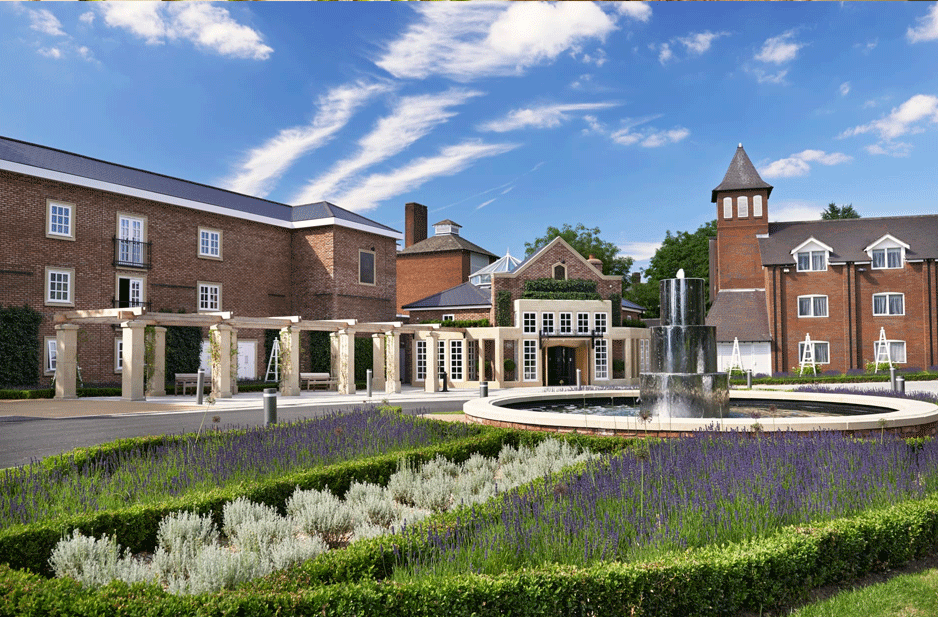
The Belfry Hotel & Resort, an award-winning luxury hotel and resort home to three iconic golf courses in Royal Sutton Coldfield, North Warwickshire, has claimed victory with five wins at the 10th annual ceremony of the 59Club European Service Excellence Awards, which took place in March 2020.

The 59Club European Service Excellence Awards honours individuals, teams and venues across Europe from the world of golf for their industry-leading performance throughout the year. Each venue is judged on its performance in sales, service, operations, retail, golf course, food & beverage and management.

The Belfry Hotel & Resort retained its position as the world’s top golfing destination as the venue won the prestigious title of The Ultimate Golf Resort for the second consecutive year and retained its two Gold Flags. Individuals Jacques Hobson, Food & Beverage Manager, and Chris Reeve, Director of Golf, also won awards for Food & Beverage Manager of the Year and Golf Manager of the Year, respectively.

James Macbeth Stewart, Resort Director, said: “Whilst we were up against some strong competition this year, The Belfry’s level of excellence is unmatched testament to the fact that we’ve not only retained our two Gold Flags but have also successfully defended our title as The Ultimate Golf Resort; The Belfry is one of only a handful of venues to have won this category twice.

“We’re incredibly proud of our dedicated team who are critical to delivering the excellent experience for which we’re renowned. I must also give a special thank you to Jacques and Chris who each play a pivotal role in sustaining the resort’s title as best in the business, so these awards are a credit to their great leadership in two of the resort’s most fundamental areas.” 

Following the hotel’s victories in the golf categories, Chris Reeve, Director of Golf, commented: “I am incredibly proud of both myself and the team at the resort for achieving these three prestigious accolades, which not only upholds The Belfry’s illustrious reputation as a world-class golfing resort but also commends the dedication of my wonderful colleagues who are the driving force behind our success.”

Commenting on his win, Jacques Hobson, Food & Beverage Manager, said: “This award is by far one of the greatest achievements of my career to date and I’m honoured to have my efforts recognised. The catering team and I pride ourselves in delivering unrivalled brilliance across all four of the resort’s restaurants and bars.”

The Belfry Hotel & Resort is an award-winning hotel situated in the heart of the country in Royal Sutton Coldfield, North Warwickshire. The hotel’s three golf courses, including The Brabazon and The PGA National, are recognised as world-class, having previously hosted The Ryder Cup four times – more than any other venue in the world – and two European Tour events, producing some of the most dramatic moments in the history of golf.

For more information, please visit www.thebelfry.com
Telephone: +44 (0) 1675 238600 | Email: This email address is being protected from spambots. You need JavaScript enabled to view it.Instagram: @thebelfryhotelandresort | Twitter: @TheBelfryHotel |

Facebook:  The Belfry Hotel & Resort

As it continues to thrives in every community, in every country, around the world, the deadly coronavirus epidemic hit a new high in the West Midlands, as two religious leaders in Wolverhampton became the latest additions to the hundreds of thousands of registered tragic fatalities as the ‘fatal mass kill’ knows no bounds.


The two latest names to add to the vastly growing list are well-known religious leaders from the same church in the city.


Reverend Bishop Horatio Fearon and Reverend Theophilus Augustus McCalla MBE were both leading and prominent figures at the Church of God of Prophecy in the city.


Bishop McCall, 86, was also a founder of the Nehemiah United Churches Housing Association in Birmingham. He was said to have had underlying health issues – one o which including him being a diabetic.

Bishop Fearon - who was also in his 80s - died shortly after Bishop McCall. .


The two religious leaders died within 24 hours of each other – both after contacting coronavirus.

One regular churchgoer, who knew both men well, spoke of the major concerns of fellow-parishioners about the spread of the Covid-19 epidemic as the pandemic knows no limit as to who it affects.


It is understood that the congregation is concerned that any number of them might add to its number of fatalities due to the pandemic.

Led by the well-established Pentecostal Holiness Christian church, the Church of God of Prophecy, which, itself was founded in 1923, created Nehemiah United Churches Housing Association which provides accommodation for people predominantly from the Caribbean community.

A step-change for culture is taking place across Birmingham and the region through new leadership at Cultural Central and leadership opportunities via the Birmingham Cultural Compact as well as investment opportunities from the Greater Birmingham and Solihull Local Enterprise Partnership (GBSLEP).


The end of 2019 brought the appointment of Erica Love as Director at Culture Central with a remit to drive forward the vision and ambition of Culture Central as advocate for culture across the city, supporting the development and sustainability of the sector.


As part of that remit Cultural Central is working with Birmingham City Council to establish a ‘Cultural Compact’ for the city. The Birmingham Cultural Compact seeks to co-create and co-deliver a holistic vision for culture in Birmingham. It will link the cultural sector to broader aspirations and priorities for Birmingham and secure partnerships between the cultural sector and other sectors.


Councillor Jayne Francis, cabinet member for Education, Skills and Culture said: “As one of the UK’s core cities, Birmingham was a key contributor to the national Cultural Investment Inquiry and one of the first cities to sign up to establishing a Cultural Compact.


We value really highly the contribution that culture makes to the economy and reputation of our city and look forward to working with a new Chair to take this agenda forward.”


Board Director for Creative & Culture, GBSLEP, Anita Bhalla, said: “With the publication of this Framework we can set out our approach to cultural investments and how it dovetails with broader objectives around placemaking, business growth, stimulating innovation and supporting the talent and skills pipeline.


"By working with partners - such as Culture Central, we can make significant step-change to ensure long-term partnerships with the cultural sector and other stakeholders and enable change for the long-term good of the economy and wider geography.”


Erica Love, Director Culture Central said: “Culture Central is driving a step change in the sustainability and contribution of culture to the life of the city, we are already working with partners to continue to build a resilient arts and cultural ecology. Through the Cultural Compact and through supporting partners such as Birmingham City Council and GBSLEP we hope to extend and expand our networks beyond the sector demonstrating the impact culture can have city-wide.”

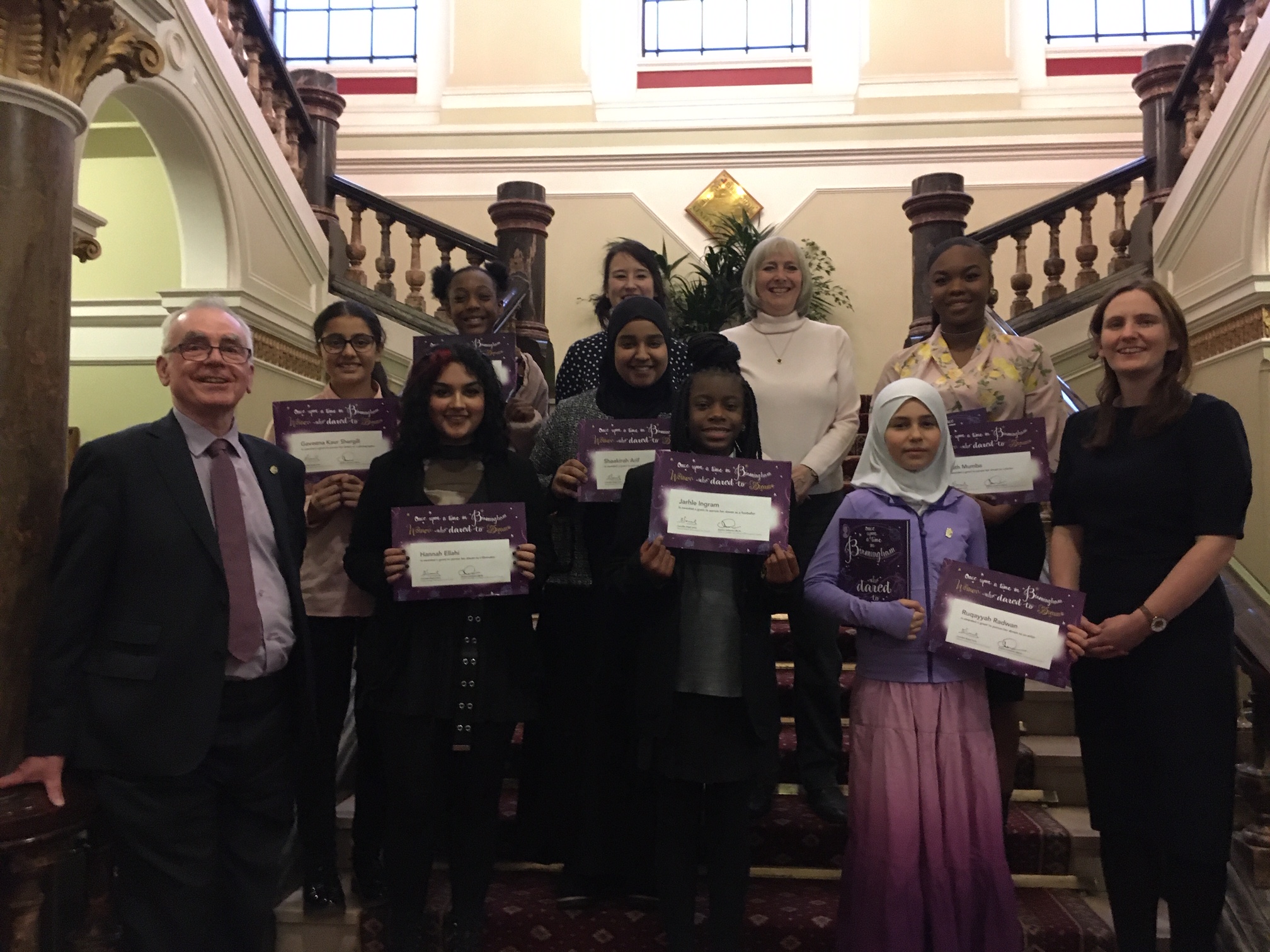
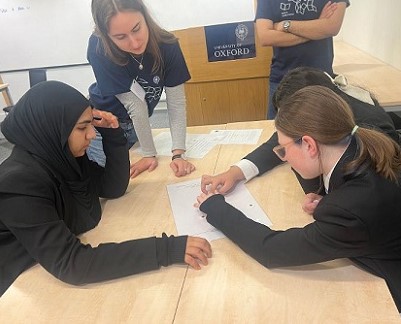
A dozen Birmingham girls who ‘dared to dream’ have been awarded the first grants from a special fund launched by Birmingham City Council and the Lord Mayor of Birmingham’s Charity. 


Eight of these girls, aged nine to fifteen, were presented with their grants and certificates during a special event held at the Council House on World Book Day.


Set up using the council’s royalties from ‘Once Upon A Time In Birmingham: Women Who Dared To Dream’ – a book commissioned to mark the centenary of women getting the vote – the fund awarded grants totalling more than £2,000 in its inaugural year.


Launched by Birmingham City Council and the Lord Mayor of Birmingham’s Charity in October 2019, the book’s legacy fund aims to help the next generation of fearless females pursue their ambitions and dreams.


This year, girls whose dreams include careers in sport, medicine, public health, politics, filmmaking and the performing arts, became the first in the city to benefit from this fund.


Applications could be made for individual grants of up to £250 to support academic or career dreams – be it an activity, course, books, equipment or accessing work experience.

A panel of four book champions representing the council and the Lord Mayor of Birmingham’s Charity reviewed the applications and were impressed with the wide range of strong applications from girls across the city – which meant making some tough decisions.


Councillor Brigid Jones, Deputy Leader of Birmingham City Council – and one of the book champions who reviewed the applications - said: “The aim of ‘Once Upon A Time In Birmingham…’ was to inspire and encourage young women to be brave in pursuing their own dreams and ambitions. The council’s royalties from the book go directly into this fund, so I am thrilled to see the book realise its own dream by helping young women take their first steps toward achieving their goals."


Stephen Goldstein CBE DL, Chair of the Lord Mayor of Birmingham’s Charity, added: “It’s great to see the first grants from this fund being awarded to young women who are passionate about pursuing their own dreams and ambitions, and we’re pleased to be able to support the city council in this innovative initiative to help open doors for the next generation.

It’s good to dream.”


Birmingham City Council joined forces with local publisher The Emma Press to produce ‘, which features 30 inspirational Birmingham women past and present, drawn from public nominations by young female writers from the Sparks Young Writers group.


Written, illustrated and published by local women, the book profiles a range of female achievement from women’s rights campaigner Jessie Eden to the first female computer programmer Mary Lee Berners-Lee, to education campaigner and Nobel Peace Prize winner Malala Yousafzai.


A Coventry man who has helped break down racial and religious stereotypes has been presented with a Mayor of the West Midlands’ Community Champions award.

Imam Mohammed Hammad of the Iqra Learning Centre in Chapelfields received the Interfaith award at a ceremony held recently.

Mr Hammad’s tireless work has had a positive effect on the dynamics between Muslims and the broader community by breaking down barriers and stereotypes bringing together people from different backgrounds and beliefs.

Among the work he has done he has helped set up the Coventry winter night shelter which provides first line support for homeless people across Coventry, and five-a-side interfaith football.

Organised by the West Midlands Combined Authority (WMCA), the region’s first Community Champions awards were launched by the Mayor of the West Midlands, Andy Street, back in January.

The honours highlight the unsung heroes of the West Midlands who are making a difference to other people’s lives.

Andy Street, the Mayor of the West Midlands, said: “Across the West Midlands we have some brilliant community champions who work tirelessly and selflessly to improve the lives of others without any recognition. So, I was delighted to be able to hold a special night to thank these unsung heroes.

“A region is only as strong as the people living and working in it, and I truly believe here in the West Midlands we have the best region in the world.

“A big congratulations to the winners and all those nominated.”

 
The awards give people in the WMCA area the chance to nominate someone who has made a significant contribution to their area.

Cllr Brigid Jones, Deputy Leader of Birmingham City Council and WMCA portfolio holder for inclusive communities added: “These awards shine a light on the wide-ranging community work that is taking place in the West Midlands.

“We applaud the selfless work of all these individuals who strive to improve the lives and wellbeing of others without expecting any reward or recognition for themselves.”


Details of the other six winners are:


Life achievement - Sean Flynn  was chosen by the judges for his tireless work spanning more than four decades. Sean’s long history of volunteering started at the age of 18 and his philosophy throughout is to “treat others how you would like to be treated.” Through his volunteering with the charity Caritas, Sean was involved with the setting up of Tabor House, Birmingham’s only permanent night shelter for people experiencing homelessness.

In 2003, Sean along with members of Christ the King parish in Kingstanding started New Heights, Warren Farm Community Project. Under Sean’s direction and leadership New Heights offers a variety of activities and support to local people.


Cross Regional: West Midlands Fire Service (WMFS) for its work as part of the national resilience arrangements, involving services across the country helping each other during big emergencies, aiding local communities affected by a major event. During 2019 crews from WMFS responded to three such deployments outside of their area in Derbyshire, Lincolnshire and most recently the floods in South Yorkshire.


Intergenerational: Candy Woods - West Midlands Fire Service, Ladywood, Birmingham
After losing her home and belongings following a volcano eruption on the Caribbean island of Montserrat in 1997, Candy has had a desire to give something back and to help others who are less fortunate than herself.

In 2003 Candy launched the Winter Coat Appeal, which has now helped thousands of people in need. Ladywood Community Fire Station has acted as a collection and distribution centre, working with Candy to identify and work with vulnerable residents helping to make the community safer, stronger and healthier.

Social Mobility: Shamsun Chowdhury - Legacy WM, Birmingham
Shamsun has been supporting the communities of Lozells, Aston and Handsworth for the last 20 years. She works with more than 100 migrant women and children supporting them with integration, connecting them with services on offer and friendship networks to avoid isolation. 


Mentor: Michael Forbes - Gro-Organic, Chelmsley Wood - Michael has committed more than 10 years to working with the regions hardest to reach and disadvantaged young people including offenders, those at the attention of the police and on the brink of criminality. During the last three years alone, Michael has touched the lives of over 1,100 young people and has supported over 340 young people back into education, employment or training.

Michael now successfully draws on his own experiences to guide and mentor people who have been through significant trauma and life challenges.


Mentee: Raheem Ali - Who was one warning away from being excluded from school when he joined a mentoring programme which has showed him a new way of life. However, this would not have been possible without his newfound determination and aspirations. He is now engaged at school and has even started delivering peer mentoring in his spare time. He is working towards a mentoring qualification and plans to start an apprenticeship once he finishes school.


The story of the Jamaican nurses who helped to build the NHS


The past decade will undoubtedly go down in history as one of the most transformative periods for women.


Female-led activism has defined the past ten years - from women’s rights, to environmentalism, to the fight against terror - women of all backgrounds have been leaders in many of the most powerful movements. 


Women-led protest movements have created platforms for everyday women and public figures alike to stand together and voice their thoughts, concerns and stories.


Now, personal biography-writing service StoryTerrace, has unveiled some of the most influential female activists of the decade according to professional storytellers. One of whom is Alina Wallace.


As Florence Nightingale is historically respected as a trailblazing figure who affected nursing policy in the 19th and 20th centuries, it was Mary Seacole, the Jamaican-British nurse who set up the ‘British Hotel’ behind the lines during the Crimean War who was at the forefront of how we see how nursing is practiced today.


Her (Mary Seacole) legacy lived on as, from 1948, the British Government funded recruitment drives to attract qualified nurses and trainees from the Caribbean to come to Britain – this played a huge part in creating the NHS which we cherish so dearly today. 


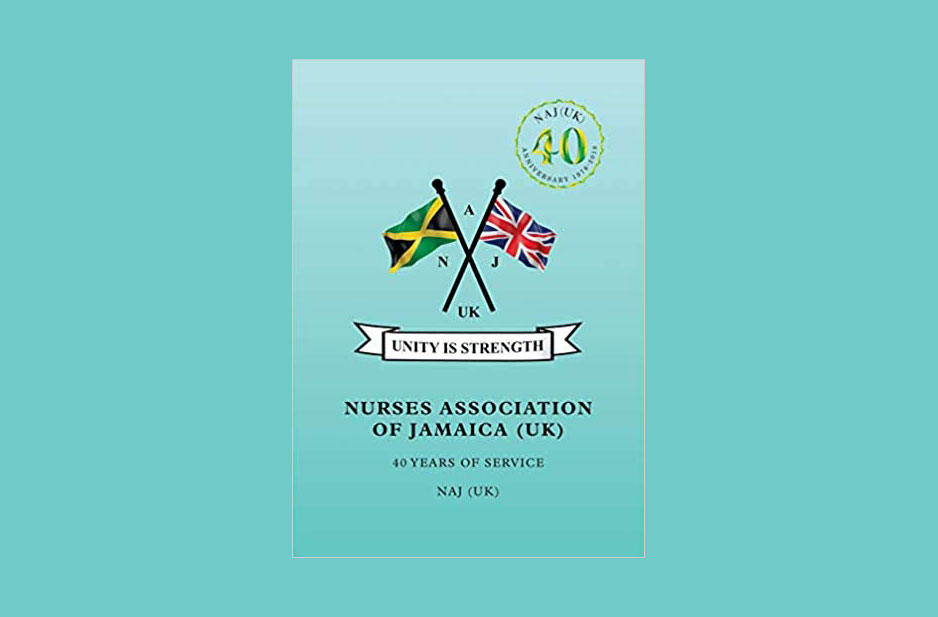
One particular group of nurses from Jamaica, who previously had no knowledge or experience of British culture, made the journey to the UK to work in the NHS. They later set up a charity known as the Nurses Association of Jamaica (NAJ) to help those facing discrimination and share harrowing personal experiences, which still stands today.Alina, one of the key members of the NAJ, has worked with StoryTerrace to document the lives of the Jamaican nurses, their travel and work in the UK to build the NHS, and the creation and work of the NAJ. It is an incredible tale of overcoming adversity, culture shock and adaptation, the beginnings of a treasured British institution, and the philosophy of the NAJ on sharing ideas and educating people on important health and social issues.


One of the NAJs members commented on the importance of documenting the individual efforts of Wallace and the NAJ: “As we celebrated our 49th year, we felt that we had achieved so much, but also that we were getting on, and there weren’t many young people replacing us.


“A lot of incredible efforts and stories of Alina and these nurses have been lost and we are keen to document these stories in the right way.


Until now, there was nothing to document how we had achieved everything, and we felt the need to leave a legacy for the next generation”.


‘Unity is Strength: The story of the Jamaican nurses who helped to build the NHS’ highlights the women of excellence who were at the forefront of what was a new National Health Service.


Across the UK, 39% of children who are placed in care without a court order by local authorities are still living in this state of uncertainty with no long-term solution within 12 months, a figure which has resulted in a leading family lawyer sounding the alarm.


Law firm Ridley & Hall recently called on all UK councils to reveal the number of children currently accommodated under Section 20 of the Children Act (14,284), and asked how many of these had in fact been in this situation for more than 12 months (5,592)*.


Local authorities can place children into care without a court order when they are deemed not to have somewhere suitable to live. This action can only be taken with a parent’s consent, and is intended to be a short-term measure while efforts are made to find a permanent solution. Unfortunately, the research shows that almost half of these children still do not have a permanent place to live a year later.


Now, an expert is calling for more resources for putting in place permanent care plans for Section 20 children who are already at risk of significant emotional harm.


The law


Originally introduced in an attempt to move child law away from the courts, the Section 20 provision of the Children Act 1989 was intended as a short-term measure. It enabled local authorities to quickly take over the responsibility of caring for children in a foster home or with another family member. However, there has been growing judicial concern that these particular looked-after children are being accommodated for unacceptably long periods of time before official care proceedings are initiated.


The research


Figures obtained from local authorities by Ridley and Hall Solicitors under Freedom of Information show that in the West Midlands, there were 1,398 children accommodated under Section 20 during summer 2019 of which 578 (41%) had been accommodated for over 12 months.


“This legislation, which is designed to give local authorities the power to provide accommodation for children without a court order when they do not have somewhere suitable to live, can be productive and helpful in some circumstances,” explains James Cook, director and head of childcare law at Ridley and Hall. “It is, for example, helpful in situations where their parents might need temporary respite. However, in our experience, the law is now being misused and abused with large numbers of children being kept in temporary care for lengthy periods of time.

This was never the intention of Section 20, and the potential implications for the children can be truly damaging.


“The primary concern has to be for the welfare of the children. The breakdown of family relationships due to prolonged separation, as well as the stigma of being in care and the anxiety caused by the uncertainty of where they will ultimately live, can be extremely harmful. There is no doubt that this can have real, detrimental long-term implications for the children.”


Mr Cook says: “There seems to be a lack of urgency in dealing with the long-term needs of Section 20 children; once they have been removed from the home, the local authority considers them to be less of a priority as they are out of immediate danger. No doubt, a lack of resources is partly to blame, but this needs to change.


“I want to urge local authorities to prioritise making longer-term plans via the courts in order to give these children the opportunity for their needs and wishes to be properly considered and represented.


“Despite ongoing pressure on public spending, the need to ensure that local authorities are adequately resourced is vital. We must ensure that they are able to effectively plan long-term care and so prevent more children from being lost in the system under Section 20.”