Colors: Yellow Color


There has been a growing concern and appetite for change when looking at terminology and language surrounding how we describe the communities impacted by racial discrimination. The mainstream term in use is Black Asian and Minority Ethnic (BAME). The problem with BAME, and other now outdated phrases as terminology, is that there are issues of generic and casual branding of communities. This is whilst also avoiding the varying issues impacting specific communities in more severe ways, as highlighted by the recent advocation for change through Black Lives Matter. The term BAME also leaves room for ambiguity and confusion around ethnicity, geography and nationality.

The term BAME collates large swathes of groups together and places recognition on some communities whilst ignoring others entirely. The emphasis of such behaviours tends to be on the physical differences of some while relegating ethnic and cultural complexities. The insinuation that any of the communities impacted by racial discrimination are simply 'minority' ethnic groups is uncomfortable for many due to the negative connotations that are attached to the word minority, which subconsciously makes ethnic groups seem inferior to white counterparts, and connotes a general negative subtext.

This is as well as the idea that all communities and individuals who fit into the umbrella term of 'BAME,' are impacted the same way by racism. These wide and non-specific groupings fail to recognise the multiple complex strands of diverse cultures. What we need to do is get specific and avoid the use of umbrella terminology where possible.

Systematic racism is incredibly complex and to tackle it effectively, we need terminology which is more specific to the communities experiencing racism in order to improve inclusivity. We believe the term BAME is too generic and allows organisations to hide behind this term to cover up underrepresentation and racial discrimination of specific ethnic groups. The only way we can begin to unpick and deconstruct the systematic racism and discrimination towards these varied communities, is by recognising specific communities, their underrepresentation and the experience they face with racism.

We must reflect on their experiences, work with them to resolve these issues and develop best practice. The first step to take is to stop using BAME and other such problematic terminology and to start looking at these communities in a more detailed way and identify them as specific groups, with an intersectional approach to identify any forms of multiple discrimination taking place. We must measure engagement from the varied communities more effectively and become accountable for the shortfalls to develop a more anti-racist approach.

We as a sector must recognise and highlight the varying and often multi-layered forms of discrimination and racism impacting communities. There are issues that would impact South Asians differently to the African or Caribbean communities, and within those communities are even more intersects of diversity that need to be recognised from ethnicity to intersectionality.

We need to be willing to embrace diversity as organisations and individuals, by knowing the communities we serve and once we do that; we need to understand and accept the diversity and complexity that communities and individuals self-identify as. Without this focus on measuring specific communities we will continue to fail to eradicate discrimination and exclusion. Being specific regarding the communities and individuals who are in need of support and engagement is the way forward. Sporting Equals recognised the weaknesses and hinderances of terminology and conducted a survey in October to aid in the development of best practice for our sector.

Our initial consultation was to our Associate Member network base of over 200 grassroots organisations in building our response to this call for evidence. This group represents 150,000 service users and almost 4,000 volunteers. The consultation reinforced our view that communities would prefer more specific definition of their identities. However, the communities also recognised and agreed that for organisational administrative purposes, they would be happy for a more sensitive and respectful term to be adopted.

The terms which were most highly favoured by our members included Diverse Ethnic Communities or Ethnically Diverse Communities, these terms allow the terminology to have more positive and broader spectrum. This is to ensure that organisations must become more specific as a result. We are placing the responsibility of specificity on our organisations and bodies of power to adopt these phrases, but then further specify the level of detail as to which groups they are engaging and why. These phrases require more detail and specification than an acronym like BAME. Diversity is the first and foremost point of importance, we need to recognise the diversity between the communities from their cultural diversity to their experiences of racism. But we must be wary to not use these terms in a casual and dismissive way. When speaking of research, marketing, engagement, and targets we must be very clear about which specific groups we are seeking to engage. We cannot continue to casually group people consistently with umbrella terminology – there must be a justified administrative or bureaucratic reason.

Following this, we at Sporting Equals will take this matter further consulting on where we should limit its usage, and we will then develop best practice to assist in cultivating a more welcoming sector for all communities. We must remember none of us win unless all of us win and with each of these changes we get one step closer to an inclusive and equal sector for all.
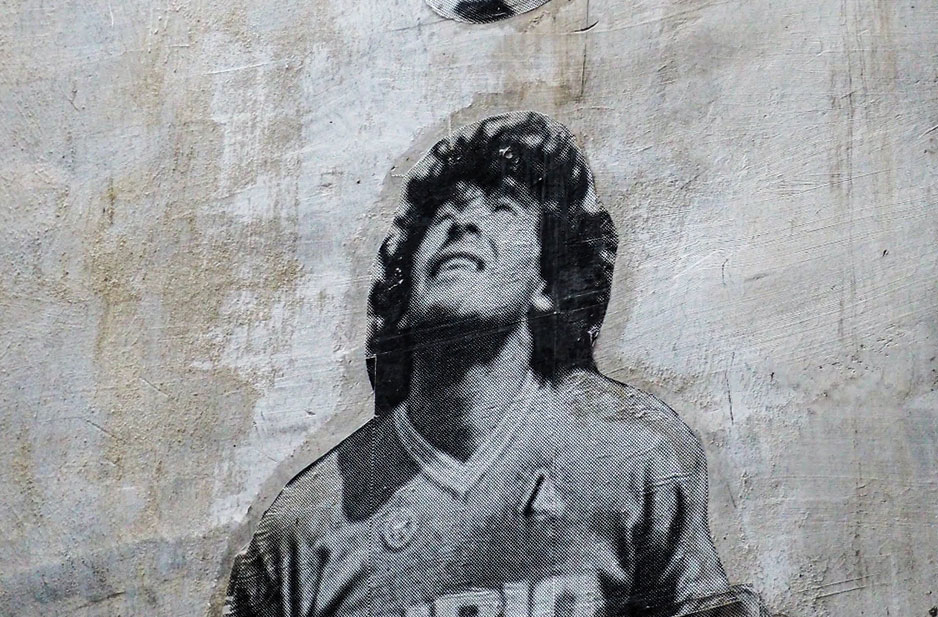
The death of former Argentina attacking midfielder and manager Diego Maradona has left the football world – neh, the world – in a state of shock as one of the greatest players of all time will be remembered for a long while.


He had successful surgery on a brain blood clot last month and was to be treated for alcohol dependency. But he suffered a heart attack at his Buenos Aires home.


A captain when Argentina won the 1986 World Cup, he scored 34 goals in 91 appearances for Argentina, representing them in four World Cups.


He started his career with Argentinos Juniors, also playing for Sevilla, and Boca Juniors and Newell's Old Boys in his homeland and as a player for Barcelona and Napoli, he won two Serie A titles with the Italian side.


Maradona led his country to the 1990 final in Italy, where they were beaten by West Germany, before captaining them again in the United States in 1994, but was sent home after failing a drugs test for ephedrine.


Argentina and Barcelona forward Lionel Messi paid tribute to Maradona, saying he was "eternal". He said: "A very sad day for all Argentines and football. He leaves us but does not leave, because Diego is eternal. I keep all the beautiful moments lived with him and I send my condolences to all his family and friends."


During the second half of his career, Maradona struggled with cocaine addiction and was banned for 15 months after testing positive for the drug in 1991.

He retired from professional football in 1997, on his 37th birthday, during his second stint at Argentine giants Boca Juniors.


Writing on Twitter Brazil legend Pele said: "What sad news. I lost a great friend and the world lost a legend. There is still much to be said, but for now, may God give strength to family members. One day, I hope we can play ball together in the sky." Former England striker and Match of the Day host Gary Lineker, who was part of the England team beaten by Argentina at the 1986 World Cup, said Maradona was "by some distance, the best player of my generation and arguably the greatest of all time".


Having briefly managed two sides in Argentina during his playing career, Maradona was appointed head coach of the national team in 2008 and left after the 2010 World Cup, where his side were beaten by Germany in the quarter-finals. He subsequently managed teams in the United Arab Emirates and Mexico and was in charge of Gimnasia y Esgrima in Argentina's top flight at the time of his death


In a statement on social media, the Argentine Football Association expressed "its deepest sorrow for the death of our legend", adding: "You will always be in our hearts." Declaring three days of national mourning, Alberto Fernandez, the president of Argentina, said: "You took us to the top of the world. You made us immensely happy. You were the greatest of them all.


"Thank you for having existed, Diego. We're going to miss you all our lives."


He was 60.

Boxing legend Mike Tyson’s first appearance in the ring for 15 years ended in a draw with fellow-legend Roy Jones Jr. 

The fight between the two heavyweights took place at Los Angeles’ Staples Centre and in light of the ongoing health crisis, the bout had no spectators or judges.

At the weigh-in prior to the fight, 54-year-old Tyson came in at 220lb, while Jones (51) came in at 210lb.

Despite there being no winner, the pair seemed to be quite content with a draw, with Jones saying: “I don’t do draws but the dude (Tyson) is so strong.

“When he hits you, his head, his punches, his body shots, everything hurts. I’m cool with the draw.”

Tyson responded by saying to Jones: “I hit you with some good shots, and you took it. I respect that.”

The pair took part in the heavyweight exhibition as a way to raise money for several charities with Tyson reportedly paid $10 million for the fight, a large amount of which he will donate.

He said: “This is better than fighting for championships. We’re humanitarians now. We can do something good for the world. We’ve got to do this again.”

The match had a ‘no knock-out’ rule that saw the two boxers engage in heavy sparring instead, with Jones describing Tyson’s body shots as ‘taking a toll’ on him.

Many of the sport’s fellow-legends expressed their satisfaction with former heavyweight champion, George Foreman tweeting, ‘Best exhibition I have ever seen’, while Amir Khan wrote, ‘Well done to my friends @MikeTyson & #RoyJonesJr. great performance from both legends. Both guys looked in great shape. I’m happy nobody got hurt, Well done [sic]’.

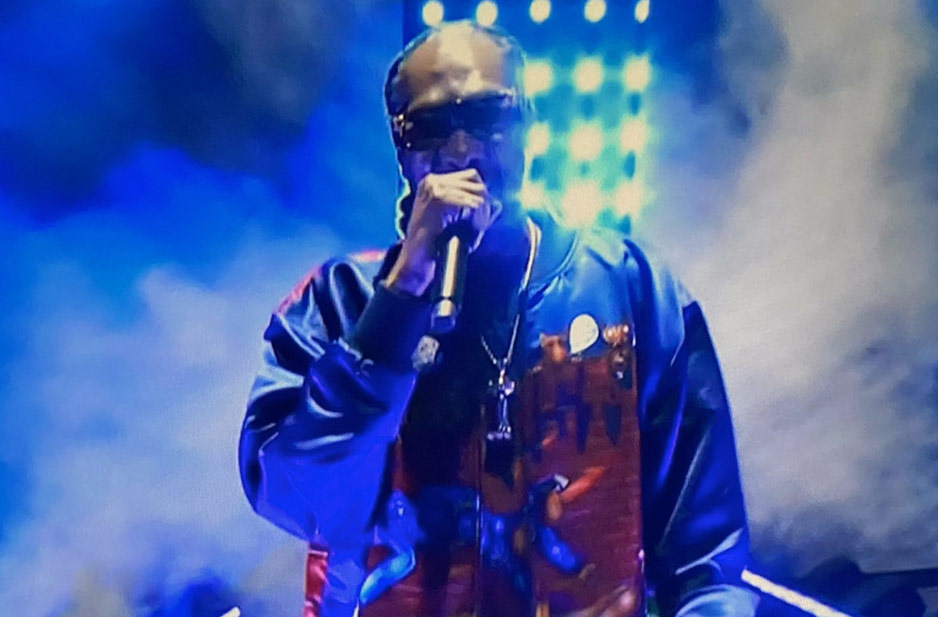
However rapper Snoop Dogg described the fight as watching two uncles fight at a family BBQ.

Following his commentary, many people joked that Snoop was the real winner of the fight with NBA star LeBron James tweeting, ‘My Unk @SnoopDogg is simply the greatest at whatever he does man!!!’

A hugely successful half-term sports-themed community programme which provided dozens of West Midlands youngsters with access to a range of physical activities and much-needed food parcels is to be repeated in the run-up to Christmas.


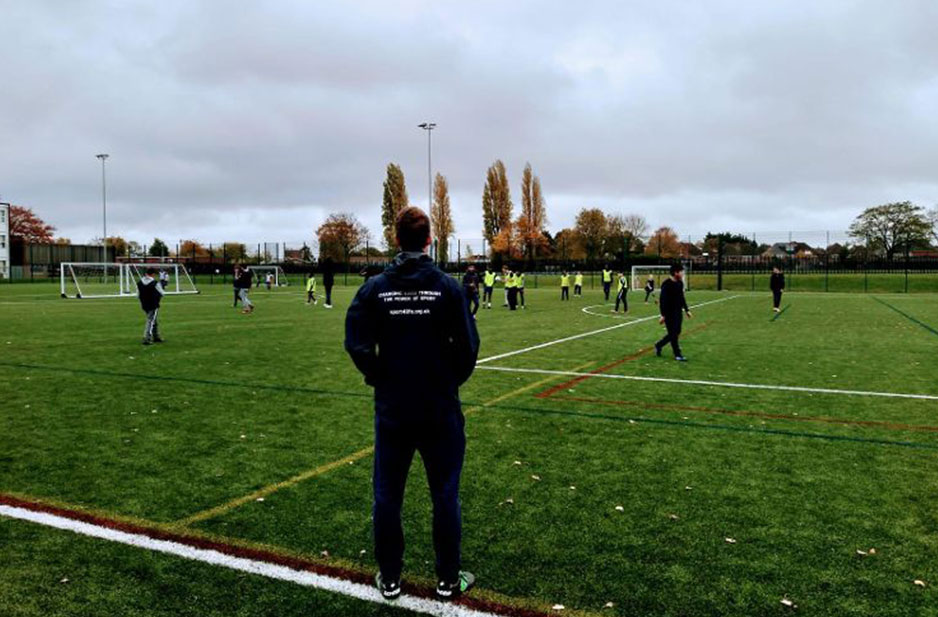
Sport 4 Life UK’s October Sports Camp took place at Hodge Hill College in Birmingham during the autumn half-term break and attracted as many as 35 people a day aged between 11 and 29 from diverse backgrounds.


And following the initiative run by the charity which uses sport to improve the life chances of young people not in education, employment or training, a number of the participants are set to complete virtual sports leader qualifications.


The event will return in the third week of December at the start of the Festive school holiday for a Winter Sports Camp, but with the format to be dictated by relevant coronavirus restrictions at the time.


CEO and Founder of Sport 4 Life UK Tom Clarke-Forrest said: “On one hand it’s rewarding for us to be making such an impact on these youngsters’ lives and I would like to thank everyone who helped to make the October Sports Camp a success. But on the other, the level of interest in our school holiday camps is growing and that is testament to the intensifying challenges young people face as a result of the pandemic and economic downturn.”


He added: “We’re now planning to run a similar event in the lead-up to the winter break in December, however, we’re mindful that the pandemic may prevent sports activities. We’re thinking therefore that if that is the case we could be looking at a food programme along with online mentoring and support rather than physical activity. One way or another we will ensure we’re there for as many young people as possible this winter, assisting them to build a positive future.”


During the October half-term Sports Camp, participants received food parcels containing essentials such as cereal bars, fruit, crisps and bottled water.


Sporting activities including football, tennis and volleyball were provided along with informal mentoring throughout the week.


Businesses and organisations interested in partnering with Sport 4 Life UK in its work supporting young people aged between 11 and 29 should contact Rob Wells, Head of Business Development, at This email address is being protected from spambots. You need JavaScript enabled to view it..


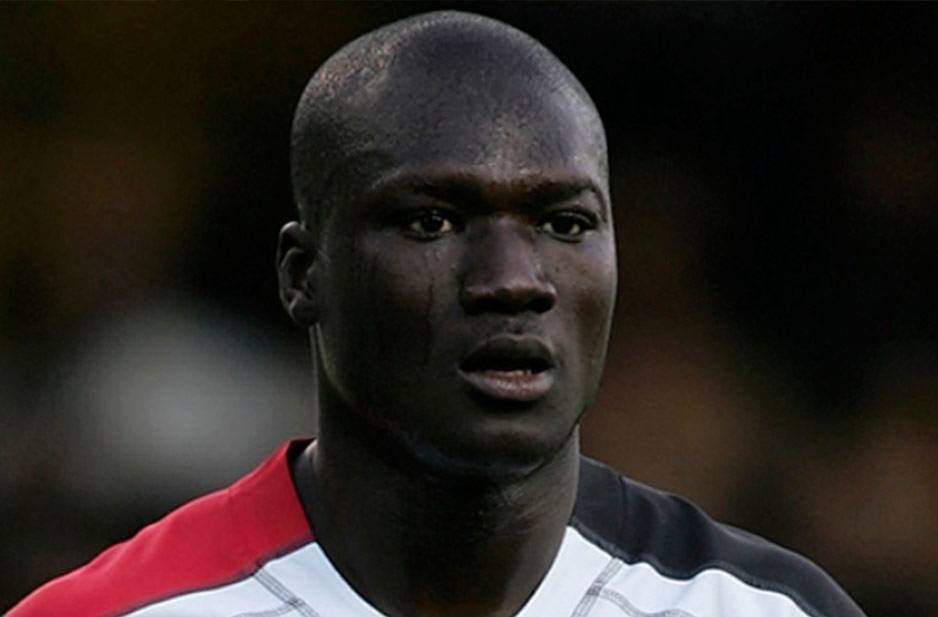
Former Senegal, Fulham and Portsmouth midfielder Papa Bouba Diop has died.

Diop made 129 appearances in the Premier League and also had spells in England with West Ham United and Birmingham City.

He played for Senegal at the 2002 World Cup, scoring the winner in the tournament's opening game as his country beat France 1-0.

"Once a World Cup hero, always a World Cup hero," Fifa posted on social media.

A post on Fulham's Twitter account said the club was "devastated" and, using Diop's nickname, added: "Rest well, Wardrobe."

Senegal reached the quarter-finals of the 2002 World Cup, with Diop going on to score twice more in the 3-3 group-stage draw with Uruguay. He also featured at four Africa Cup of Nations tournaments, including when Senegal were runners-up in 2002. He retired in 2013.

Diop helped Portsmouth, who were managed by Harry Redknapp at the time, win the FA Cup in 2008.

"He was such a wonderful character," Redknapp said. "He was fantastic for me, a great character, always happy and always had a smile on his face. He was a giant of a man.

"He had no aggression in him. He looked aggressive on the pitch because he was so big, but there was nothing nasty about him.

"My thoughts are with all his family."

Macky Sall, the president of Senegal, called Diop's death "a great loss for Senegal" while Liverpool's Senegal midfielder Sadio Mane wrote on his Instagram: "Pape Bouba, it was with a broken heart that we learned of your (death). Know that you will forever remain in our hearts even if you left without saying goodbye to us."

He was 42.

The UK Athletics ‘Let’s Talk About Race’ programme launched this summer has culminated in a sport-wide commitment to tackle issues of racial inequality endorsed jointly by UKA and the Home Country Athletics Federations (HCAFs).


The programme was launched to review all issues related to race within the sport following the murder of George Floyd. Whilst athletics in the UK is enjoyed by a diverse community, UKA CEO Joanna Coates appealed to the sport to let UKA know how it could be better at supporting ethnically diverse communities in the long term and not just in the immediate aftermath of this tragic event.


The programme launched with a series of roundtables, bringing together voices from across the athletics community to discuss race and was followed by a series of focus groups that identified priorities which have enabled UKA to finalise the actions to be taken forward as part of the 2021-2024 Diversity Action Plan – set to be published in January. 

The headline actions agreed by the CEO forum include:

  • A sport-wide commitment to address racial inequality in athletics
  • Embedding ED&I in UKA & HCAF strategies
  • Diverse representation at all levels of athletics e.g. Developing a Club ED & I toolkit for use
  • Development & Education e.g. Mandatory unconscious bias/ED&I training in coaching, officials and workforce qualifications
  • Develop mentoring/shadowing programmes
  • Policies e.g. Develop and implement a Race Equality Code of Conduct agreement for officials


Joanna Coates, UK Athletics CEO, said: “Following the impact of the murder of George Floyd, UKA felt it essential to engage with the sport and take positive action against racism by delivering the ‘Let’s talk about Race’ programme in line with our commitments to the Race at Work Charter.

‘We are very proud of the work undertaken so far on this having committed to real change within the sport. But agreeing the plan is only the first step. The recommendations will be taken forward as part of our 2021-2024 Diversity Action Plan, and the sport will need to work collectively to make these changes.”

Donna Fraser, Equality, Diversity and Engagement Lead at UK Athletics, said: “The murder of George Floyd sparked positive and negative conversations about race around the world and although a heart-breaking experience, we took the time to reach out to the athletics community to understand the true feelings and experiences within our sport. 


“The passion and commitment to make change from those who supported the programme really shone through and I thank them for their honesty. This is the start of a journey and I have no doubt that the athletics community will hold myself and the senior leaders at UKA and the HCAF’s accountable for the Let’s Talk About Race deliverables.” 


Thanks go to the respective Chairs of the focus groups; Imani Lansiquot, Yannick Phippen,  Michael Afilaka, Melanie Anning, Marcus Opoku, Mark Draisey and Sabrina Pace Humphreys.