
Colors: Yellow Color

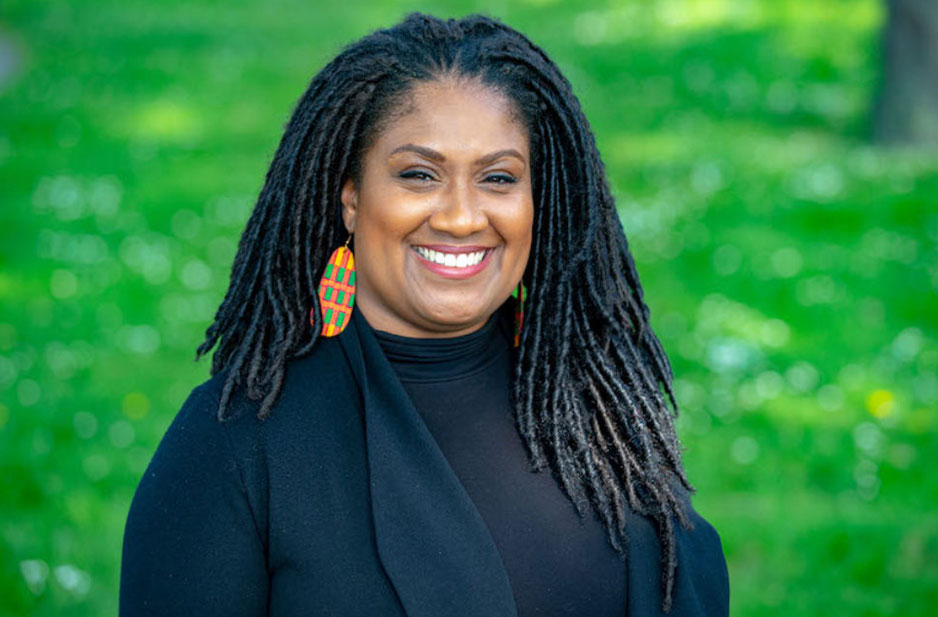
Birmingham cricket star Amy Jones says that competing for gold for Team England at the Birmingham 2022 Commonwealth Games will be “a real light at the end of the tunnel” after a period of lockdown which has seen the 2021 ICC Women’s World Cup postponed. 

Jones grew up in Sutton Coldfield and has more than 90 international caps for England as well as playing county cricket for Warwickshire. She is one of the stars of Birmingham 2022’s latest campaign, celebrating elite athletes with a link to the West Midlands. She will appear on billboards across the region from this week as the build up to the Commonwealth Games continues.

Women’s T20 cricket is part of the Commonwealth Games programme for the first time in Birmingham, and Jones says it is an absolute dream come true to be able to compete in her home city: “With how things are at the moment, I think it will just be a real light at the end of the tunnel and something for everyone to look forward to. I think it’s a brilliant opportunity for the city; all eyes will be on Birmingham for that period of time. I’m proud to be from Birmingham, and having such a global event coming to the city will just be brilliant.”

Birmingham 2022 will be the first time Jones and her England teammates will have competed as part of a multi-sport team, something that she says will add to the already special occasion as he adds: “It’s something that will be extremely special. We’ve never really been part of a bigger team, and being around that whole Team England squad of athletes is something that we’re really looking forward to.”

Amy Jones says the Commonwealth Games will be a chance raise the profile of women’s sport in general and women’s cricket in particular, and she welcomes the decision to award more medals to women than men at Birmingham 2022: “I think it’s the first global event to do that which is a really special occasion and just shows how far women’s sport has come. It’s really nice to see women’s sport being rewarded with more medals, and hopefully we just broaden the reach and attract more and more young girls to take up sport in general.

“Every athlete wants to inspire, and the more people that can see us and see what we do and see how much fun we have when we’re out there, if that comes across to young girls maybe watching cricket for the first time, I think that is hugely important.

“As a team we always try and engage with people that come and watch us and really just make it an experience that makes them want to come back and watch again. Hopefully that will be the case in 2022.”

The current world’s top eight women’s T20 cricket nations are all eligible to compete at the Commonwealth Games (Australia, England, New Zealand, India, South Africa, West Indies*, Pakistan and Sri Lanka), promising an extremely high quality tournament.  England qualify automatically as hosts, with the top six highest ranked sides as of 1st April 2021 also qualifying directly. The eighth spot will go to the winner of a qualifying tournament.

The Birmingham 2022 cricket competition will be held at the iconic Edgbaston cricket ground, home of Warwickshire County Cricket Club. And Amy Jones, who plays for Warwickshire, says that will make the competition even more special: “I first started playing for Warwickshire at under 13 level so it was really where I learned how to play cricket; it’s definitely a special place for me personally. I’ve only been able to play out on the main pitch a handful of times, so just to be able to play out there is one thing, but to represent England out there will be unbelievable, and I’m sure the support we’ll get there will be great as well.”

Amy Jones features in Birmingham 2022’s latest campaign, featuring elite athletes who have an association with the West Midlands. She says it’s an honour to be part of the campaign: “It’s incredible, I don’t think it will have sunk in until I’ve seen a billboard or my family walk past and see it. It’s definitely a bit crazy to be honest but it’s something I’m hugely proud of and I feel very lucky to be one of the athletes that’s up there. It’s definitely something that I’ll not forget.”

-

Dick Pound, the longest serving member of the International Olympic Committee (IOC), remains uncertain whether the Tokyo 2020 Games will go ahead. It comes after organisers said they will be ready to host the rescheduled Games - despite the city declaring a state of emergency over Covid-19. Pound said: "I can't be certain because the ongoing elephant in the room would be the surges in the virus." The rescheduled Games are set to take place between 23 July and 8 August.

He added that competitors should be high up the priority list when it comes to getting vaccinated, and also suggested that organisers could make it a condition for them to declare they have received the jab before entering Japan. The IOC earlier stated athletes would not be obligated to do so, but added: "At the same time, the IOC and the International Paralympic Committee are fully aligned in their commitment to have as many foreign participants as possible vaccinated before the Games.

"Athletes are important role models, and by taking the vaccine they can send a powerful message that vaccination is not only about personal health, but also about solidarity and consideration for the wellbeing of others in their communities." Earlier, Japanese Prime Minister Yoshihide Suga said there was a "sense of crisis" as he announced emergency Covid-19 plans. Organisers said: "This declaration offers an opportunity for Tokyo 2020 to plan for a safe and secure Games this summer."

Tokyo recorded 2,447 new Covid-19 cases on Thursday and the latest measures primarily target restaurants and bars, which will be asked to stop serving alcohol by 7pm local time and close an hour later.mCosts for the Games have increased by $2.8bn (£2.1bn) because of the measures needed to prevent the spread of coronavirus. And a recent poll by national broadcaster NHK showed that the majority of the Japanese general public oppose holding the Games in 2021, favouring a further delay or outright cancellation of the event.

Japan has secured rights to at least 540 million doses of vaccines from several Western developers - more than enough for its 126 million population - but the distributor of one of those, Moderna Inc, believes its vaccine is unlikely to win approval in Japan until May owing to requirements for local clinical trials. It would leave a tight vaccination schedule, with the Olympics set to start two months later.

Japan has a requirement for local clinical trials before requesting approval for a vaccine and a trial of the Moderna vaccine, which has already won approval in the United States, Europe, Canada and Israel, is due to start this month. Masayuki Imagawa, the head of the Japan vaccine business for Takeda Pharmaceutical Co, told Reuters it would probably take several more months to complete the trial and said securing approval in May was "the best-case scenario".

Meanwhile, the founder of the charity Sporting Minds, Callum Lea, says the uncertainty over Tokyo 2020 has resulted in an increase in mental health concerns among elite athletes. "We saw quite a big spike in March and April when the first lockdown was in full force, and we've seen another spike in the past month," Lea said. "For Olympic athletes their opportunity comes around once every four years and they could be at the peak of their careers, and a lot of them will know that this is their only chance, or their last chance.

“It is always different for every individual - you have some who will be able to cope with it OK and others who are extremely worried and will start to think that this is the opportunity they have built towards their whole life, and it is slowly starting to slip away."

England's touring party in Sri Lanka has been retested for coronavirus after all-rounder Moeen Ali returned a positive result. All of the players and staff had a lateral flow test and PCR at England's base in Hambantota.

The results are expected, with England hoping to be able to train for the first time in the afternoon. Moeen will leave the Hambantota base afternoon to continue his 10-day quarantine in a hotel near Galle.

Fellow all-rounder Chris Woakes was deemed as a possible close contact, having shared a car to the airport with Moeen in the UK, and is observing a period of self-isolation and further testing. The touring party must remain in their hotel rooms until the results are returned.

Meanwhile, it has been learned that Sri Lanka, who lost the second Test against South Africa in Johannesburg on Tuesday, will not face a 10-day quarantine period upon their return to the country. They will fly back on a chartered flight and, as they are transferring from one bio-secure bubble to another, a quarantine period has been deemed unnecessary.

They are expected to have PCR tests before being cleared to play in the two-Test series that starts in Galle on January 14.

Former Test Cricket umpire John Holder is suing the ECB (England and Wales Cricket Board) over allegations of racial discrimination during the time in which he worked for the board.  The legal claim that is lodged follows after Holder, and another former umpire Ismail Dawood, accused made accusations of “institutionalised racism”. 

A first-class umpire between 1983 and 2009, Holder related it to his employment, where he became the most notable Black British umpire in England cricket. He (Holder) claims that he was discriminated against on the grounds of race, with his - and Dawood’s - concerns over the fact that no non-white umpires have been appointed to the first-class list since 1992. In November they both asked for an independent investigation from the Equality and Human Rights Commission.

The ECB, who have promised to implement a range of changes, has produced its own report - Racial Equality in Cricket - which has stated that 58% of those consulted believed racism existed in English cricket. Holder and Dawood said that the ECB has “systematically failed to adopt these recommendations”. Holder has also highlighted that his application for a role as an ECB mentor after he retired in 2009 received no response.

“As with all areas of our game, we want our match officials to represent and reflect everyone who supports and plays cricket. Therefore, we announced that we would re‑evaluate the way in which we attract, develop and performance manage our match officials, in order to increase the diversity of our officiating, inspire the next generation of umpires and match referees and ensure a culture of inclusivity and fairness throughout.

“Aligned with this process, we have been arranging to meet with John Holder and others to listen to their experiences so as to better inform our future approach to recruiting and developing umpires and match officials.”

The last state-educated Black cricketer to make a Test debut for England was Michael Carberry in 2010. Carberry has also spoken out on institutional racism in English cricket.

An ECB spokesperson reportedly said: “We are not aware of the detail of this claim from John Holder and are therefore unable to comment upon it. The ECB is absolutely committed to ensuring there is no place for discrimination, of any kind, in our sport.

Back in 2000, former South Africa President Nelson Mandela declared that “sport has the power to change the world.” Two decades years later, 2020 proved how right he was.

This was a year where athletes of all different talents - footballers; basketballers; track and field stars; tennis players; F1 drivers - from across the world mobilised. They protested against racism. And they demanded change. Sierra Leone's US-based footballer, Kei Kamara - who joined in the protests following the death of George Floyd - said his children and their futures inspired him to make a stance.

"I lay down on the ground for nine minutes and my son actually then just lay down next to me, without me even asking him - and Kendrick is only three," Kamara said. "He just decided to lay next to me. And I turned around and I saw him and it just hit me so hard, like 'wow'.

"I'm so, so grateful to every other race that's standing with us now because it's given us a voice".

2020 was also the year that footballers in the English Premier League began taking a knee before kick-off in show of unity against racism. For the American triple-jump record holder Tori Franklin, sport has the capacity to provoke a shift in people’s mentality and play its part in the fight against racism. I feel like sport can really make a huge impact” Franklin said. “Sport is a big part of American culture. It’s gets a lot of TV time, a lot of press. Athletics teams taking a stand and protesting about something is going to make a huge impact.”

On 26 August 2020, the NBA team Milwaukee Bucks refused to play the fifth game of their playoff series against Orlando Magic following the shooting of African American Jacob Blake by a police officer near their home stadium. This led the NBA not only to reschedule this match, but also all the other games to be played that night. And several other sports followed, supporting the athletes’ decisions to boycott a match: sports including baseball, football and tennis.

For Franklin, every sport has a voice and should speak out against racism - no matter its profile. “Of course, we definitely have a voice," she said. "Our voice is obviously not as big as the NBA, but there have been many athletes who have protested in competition - Gwen Berry in 2019 at the Pan-Americans games, Noah Lyles did it this year, at Monaco (Athletics Diamond League meeting), wearing a glove and putting up the Black fist. "And numerous athletes have been posting on their social media, going out on protesting, just being very involved - myself included."

The biggest platform for athletics is the Olympic Games - an event that, had coronavirus not happened, would have been the focal point of the sporting year. And throughout history, athletes have used the Olympics to bring awareness to social and political issues, something the International Olympic Committee (IOC) does not allow.

In January 2020, with the Tokyo Olympics and Paralympics in sight, the IOC published fresh guidelines explaining the meaning of rule 50, a longstanding rule which states that “no kind of demonstration or political, religious or racial propaganda is permitted in any Olympic sites, venues or other areas.” The IOC explicitly condemned “hand gestures or kneeling” and any “refusal to follow the Ceremonies protocol”.

This came following the incident at the 2019 Pan-American Games which Tori Franklin referred to, when American hammer throw-winner Gwen Berry raised her fist at the end of the medal ceremony and fencing winner Race Imboden knelt down during his medal ceremony to protest against racial inequality in the US. Both were put on a probation for 12 months, and Berry said she lost sponsorship. Such a stand comes with a serious cost for the athletes - not just financial but for their lives too.

The most iconic display of this remains Americans Tommie Smith and John Carlos who stood on the 200m podium shoeless with black socks, black gloves and fists raised at the 1968 Mexico Games. Both, with silver medallist Australian Peter Norman, were also wearing Olympic Project for Human Rights badges.

The Americans were suspended and banned from the Olympic village. All of them were ostracised when they went back to their countries and Australia only officially apologised years after Norman's death. But today, the three men are celebrated as legends and heroes, even by the IOC itself.

At the 2016 Olympics in Rio, the marathon silver medallist Feyisa Lilesa surprised the world when he held up his crossed wrists above his head (as if they were shackled) while he crossed the finish line, a sign bringing awareness to the Oromo protests happening in Ethiopia at that time, against social and political marginalisation. Ethiopia's Prime minister resigned two years later with the new leader implementing many reforms. If the change was not directly caused by Lilesa's stand, there is no doubt he forced the world to look at what was happening in his country at that time. But the IOC's rule 50 is clear - such a demonstration is not allowed at the Olympics.

Tori Franklin says that athletes are trying to find a common ground with the Olympic authorities. “The athletes have created the Athletics Association which is run by a few track and field’s athletes. They’re doing their part as well, trying to urge the US Olympic committee to allow protests within competition without getting punishment for those athletes.”

In the documentary Jesse Owens Returns To Berlin, the legendary Black American athlete - whose dominance at the 1936 Olympics, under Hitler's gaze, proved everything wrong with the Nazi's horrific ideology - says, “there is a bond among athletes of every race, religion and colour that transcends all prejudice.” Sprinter Owens won four golds that Olympics. He knew all about the power of sport to break down racial barriers. An example of it was his friendship with German long jump athlete Luz Long - the physical archetype of Hitler’s Aryan theory - at a time in history when everything in the world seemed to oppose them. But they maintained a shared humanity through sport and, perhaps, their faith.

Some 84 years later, athletes across sports united to make a stand against racism, It may have been sparked by events in the US, but the reaction was global. Look at Burnley captain Ben Mee, seething with barely-contained anger in a live interview in response to a plane being flown over his club's ground with a White Lives Matter banner. “What next?” was the question that followed the NBA Milwaukee Bucks' boycott on 26 August. It’s a long road” said Tori Franklin, reflecting on the year. “But I do think that the things that we are doing are making an impact”.

It will require more than just sport to change the world for better. But history has proved that sport has power; the power to unite people, inspire change, create hope and break down racial barriers.

Becky Hammon became the first woman to lead an NBA team after the San Antonio Spurs' head coach Gregg Popovich was ejected against the Los Angeles Lakers. Popovich put assistant coach Hammon in charge after he was removed in the second quarter of the Spurs' 121-107 defeat by the Lakers in Texas.

Hammon, who joined the Spurs in 2014, said: "Obviously it's a big deal and a substantial moment "I try not to think of the huge picture and huge aspect of it because it can be overwhelming.

“I was trying to get the guys in the right spots and trying to get them motivated. Obviously, it’s a learning situation for all of us, but I would have loved to have walked out there with a win with the guys.”

Former WNBA star Hammon, who was the first woman to join an NBA coaching staff, said she did not know she would take charge if Popovich were to be sent off until he pointed at her and said: "You got 'em."

Popovich was thrown out by official Tony Brown after shouting and entering the court when he felt a foul was incorrectly not called.

Scoring double figures for a 1,000th consecutive game, extending his own NBA record, LeBron James led the Lakers with 26 points on his 36th birthday.

"It was a beautiful thing just to hear her barking out calls, barking out sets," he said, “and congratulations to her and for our league."

Lakers coach Frank Vogel said: “Well deserved. I’ve talked to her before and she really knows her stuff and obviously she’s here for a reason. She’s equipped, intelligent (and the) guys have great respect for her. She’s going to be a great coach one day.”

A three-time All-American at Colorado State, Becky played for the New York Liberty and San Antonio Stars in the WNBA as well as overseas before retiring to join Popovich’s staff in 2014.

She is the first full-time female assistant coach in league history.


Following consultation with the league office, the four BBL Cup Semi-Finalists have come to an agreement to amend the format for the BBL Cup Semi-Finals due to fixture pressures due to COVID-19 implications.

The changes are:

· Moving from two-legs to single-leg.

· Playing both games in one central venue

· Playing both games on the same day

Therefore the BBL Cup Semi-Finals have been agreed as follows:

Date: Tuesday 12 January 2021

Venue: National Basketball Performance Centre, Manchester

Game 1: Leicester Riders v Newcastle Eagles – 5:00pm

Game 2: London Lions v Manchester Giants – 8:00pm

Both games will be broadcast live via BBL Player.

Formula 1 World Champion, Lewis Hamilton says the Black Lives Matter (BLM) movement helped to drive him on to his seventh title. The 35-year-old took a knee on the grid and wore anti-racism slogans in support of the cause during the season and his Mercedes team also adopted a black livery for the 2020 campaign in a stand against discrimination.

Having been voted the 2020 BBC Sports Personality of the Year earlier this month after equalling Michael Schumacher's record of winning seven World Championships and passing the German's total of 91 grands prix victories, he said: "I had this extra drive in me to get to the end of those races."

Speaking to historian and presenter Professor David Olusoga, Hamiltion said: "It was a different drive than what I've had in me in the past - to get to the end of those races first so that I could utilise that platform for Black Lives Matter and shine the light as bright as possible." Asked if he had been concerned about the response to his stance, Hamilton replied: "There is no way that I could stay silent. And once I said that to myself, I didn't hold any fear."

When asked by presenter Nick Robinson about racism in his sport and the fact that he is the only Black F1 driver, he said: "There are many other young kids of colour that deserve the opportunity to progress, have a great education, be an engineer or whatever it is they want. But the fact is, the opportunity is not the same for them." The Mercedes driver also hinted that activism might represent a new avenue for him when he retires from racing. Lewis added: "The happiness and success of winning these championships is a wonderful thing, but it's short lived."

As well as Black Lives Matter, Hamilton also discussed the Hamilton Commission, the programme set up in his name to increase diversity in motorsport, the power of sport to bring positive change, electric cars and animal rights.

Former Super Eagles captain Austin Okocha insists the Nigerian obsession with finding a new 'Jay-Jay' has to stop. That sentiment echoed by his World Cup teammate Mutiu Adepoju who says there is too much pressure on the national team's young players. The 47-year-old Okocha, who retired in 2008, admitted to Lagos radio station Brila FM that the lack of creative midfielders is holding the current Super Eagles squad back.

"We should support these players and let them flourish on their own instead of unfairly putting them under pressure by calling them the next this or that," said Okocha. "I think people need to stop the obsession with that new Jay-Jay label because it's unfair on these young players."

In recent years Under-17 World Cup winners Rabiu Ibrahim and Kelechi Nwakali, Joel Obi and Alex Iwobi have all been hailed as a successor to Okocha in the Nigerian midfield that many believe lacks flair and creative verve. Okocha made his debut for Nigeria against the Ivory Coast in 1993, before going onto win Olympic gold three years later and then become the first Nigerian to play in three World Cups in 1994, 1998 and 2002.

The former Bolton, Hull City and PSG midfielder is regarded as one of the finest players to have emerged from the West African nation and his talent saw him win twice crowned the BBC African Footballer of the Year. Midfielder Adepoju, who also participated in three World Cups with the Super Eagles, agreed that the local media and fans are guilty of putting too much pressure and spotlight on the young players.

"I believe calling young players in the youth teams as next Messi or Jay-Jay Okocha is unfair and unnecessary," Adepoju who turned 50 on Tuesday told BBC Sport Africa. Indulging in this comparison is setting them up for failure because the weight of expectations will definitely affect these players mentally. It's the main reason some players refused to work hard and be themselves because they easily get carried away by what the press was writing about them." He says that he has seen plenty of younger talent that has not made the step-up to senior level over the last ten years.

"We've seen in the past decade that we have talented players all over the field who can make our team tick again," he explained. "Nigeria continue to dominate the youth events and there are positive signs of better days to come. We just need to nurture these players properly and do away with the hype and noise. But if these players are allowed to play their own game and shine, they can be a success both at club and national team level. Victor Agali was widely regarded as the next Rashidi Yekini, but he fought extra hard to establish himself and sometimes people expected too much from him.

He is an example of someone who saw the burden of that label yet worked hard to establish his own name." Adepoju holds a Uefa Pro license and has Spanish nationality after years spent playing in Spain, for the likes of Real Madrid, Real Sociedad and Salamanca. He played alongside Okocha as Nigeria won the 1994 Nations Cup and his career also took him to Turkey, Saudi Arabia and Cyprus after making over 50 appearances for the Super Eagles. A 1989 Under-20 World Cup star, Adepoju insists Nigeria has shown promises in global youth tournaments that it can produce midfielders who can bring success back to the national side.

A Ugandan orphanage's unlikely fascination with English football team AFC Bournemouth has resulted in its children receiving thousands of pounds of sports kit in time for Christmas. The children living in Bugembe were inspired by the club's rise through the leagues, and videos of them cheering on their team were posted on social media. This prompted some of the Dorset club's fans and captain Steve Cook to send the orphanage football kit and equipment.

Fans hope to raise more funds online. Bournemouth's climb from the bottom of League Two to spending five seasons in the Premier League captured imaginations around the world. The children at Ibun Primary School, a community orphanage and football academy, were encouraged by their coach Joshua Kiizza to learn from those achievements. Mr Kiizza shot videos of the children chanting for Bournemouth and took photos of them gathered around a radio listening to their matches on BBC Radio Solent.

Cherries fan Steve Butler spotted some of the posts on Twitter and started raising money to send football supplies to the orphanage. Uganda is one of the poorest countries in the world and Mr Butler said he wanted to do something to help the children in time for Christmas.

"I thought 'these children need some help - and hopefully we can give them that' so I started a GoFundMe page that has raised just over £2,600." The equipment has since arrived in Uganda and Bournemouth captain Cook has also sent club shirts, goalkeepers' gloves and training kits.

"The coaches at the orphanage] are obviously doing a really good job - the children out there always seem to be smiling in every picture," he said. "Hopefully we can get promotion [back to the Premier League] and see some more smiles."

Organisers of the delayed Tokyo Olympic and Paralympic Games will spend $900m (£670m) on measures to stop the spread of coronavirus at next year's events. The final budget means the Games will cost $15.9bn (£11.8bn) - up $2.8bn (£2.1bn) from figures last year. It could make the Tokyo Games the most expensive summer Olympics in history.

Tokyo 2020 chief executive Toshiro Muto said: "Whether you see this budget as expensive or not depends on how you look at it. You can look at it from a cost perspective or an investment perspective. If you look at it purely in terms of cost, it doesn't make sense.

"But if you look at it as a positive investment, I think there are areas where it can be identified as such." The coronavirus plans include the creation of an infection control centre in the Olympic and Paralympic Village, as well as plans to regularly test athletes and ban cheering in venues.

A poll last week by national broadcaster NHK showed that the majority of the Japanese general public oppose holding the Games next year, favouring a further delay or outright cancellation of the event. But organisers insist the Games can be held, and have ruled out another delay.

Games elements, including athlete welcome ceremonies, have been scrapped in a bid to save money and the "look" of the event will also be scaled back. But the savings, plus extra revenue from sponsors, have been cancelled out by extra costs including rebooking venues and transport to retaining the huge organising committee staff.

Organisers increased the service budget of the Games to $7.1bn (£5.3m), with extra money allotted for the opening and closing ceremonies. However, the International Olympic Committee has agreed to cover the costs of moving the marathon and race-walking to northern Sapporo to beat Tokyo's summer heat.

"We are trying to hold a global event during a pandemic, and if we are able to do that, it would mean that we can co-exist with Covid-19," Muto added. "We would be able to provide a model for living with the virus, and I think in that sense this event can be a meaningful one."


World heavyweight champion Anthony Joshua has made a substantial donation to help fund amateur boxing in Britain - saying he hopes "we have not lost the next generation" of fighters. Some clubs have closed and boxing was not included on a list of sports that received a £300m bailout in November. Joshua, 31, gave a six-figure sum to the amateur boxing federations of England, Wales and Scotland.

"Without grassroots boxing, there is no Anthony Joshua," he said. "The doors to these gyms are always open to any kid from any background," Joshua, who turned professional after winning Olympic gold at London 2012, said. "If I was 18 again and I was in a position where the gym was closed and it might not open, I would be devastated.

"It's not just financial help. I will often try and motivate these kids by being among them, bringing my belts down and training with them. I believe in the next 10-15 years, you are going to see the leaders of tomorrow, but I hope it's not 25-30 years because we have lost this next generation." Funding will be provided to the clubs most in need.

Gethin Jenkins, chair of England Boxing, said: "We are delighted and we thank Anthony for this much-needed financial support and for drawing attention to the role and support the clubs offer in their local communities and with it the need for greater government support to grassroots boxing clubs." Although boxing was not included in the government's bailout last month, Sport England has distributed £2.5m to local clubs since the start of the Covid-19 pandemic.

Joshua first became world champion in 2016 when he beat American Charles Martin to win the IBF title. His most recent fight was a ninth-round stoppage of Bulgarian Kubrat Pulev at Wembley Arena on December 12.

The IBF, WBA and WBO titles holder and compatriot Tyson Fury, who is the WBC champion, currently occupy all of the world heavyweight titles between them, and the former says he is "certain" the pair will meet in a unification bout in 2021. Both fighters have progressed from the amateur ranks and Joshua says "the world's eyes will be watching" their fight.

"I'm certain [it is going to happen], I'm keen and I'm ready," said Joshua. "It's about me challenging myself and getting my hands on that WBC belt because I want to be an undisputed heavyweight champion. That is legacy."

With rumours of the fight being agreed in a lucrative deal overseas, Joshua said he "prays" the bout happens in Britain, but he is "more interested in the fight than where it happens. We are aiming for some time in June so it gives us a window to assess the situation with the Covid-19 pandemic here.

"I will do it any time and any place, but until that fight is reality and his signature is on the dotted line, I'm not really going to talk about it."


Premier League players from all 20 clubs have made the following statement:

'We, the Players, stand together with the singular objective of eradicating racial prejudice wherever it exists, to bring about a global society of inclusion, respect, and equal opportunities for All, regardless of their colour or creed. This symbol is a sign of unity from all Players, all Staff, all Clubs, all Match Officials and the Premier League #blacklivesmatter #playerstogether.’

The PFA stands alongside players, clubs, the Premier League, The FA, EFL, LMA, PGMOL and all those who oppose discrimination in any form. 

The PFA and the Premier League supports the players’ wish to have their names replaced by Black Lives Matter on the back of their shirts for the first 12 matches of the restarted 2019/20 season. A Black Lives Matter logo will also feature on shirts for the remainder of the season, along with a badge thanking the NHS for their work during the COVID-19 crisis. 

In addition, the PFA and the Premier League will support players who ‘take a knee’ before or during matches.

As such a diverse industry, this is an important show of solidarity in the fight against systemic racism. Enough is #Enough


A Letter To English Football From Paul Elliott, Chair Of Our Inclusion Advisory Board

It fills me with huge pride that, for the remainder of the season, teams playing in the Premier League, EFL and the Emirates FA Cup will support the Black Lives Matter campaign.

This will ensure that everyone around the world knows that English football is united against racism.

Progress has been made by English football in the last 30 years. When I played, a torrent of racist abuse was sadly the norm. We've worked hard to reduce discrimination from the pitch and from the terraces.

But despite that progress, we still have some way to go as a game in some key areas. Critically, we need to address the systemic inequalities that prevent under-represented and minority communities gaining senior management opportunities across society and in football.

We must ensure that our boardrooms and leadership positions reflect the society that we live in and the people who play the game.

We need to lead this change as it will help ensure that voices from all our communities are heard and to encourage the broadest possible range of talent to work in our wonderful game. As well as helping to combat discrimination, this will make us more effective as businesses. It will also signal change to the country.

Thirty years ago, racism was a societal problem; but it was football and footballers who led the way, standing up to racism and helping change perceptions across the country. It’s clear that inequality is still being felt across all of society today and rather than resisting change, we need to embrace and drive it.

Football is a game that unites like no other and players across the game are clear that they want football to lead once again. Football needs to lead the way not because of its high profile but because of its unique demographics.

Football, like in nearly every area of society, has Black and minority ethnic people underrepresented at all senior levels. Nearly 30 per cent of professional footballers are Black but Black people are still a rarity in the boardroom, executive offices and dugouts. This must change.

Showing solidarity with the Black Lives Matter campaign is a welcome start, but it will be an empty gesture from football if we don’t take this opportunity for concrete action. Your support for the campaign and the players’ passionate voices have shown me that if there is an opportunity to create change, the game will take it.

We are therefore creating a voluntary code for Equality In Football Leadership, which every level of club will be able to sign up to – whether grassroots, semi-professional or elite.

This will be a firm and tangible commitment to diversity and inclusion in boardrooms, senior administration and coaching. I’m asking that you join us.

I will be working on the details of the code with some of the senior black leaders in the game. We will welcome any feedback and input from across the game and beyond.

We will conduct a structured three-month consultation process. The three-month period ensures we do not get bogged down in interminable meetings whilst another generation of talented Black and ethnic minority candidates miss out on the chance to develop their careers in football. Project Restart has shown football can move quickly when it sees the need.

Our aim is to add to the good work clubs are already doing up and down the country, working with them to create meaningful targets which we can then all use to demonstrate collective progress.

Adopting the code will signify that together we want to go on a journey to ensure football leads the way. The targets may vary according to multiple factors. For example, the region of the country that you operate in or global reach and impact. We’ll audit annually and will be transparent in publicising the results. To do this, clubs will need to be prepared to be transparent about their diversity statistics.

Of course, change should go further than clubs alone and football administration must keep pace too. I have already agreed with FA Chairman Greg Clarke that our organisation must review the composition of the FA Council, revisit the FA’s lack of BAME executive leadership and ensure that County Football Associations can set the standard for the grassroots game by using the newly agreed diversity provisions of the County Football Association governance code. 

The FA Board is diverse with four women and one BAME director. I attend as an observer in my role as the chair of the FA Inclusion Advisory Board to ensure that diversity and inclusion issues are fully represented at every meeting, however I do not have a vote. We need the Premier League, EFL, Barclays FA Women’s Super League and the National League to step up and provide ethnic diversity at board and executive level too. We need more role models for young BAME people beginning their careers to draw inspiration from.

So, I thank you for your support of Black Lives Matter and for all the excellent anti-discrimination work you already do. Football can and should be very proud of its achievements to date. Through this new initiative we can lead the nation’s response to inequality by ensuring the leadership of football reflects the composition of our country.

This global movement was captured beautifully by the visibility of the diverse next generation of our youth. The multicultural, multiracial makeup of the protesters really embraced what the world looks like today. It is so comforting for people of colour to know they no longer need to feel they are a minority voice and the world is listening and supporting them.

In asking for your support I would like to recall the words of Martin Luther King Junior: "In the end we will remember not the words of our enemies, but the silence of our friends."

Don’t be silent. Football must unite against inequality. Join in and make football and society fair for all.

Football is coming together to ensure this initiative gains genuine traction rather than be another opportunity for making speeches and handwringing. The following people of many ethnicities have put their names to this letter, rather than remain silent, to show their support for action now.

There are many more people across football who I’m sure would like to support us with this initiative, and we hope to make contact with them in the near future. I will be putting together a working group to support me on this journey, as we all have a significant role to play and one where we can action change together.

List of support:
• Greg Clarke, FA chairman
• Mark Bullingham, FA chief executive
• Sanjay Bhandari, Kick It Out
• Bobby Barnes, PFA
• Heather Rabbatts
• Gareth Southgate
• Phil Neville
• Chris Hughton
• Chris Powell
• Gary Lineker
• Alex Scott
• David Pleat
• Graeme Le Saux
• Justin Cochrane
• Liam Rosenior
• Michael Johnson
• Rachel Yankey
• Tyrone Mings
• Robbie Savage
• Lucy Bronze
• Bruce Buck, Chelsea FC
• Steve Parish, Crystal Palace FC
• Ben Robinson, Burton Albion FC

Paul Elliott, CBE

Chair of the FA’s Inclusion & Advisory Board

An inspection of the progress on the redevelopment of the Alexander Stadium ahead of the Birmingham 2022 Commonwealth Games was carried out by athletes and project partners today (December 16).

Since planning permission was granted in January this year, the demolition of three existing stands has been completed and the site remodelled with steelwork that will form the eye-catching new West Stand, which has started to take shape in recent weeks.

And despite the challenges posed by the Coronavirus pandemic, the £72.4million scheme remains on budget and scheduled for completion in spring 2022 ahead of its initial use as the venue for the Commonwealth Games athletics competition, as well as the event’s Opening and Closing Ceremonies.

Kelly Sotherton, Team England’s Track and Field Team Leader for Birmingham 2022, said: “It is fantastic to be able to take a closer look at the progress that has recently been made on the redevelopment of the Alexander Stadium. I’m impressed with how quickly the new parts of the stadium are taking shape.

“This will be an amazing venue for Birmingham 2022 and I’m sure that athletes from across the country, and around the world, are looking forward to competing here during the Games. This stadium has long been associated with great events and great athletes and that association can now continue in 2022 and beyond.”

Post-Games the Stadium is set to become a focal point of health, well-being, sport, academic and community activity in an improved Perry Park as part of the wider Perry Barr Regeneration Scheme - which will see well over £500million invested into north-west Birmingham in the next decade.

Councillor Brigid Jones, Deputy Leader of Birmingham City Council, which is delivering the Stadium redevelopment project, said: “The Alexander Stadium will be at the centre of international sporting attention during the summer of 2022, and it is really exciting to see the new stand taking shape.

“It is a testament to the hard work of everyone involved with the project that they have kept things on track despite the challenges of this year.

“As we come up to the third anniversary of Birmingham being awarded the Games, this is a hugely encouraging demonstration of the progress we have made so far in our preparations, and the long-lasting legacy that this project will create for the people of Perry Barr and Birmingham as a whole.”

The Stadium, which will house around 30,000 spectators at each session it is used for during the Games, will revert to a permanent capacity of around 18,000 post-Games, the largest permanent facility capable of hosting major athletics in the UK, and the home of the world-famous Birchfield Harriers athletics club, in addition to a range of other tenants.

Birmingham 2022 Chief Executive Officer, Ian Reid, added: “I am truly impressed with the progress that has been made on this project this year. Despite the challenge of the pandemic, it is on track and on budget and the new stadium is really starting to take shape.

“The Alexander Stadium is a hugely significant venue for Birmingham 2022 and this redeveloped stadium will be the perfect stage for the athletics competition during the Games, and of course for our opening and closing ceremonies which we are currently planning.

“It is great to end the year on such a positive note and it is exciting to witness first-hand the hard work and passion that has been poured into this project over the last few months.”

Nigel Huddleston, Minister for Sport, Tourism and Heritage said: "I'm delighted by the significant progress that has been made at the Alexander Stadium in the past few months and I want to thank everyone involved for their efforts so far. We are on track for the stadium to be a brilliant centrepiece of the Games and a fantastic community facility for many years to come." 

Funding for the Alexander Stadium Redevelopment comes from three sources: Birmingham City Council (£27.4million), the Greater Birmingham and Solihull Local Enterprise Partnership (£20million) and West Midlands Combined Authority (£25million). The overall project cost is part of the local contribution to the overall Commonwealth Games budget (£184million of the £778million total).

East Bengal's DR Congo international midfielder Jacques Maghoma has said that the Indian Super League (ISL) can emulate Major League Soccer (MLS) in the US. On the back of five seasons with Birmingham City, Maghoma chose to ply his trade in India, coveting an experience in a different football culture. The 33-year-old was also intrigued by the history, pedigree and forward planning of ISL newcomer East Bengal.

"The Indian Super League is only in the seventh season and you can already tell how much it has improved from when it first started," Maghoma said. "The stadiums, the pitches, the referees - how everything is set up, a lot of it has improved. It will be like Major League Soccer."

MLS launched in 1996 and over the past 25 years the US' topflight has blossomed with the proliferation of football-specific stadiums, the signings of marquee players and national TV contracts. In terms of media coverage though the league is still battling for attention in a crowded field of traditional American sports.

He said: "Who would have known that the MLS would have gone from what it was, maybe ten years ago, to what it is now?

"The ISL will grow and even grow bigger than the MLS. The league has the potential to do that and attract more and bigger players to come and play out here in the latter stages of their career."

In the past, football greats like Alessandro Del Piero, Robert Pires, Diego Forlan and Roberto Carlos were among the marquee players who, in the twilight of their careers, provided the league with star power. Maghoma may not have the same reputation as those names but the 33-year-old has experience from his playing days, having featured in the English Football League for Burton, Sheffield Wednesday and Birmingham City.

"In terms of quality, I wouldn't compare it to the UK, but there is still a lot of talent in India and in the ISL," he said. "At times, you 'd be surprised how good some players and some teams are, how they want to play football."

London-born Maghoma did not have an easy start in India, arriving at his new club in the middle of October with the coronavirus pandemic raging across India. He was thrown into the deep end, having to quarantine, train with his new colleagues and play the season's curtain raiser against Kolkata rivals ATK Mohun Bagan.

"You play a derby more for the fans and for the club," he said. "Bagan have been together as well for a longer period of time. Everyone in our club is pretty much new. We are still getting to know each other's strengths and weaknesses."

The Kolkata franchise are bottom of the table with three defeats and a draw from their opening four matches and are yet to score a single goal. The disappointing results have increased the pressure on team coach, former Liverpool and England goal scoring legend Robbie Fowler, who oversaw a shortened pre-season because of East Bengal's late entry into the ISL.

In October, he signed a two-year deal with East Bengal following a successful coaching spell in the A-League with Brisbane Roar.

A lack of stadium development is one of the reasons racism remains an issue in Italian football, says AC Milan chief executive Ivan Gazidis. Milan's San Siro is one of 12 Serie A grounds built over 50 years ago. Only champions Juventus play in a ground opened more recently than 2010.

"We see an environment in which there is a lack of respect kind of built in, perhaps similar to what we saw in England before the development of stadiums," Gazidis said. "The new stadiums provide an atmosphere in which people feel more safe and secure.

"They have more technology in them, they're more inclusive, you get more diversity in the crowds, women come, children come, people from every different race, colour, background and sexual orientation feel more welcome into the stadiums.

"That's what we have to work towards here in Italy. I think England perhaps has been working on these issues in a deeper way for longer. That doesn't mean they are anywhere near the end of the journey."

Milan have launched a 'Manifesto for Equity, Diversity and Inclusion' which they say will help tackle all forms of prejudice and discrimination within football.

"Denying that we have issues and pushing them under the carpet does not help," said former Arsenal chief executive Gazidis. "The first thing is acknowledgment and then we can take action.

"This is a process, there is no end to the process that we're on. The journey that football has taken over the last 20 or 30 years has been significant, but we have a long way to go." Milan were the drivers behind an open letter released last year in which all 20 Serie A clubs pledged to combat Italian football's "serious problem" with racism because there is no more "time to waste".

"It was a very significant moment," said Gazidis. "It was a moment when all of the clubs came together with one voice and said 'we believe more must be done'.

"This wasn't just a call to action to the league and the governing bodies, it was also a call to action for ourselves." 'Something bigger than the points'

Last week Istanbul Basaksehir and Paris St-Germain players walked off the pitch during their Champions League game after the fourth official was accused of referring to Basaksehir assistant Pierre Webo by the colour of his skin.

Gazidis said he would support his players were they to take similar action. "We talk a lot about racism but I'm a little bit fearful of the extreme reactions that we have," he said. "We all carry prejudices, all of us.

"These may be attitudes that aren't hatefully driven but driven through ignorance or through a lack of understanding of the sensitivities.

"I tell you why I would support players because they would do that only if it was something that they felt strongly about. We need to listen to those feelings if we're able to address them properly.

"There is something bigger than the points and what's happening on the field. In general, football has been an incredible force for good in this area."

Things are going well for Milan on the field. They are unbeaten in the league since March, with the youngest squad in the top five divisions in Europe.

"We have set out a vision for a progressive, modern, young Milan team playing ultimately in the most beautiful stadium in the world and establishing itself both in the domestic game and also in the international game," said Gazidis. "We have our stadium project, which will be the most modern and the most beautiful stadium in the world. It's an incredible project."

A recent poll showed younger fans are happier about the prospect of a European Super League than older fans. Gazidis is aware young supporters engage with the game in a different way than before - following their favourite players and clubs from around the world.

"This conversation about the European Super League has been going on for probably more than 20 years," he said. "The reality is there are many different ways that European football could develop over the next 5-10 years.

"I don't think there's a big likelihood that we see a Super League in the way that people talk about it.

"Do I think that there could be developments in the way that the Champions League develops? Absolutely I do. That's a conversation we should have and have it with an open mind."