Colors: Purple Color

For the past year, many British cars have seen very little use as lockdown restrictions have drastically reduced commuting and leisure travel. Now, with restrictions easing since yesterday, it is predicted that many people will be using their cars as safe, private transport as life slowly returns to normal. Before setting off to see loved ones or engage in some much-needed retail therapy, leading UK online car maintenance provider Fixter has provided 10 top tips for checking your car is in good working order before you travel.

People are now allowed to meet outside, consisting of either two households or within the rule of six, in public spaces and private gardens. Small wedding groups are also re-starting, as is outdoor sport. The phased return to normal is set to move on again from April 12 with the re-opening of many areas of the retail and hospitality sectors, as well as self-contained holidays for people living in the same household. 

The gradual easing of restrictions is not just good news for Brits, as well as the economy, it is also welcome news for cars. Having sat idle, or done short journeys in many cases, for several months, as Spring arrives many vehicles will no doubt benefit from being used again on a more regular basis.

Commenting on their latest advice, Limvirak Chea, Co-founder of Fixter, the first online end-to-end car maintenance service provider in the UK, said: "Understandably, there is a lot of pent up demand to hit the roads to see friends and family and start enjoying many aspects of life again. We know that not everyone is fully clued up when it comes to car maintenance, so we’re here to help car owners with keeping their cars in good condition at all times. We hope that by sharing our knowledge, we can ensure that British drivers and their occupants get to their destination safely, securely and with minimal fuss when the time is right.” 

While a simple visual health check at a local garage will avoid expensive repairs and problems in the long run, in the meantime, Fixter has provided 10 top tips to act as a checklist before heading out on the roads:

1.     Check your oil level

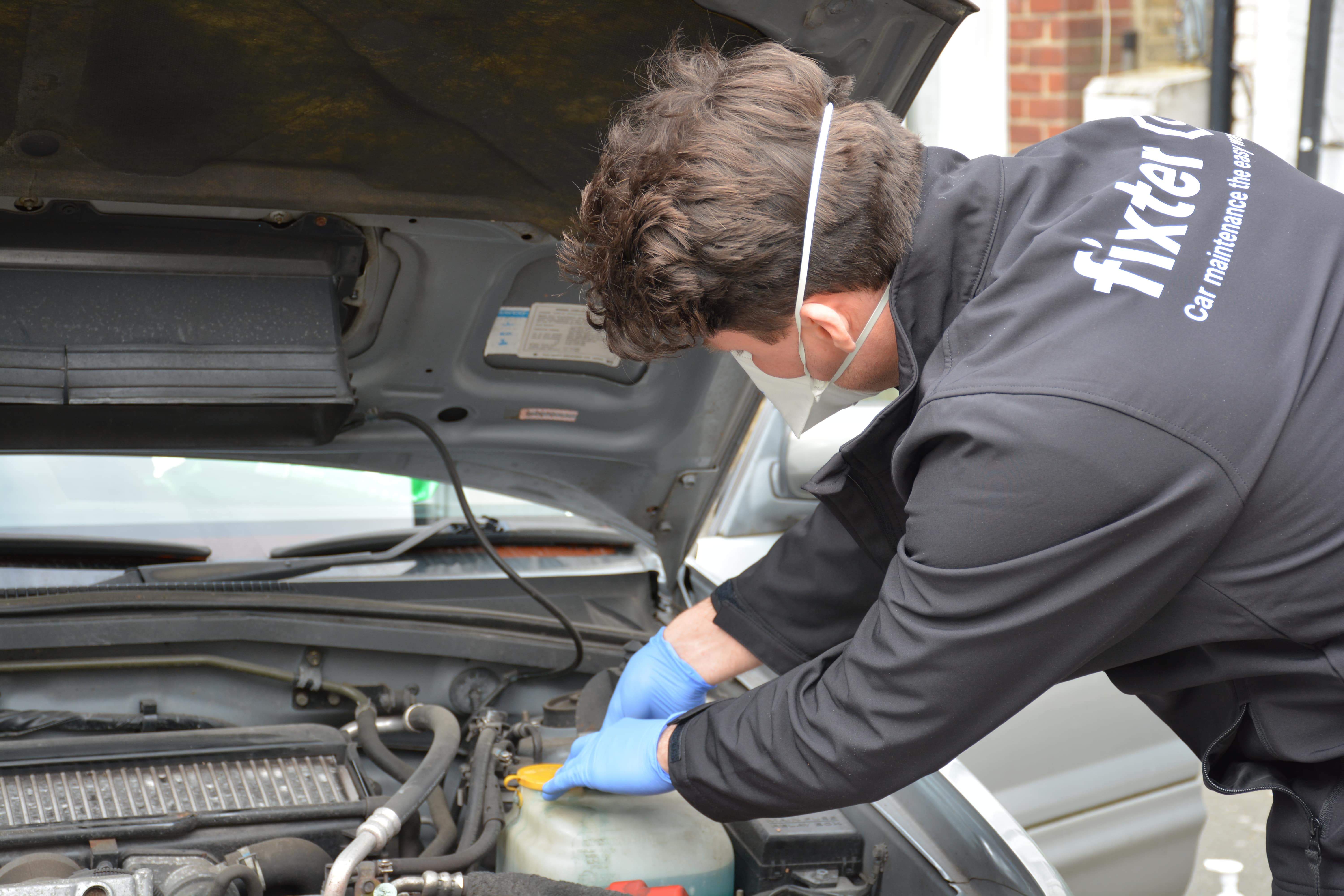
Your car’s oil and coolant play a vital role in keeping your engine running smoothly. Checking and topping up your engine oil is quick and straightforward. Lift your bonnet and locate the dipstick. Pull the dipstick out and wipe off all the oil with a cloth. You should notice two marks or grooves on the dipstick, which indicate the minimum and maximum oil levels. When it’s clean, reinsert the dipstick back into its tube, then remove it again. If the oil level is halfway between the minimum and maximum markers you don’t need to add any oil. If it’s below halfway, you should add some engine oil. If it’s below the minimum level mark, you will definitely need to top-up your oil.
 

2.     Check our coolant level
 
With restrictions due to be lifted in time for summer, it’s important that you check your engine coolant levels. Coolant prevents your engine from overheating in hot weather and freezing in colder weather. It’s stored in a clear plastic container usually located near the radiator. There will be a mark or sticker on the container to indicate the correct fluid level. Top-up the fluid to ensure it remains at the correct level.

3.     Top up your windscreen washer fluid

This is a simple DIY check. The reserve is usually close to the top of the engine and is often marked with a windscreen wiper icon. If you can see that the fluid level is low, top it up, based on the manufacturer’s recommended dilution where applicable.

4.     Check your battery health

If over lockdown you’ve only been doing very short trips in your car, or haven’t driven at all for several weeks, your battery may have gone flat as it won’t have been able to recharge over longer trips. As soon as it is safe to do so, we recommend going for a longer drive, at least 30 minutes, to make sure the battery has a chance to recharge. If you’re having trouble starting your car for the first time in a while, you may need to jump start the vehicle to get it going so that you can drive and recharge the battery. If possible, trickle charge the car’s battery overnight.

It's also a good idea to visually inspect the battery terminals, making sure they’re secure and corrosion-free. If your car has been sat idle, particularly in damp conditions, the terminals may have rusted which could affect the power supply to and from your car’s battery.

5.     Check your tyres

Due to less use, your tyres could have deflated or even developed cracks. Before you set off, check your tyres (including the spare) for any splits, holes or tears. Look for any glass or nails that could cause a puncture or tear in the future.

Next, check the depth of tread on each tyre. In the UK and Europe, the legal minimum tread depth for cars is 1.6mm. The tread must meet this minimum across its entire circumference. The easiest way to verify whether your tyres have a deep enough tread is to use a 20p coin. Place the coin in the main tread grooves of your tyre. If you can see the outer band of the coin face at any point this is an indication that the tyre is likely to be below the legal limit so you should arrange a professional inspection by a mechanic.

6.     Check your tyre pressures

Ensure that your tyres are inflated to the recommended pressures by checking the guidelines in your car’s handbook or on the panel inside the driver’s door. You can check tyre pressure using a handheld tyre pressure gauge, or if you don’t have one of those handy you can check and top up your pressure at most petrol stations.

7.     Check your brakes

It’s important to always keep your brakes in tip-top condition, as they are arguably the most important safety feature in your car. When a car has been left standing for long periods, as it may have been during lockdown, issues can arise with your brakes.

Sticking brakes are a common problem if a car has not been used for a while. Most cars use disc brakes, which include brake pads, rotors, and calipers. Over time, particularly if your car has seen little usage recently, parts of your brakes can become rusty. As the surfaces will be covered in a light coating of corrosion, you'll notice a sticky sensation in your brakes and a grinding or squealing noise.

This soon clears away as you drive, but remember that your brakes won’t be fully effective until the surface corrosion has worn away, so drive cautiously until your brakes return to normal. If the noises and sticking sensation continues your brake pads or discs may need replacing, so should be inspected by a mechanic.

8.     Check your fuel level

Cars parked for an extended period of time can suffer from moisture gathering in an empty fuel tank. This can cause rust to build up inside it. To get round this, simply fill up the tank completely, or even add a stabiliser fluid to keep it fresh.

9.     Check your car’s exterior

While sitting on a driveway or on the road, it is likely that leaves or debris might have gotten stuck on the outside of your car. Before setting off, it is worth checking air intakes on the front bumper, as well as the lower part of the windscreen to remove anything getting in the way.

10.  Try the car’s doors and handles

While many cars won’t have been used much at all, others might have just had one user in the form of a keyworker. Either way, you should check all of your car’s doors, including the boot, and lubricate locks and moving parts where necessary.

Lastly, in case your car lets you down on one of your initial journeys, it is a good idea to pack a fully charged mobile phone, phone charger, jacket, blanket, snacks, breakdown cover details, torch, and ideally a high-vis vest and warning triangle. 

Fixter’s tech-led approach makes car maintenance as easy as ordering a takeaway, allowing car owners to book MOTs, servicing and repairs within minutes, as well as get an instant quote, using a laptop or smartphone. They also offer a contact-free service, with convenient thirty-minute time slots for delivery and collection and live text updates.

Taking the hassle out of car ownership, the award-winning firm employs in-house technicians who liaise directly with its high-quality garage network for service and repair quotes and approvals, so that there are no nasty surprises. At the same time, in these uncertain economic times, Fixter offers the potential to save up to 30% compared to typical franchised dealer costs. Their approach is clearly working, given the company’s very positive 4.6 out of five stars on Google Reviews and 4.4 out of five stars on Trustpilot. 

Bentley Motors has celebrated the 200,000th luxury car built in the company’s illustrious 100-year-plus history. The Bentayga Hybrid, destined for a Chinese customer, met the oldest surviving Bentley, EXP 2, and a number of long serving colleagues, as it rolled off the production line at the home of Bentley in Crewe, in Staffordshire. This crowns an extraordinary 20-year period in which the success driven by modern day models such as the Continental GT and Bentayga has truly changed the face of Bentley Motors.   

The manufacturing milestone is even more remarkable when considered that the 200,000th car is the latest in 155,582 vehicles built at Crewe since 2003 – the breakthrough year the Continental GT was originally launched as the first model of the modern Bentley era. Today, Bentley is building 85 cars per day, the same output in one month two decades ago.

In comparison to Bentley’s modern era, in the year of Bentley’s first existence, 1919, through to 2002, the company built 44,418 luxury cars – 38,933 of them in Crewe. Among that total were many iconic models of their time, including the Bentley Blower, the R-Type Continental, Mulsanne, Arnage and Azure. Incredibly, records show that 84 per cent of all cars built for the UK market are still on the road today.

A major investment programme at the Crewe factory since 2003 has gone hand-in-hand with the success of the Bentley Continental GT, the definitive luxury Grand Tourer. The 80,000th individual, made-to-order example was built in January this year. Bentley’s Chairman and Chief Executive, Adrian Hallmark, comments: “This production of the 200,000th car is just the latest landmark on the extraordinary journey that Bentley has been travelling since its foundation in 1919. In 2003 the introduction of the Continental GT represented a transformative moment for the brand, and this Bentley alone, has represented 80,000 sales of our total 200,000, and created both a new segment, and a contemporary image foundation for the Bentley business.

“The pace of progress has accelerated significantly since 2003 and we are now entering the next period of transformation as we pursue our Beyond100 strategy, with the aim of positioning Bentley as the global leader in sustainable luxury mobility.” To witness the landmark moment, the Bentayga Hybrid and EXP 2, were joined by Bentley’s longest serving colleagues, including Steve Ward, who joined in 1977, and followed in his father’s footsteps, his own Bentley career beginning 42 years earlier.           

In his role as Whole Vehicle Analysis Engineer, Steve has had an active involvement with every Bentley model since 1980 and has tested them throughout the world, witnessing first-hand the transformation in modern-day Bentley cars. The Continental GT is the ultimate in high-speed luxury and remains the benchmark in its sector. This week (March 23) also saw a new Continental GT revealed – the most capable, performance-focused Bentley yet, the Continental GT Speed offers no compromise to comfort or luxury.

The success of the Continental GT has been mirrored by the Bentayga, offering a true Bentley driving experience and unparalleled luxury. Launched in 2015, when it established the luxury SUV sector, the fastest SUV in the world has reached its 25,000 production landmark. It is expected that the Bentayga could surpass total sales of the Continental GT within a decade and become the biggest selling Bentley model in history.

Since 2005, the company has also built 40,000 examples of the Flying Spur, the most successful luxury sports saloon in the world. Looking to the future, the ambitious plans Bentley Motors has for car production were outlined in November 2020, with its ground-breaking Beyond100 strategy. The company aims to be end-to-end carbon neutral by 2030, with the Crewe factory climate positive thereafter.

Bentley will move to full electrification – PHEV or BEV only – by 2026, then switch the entire model range to battery electric vehicles by 2030. The industry-leading Beyond100 Strategy will transform every aspect of the business as Bentley accelerates into its second century of luxury car production.

Birmingham City Council has partnered with Motorpoint to offer people working in the Clean Air Zone the chance to scrap their old car and receive £2,000 credit towards a vehicle that meets the zone’s emission standards or a mobility credit. Following a lengthy tender process, the dealership, which has branches in Aston and Oldbury, has been appointed to deliver the Clean Air Zone’s Scrappage and Mobility Scheme using £10 million Government funding.

Motorpoint is the UK’s largest independent car retailer selling nearly-new cars up to four years old and with less than 30,000 miles. Every vehicle comes with a manufacturer’s warranty and is backed by the Motorpoint Price Promise which means they will refund the difference if the same vehicle is found cheaper from a competitor within seven days of order.

The Clean Air Zone Scrappage and Travel Scheme enables people who work in the zone and who earn less than £30,000p.a. to scrap a vehicle that would be subject to the daily fee from 1 June 2021. In exchange, they will receive £2,000 credit towards a compliant vehicle from Motorpoint or £2,000 in a ‘mobility’ credit to use on public transport via Swift Card with Transport for West Midlands.

Stephen Arnold, Head of the Clean Air Zone, said: “We have had a high number of workers who have registered an interest the Scrappage and Mobility Scheme so we know today’s announcement will spark huge excitement amongst city centre workers. Motorpoint has a huge fleet to choose from, all of which will meet Clean Air Zone emission standards.

“We are continuing to take expressions of interest in the scheme through the Brum Breathes website and we expect to be able to accept full applications shortly. In the meantime, we are encouraging city centre workers who may qualify for this scheme to also apply for a temporary exemption permit so that their existing vehicle will not be subject to the charge when the zone launches on 1 June this year.”

The Scrappage and Travel Scheme will be open to people who have been the registered keeper of a vehicle that does not meet the emission standards for the Clean Air Zone so would be subject to the daily fee, work for at least 18 hours a week at premises within the Clean Air Zone boundary and who earn less than £30,000 a year. They must have been the registered keeper of the vehicle since 10 September 2018.

Kevin Cartwright, General Manager of Motorpoint Birmingham and Oldbury, said: “We are proud to have been given the opportunity to support the Clean Air Zone’s Scrappage and Mobility Scheme and through it help play our part in reducing the level of nitrogen dioxide emissions in Birmingham. Motorpoint has thousands of low mileage, nearly new, Clean Air Zone compliant vehicles in stock to ensure there is something to suit all tastes and budgets, and all are available with our same day driveaway service, which means customers can choose, buy and drive away in just over an hour from either our Birmingham or Oldbury stores.”

Applications for the scheme are expected to open prior to the Clean Air Zone launching on 1 June 2021. Those who have registered an expression of interest through the Brum Breathes website will be first to be notified of the scheme launching.

Birmingham Airport has achieved ISO 45001 certification following a successful assessment of its occupational health & safety management system by the globally recognised certification body, Lloyd’s Register. 

ISO 45001:2018 is the international standard for Occupational Health and Safety (OH&S) Management Systems. It has been designed to provide companies with a framework that elevates the importance of OH&S on the corporate agenda. It aims to improve employee safety, reduce workplace risks and accommodate health and safety challenges.  

The airport’s ISO 45001 certification scope covers the terminal operations, including security, cleaning and facilities management, and supports its commitment to providing a safe and secure work and operational environment for all who use the facility. 

Simon Toseland, Head of Health, Safety and Fire at Birmingham Airport, said: “We are all tremendously proud to achieve the ISO 45001 certification. It demonstrates the commitment to our ‘Safety Culture Excellence’ vision to provide the safest possible environment for our employees, passengers and all other persons who visit the airport. 

“It was important that we chose a certification body who has a strong working knowledge of our industry and who were going to challenge our OH&S Management System as we strive for year on year continual improvement. Working with Lloyd’s Register throughout this process has been an extremely positive experience; they really took the time to understand the unique risk factors of our complex operation as well being able to competently liaise with our teams at all levels”. 

Senior Auditor at Lloyd's Register, Pam Phillips,  added: “Throughout the certification process, Birmingham Airport demonstrated a great level of commitment and engagement that makes their achievement even more important. The whole team involved was very enthusiastic, knowledgeable about their management system and understood well their roles and responsibilities. LR is looking forward to supporting Birmingham Airport through our services in the future”. 

Birmingham Airport is the UK’s third largest airport outside London and supports employment on site for 7000 people. Prior to the COVID pandemic, some 13 million passengers travelled through the airport annually, and as it prepares for the restart of travel once restrictions are lifted, health and safety will be front and centre of its plans.    

Almost 13 million mobile phone and broadband customers will next week see their bills rise in the middle of their contract by 4.5%, reveals research by Uswitch.com, the comparison and switching service.

The mid-contract price rise will cost consumers an extra £11 million a month, but none of them will be able to walk away from these increases without paying a penalty. Ofcom rules say that customers must be given one month’s notice of any rise in the monthly fee, and allowed to exit the contract without penalty. However, telecoms companies use a loophole in this rule by writing yearly increases into contracts and communicating it to customers when they sign up.

BT, EE, Three and Vodafone now increase their prices every year for most customers by the rate of inflation (CPI) plus 3.9%, while others, such as O2 increase prices by the rate of inflation (RPI). Since this increase is written in their contracts, more than two fifths of mobile (43%) and almost one in ten (9%) broadband customers are unable to leave penalty-free.

Table: Broadband price rises

Provider

Price rise

Takes effect

Can you cancel penalty free?

BT

Up to 4.5%

31 March

No

Plusnet

Up to 4.5%

1st June

No

Sky

Capped at £6 a month

1st April

Yes

TalkTalk

Up to £36 per year

1st April

Yes

Virgin Media

Up to £54 per year

1st March

Yes

Source: Uswitch.com, data correct as at 23/3/21

Table: Mobile price rises

Provider

Price rise

Takes effect

Can you cancel penalty free?

BT

Up to 4.5%

31 March

No

EE

Up to 4.5%

31 March

No

O2

1.4%

April bill

No

Three

Up to 4.5%

April bill

No

Vodafone

Up to 4.5%

April bill

No

Inflation is currently low, with the December figure (CPI) used to calculate most of the spring price rises standing at 0.6%. However, if inflation rose to 3% — as it did as recently as 2018 — it would mean bills increasing by a massive 6.9%, equal to £16 extra a year for someone on a £20-a-month contract.

Uswitch.com experts question the need for mid-contract price rises, as there are none in the fixed tariffs offered by the energy and insurance markets. And while customers once had a choice to switch to providers that didn’t impose such increases, in recent years the main players in the market have all brought in similar policies. 

Uswitch.com is calling for the industry watchdog Ofcom to act to give consumers the option of exiting their contract without penalty and avoid any price rises, establishing the principle that a fixed length contract comes with a fixed price.

Richard Neudegg, head of regulation at Uswitch.com, comments: “Millions of mobile phone and broadband customers are being hit by mid-contract price rises of 4.5% at a time when inflation is below 1%.

“Ofcom’s rules were supposed to allow consumers to leave their deal penalty-free if their bills go up, but providers have got around this by writing these increases into customers’ deals. Given the majority of telecoms providers are now using this tactic to prevent their customers from freely walking away from their contracts when prices go up, consumers have little choice but to accept this practice, taking a gamble on where future inflation rates will land. 

“Now is the moment the regulator needs to step in and stamp out this loophole. What’s frustrating for customers is that in other sectors, such as energy and insurance, the price you sign up for doesn't increase until the deal ends - it’s a case of fixed price as well as fixed term. There really is no special case for this to be different in telecoms.”

Switching to a water meter or tapping into financial support from water companies’ social tariff schemes could help millions of low-income households stay afloat ahead of a wave of April bill rises. 

The Consumer Council for Water (CCW) is urging people that have been hit in the pocket during Covid-19 to join more than a million customers who are already receiving ongoing financial help from their water company.

Water is one of the few household bills set to fall on average from 1 April by about £2 but consumers still face many other soaring costs including energy, council tax, mobile phones, broadband and TV licences. 

Not everyone will also see their water and sewerage charges fall with changes to bills depending on a host of factors including where people live, whether or not they are metered and other individual circumstances. 

That’s why CCW wants customers on a low income to dip into the pool of help on offer from their water company with social tariff schemes, payment breaks or switching to a water meter just some of the options available. 

Senior Policy Manager Andy White said: “Covid-19 has hit millions of people in the pocket which makes the prospect of some significant bill rises in April even harder to swallow.”

“Water is often overlooked when it comes to saving money but whether it’s trialling the benefits of a water meter or seeing if you’re eligible for your supplier’s social tariff – there’s the potential to slash hundreds of pounds of your water bill.” 

Sign up to a social tariff – average saving typically £150

Every water company in England and Wales has a social tariff scheme that caps the bills of low-income customers who meet the eligibility criteria. Each scheme and the support it provides is different but CCW has a guide to these tariffs on its website. Bills can be reduced by as much as 90 per cent in some instances. 

Cap your bills with WaterSure – average saving £270

WaterSure is also offered by all companies in England and Wales. It limits metered bills for low income, high water users to – at most – the average bill for the region. Customers qualify for help through this scheme if they are metered; in receipt of certain welfare benefits and are receiving child benefit for three or more children under the age of 19 or have someone living at the property with a medical condition requiring high water use.

Trial a water meter – average saving £200

For smaller households - even those having to spend more time at home during lockdown - one of the most effective ways to cut their bill remains switching to a water meter. Water companies usually give customers two years to trial the benefits and return to unmetered charges if they’re unhappy – unless you live in parts of the south of England where metering is becoming compulsory. 

Over the past year more than 220,000 people have used CCW’s free water meter calculator to see if they might save money by switching – clocking up savings totalling £14 million. 

Give your finances a break with a payment holiday

Customers who just need some breathing room with bills might want to consider joining almost 100,000 households who have already taken a payment break since the outbreak of Covid-19.

News Direct and Media OutReach - two newswires that are revolutionizing the news distribution industry with advances in technology, analytics, security and workflow - have entered into a reciprocal press release distribution arrangement covering the United States and Asia Pacific region.

Media OutReach clients will benefit from News Direct's full-fledged access to The Associated Press distribution network in the US, which includes the nation's leading newspapers, magazines, radio and television stations, and online sites. Additionally, releases are posted to AP's popular app and apnews.com, the news agency's heavily trafficked consumer-facing site.

News Direct's geographic distribution capabilities are supplemented by its robust industry-specific reach, allowing for highly relevant targeting. Trade sector and consumer-focused lists are refreshed with each use for maximum effectiveness. The partnership also allows Media OutReach clients to issue multimedia such as infographics, videos and images as independent assets in line with journalistic preferences. As a confirmation of ROI, clients receive a robust Performance Report that includes postings on major portals including Yahoo! Finance and MarketWatch.

Media OutReach is the first global newswire founded in Asia Pacific and has a unique, in-depth understanding of the media landscape in the region. Its success has been driven by its technology-led distribution platform with an unrivalled Asia Pacific network, comprehensive database and precise editorial targeting capabilities which has proven to be highly-effective for PR professionals to reach out to journalists and editors - including influencers in their target media and countries. Through this partnership, News Direct's clients can expand their reach and build direct connections with journalists in the region.

Additionally, News Direct clients can leverage Media OutReach's extensive media partnerships which guarantee online postings. As such, they will see their stories posted on leading news portals such as SINA, Viet Nam News and AsiaOne among others, further enhancing their exposure in Asia Pacific.

News Direct clients will have access to the Media OutReach automated post release reports which provide qualitative and quantitative performance metrics. Importantly, this includes access to the proprietary Media and Journalist Insights dashboard, which provides insights such as the interaction between journalists and the press release including story open rates by publication, by country and eventual write ups.

"News Direct aims to differentiate itself in many ways," noted founder and CEO Gregg Castano. " but above all we want to be known for the unrivalled quality of our distribution network. We are proud to partner with Media OutReach, which has earned its reputation as Asia's most innovative and dynamic distribution service."

Jennifer Kok, founder and CEO of Media OutReach said, "This partnership enhances our USA distribution capabilities and customers can now distribute their news release and multimedia through its leading-edge delivery platform in America. Overall, this adds further strength to Media OutReach's global distribution network, and we are pleased to be working with News Direct.

The team at News Direct are industry veterans, many of whom are formerly from Business Wire and have built on their expertise to create an exceptionally strong distribution platform and service."

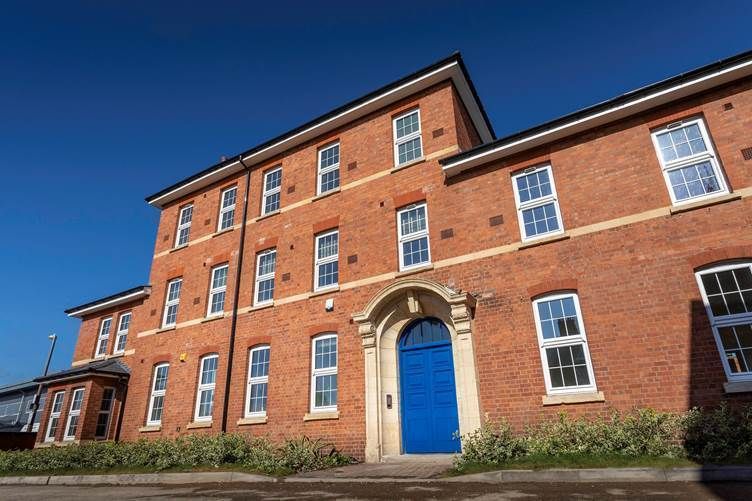
Lovell Homes’ Station House development in Stourbridge, in the West Midlands, has almost sold due to high demand, with its final apartment remaining. The former police station was recently renovated into 31 ‘one-of-a-kind’ one and two-bedroom apartments, including unique mezzanine and penthouse apartments.

With just the final mezzanine apartment available released at £275,000, homeowners are being encouraged to act quickly. Situated on New Road, the site has stood for more than a century and was the police base for decades in the town.

Part of the building dates back to 1885, when it was built as the County Police Station, replacing an earlier court and jail. The main police station, now known as Constable House, was built in 1911 as the headquarters of the Worcestershire County Constabulary and the Magistrates Court, including on-site police cells, highlighting the historic and important role of Stourbridge at that time.

Victoria House was formerly an accommodation block for officers, which featured a bar, lounge and pool room where they could unwind. Wendy House, the newest building on the site, formerly housed office accommodation. Both of these buildings are believed to date from the 1930s.

Stourbridge’s police station closed its doors in 2017 and was purchased by Lovell in 2018 and construction work commenced in 2019. The sales launch took place early last year and the first residents moved to their brand-new apartment in November 2020.

Trish Foster, regional sales director at Lovell, said: “We’re thrilled at how successful Station House has been since its launch. Despite the backdrop of the current pandemic, the homes at Station House have proven exceptionally popular, with almost 40% of the development selling out during the first lockdown alone.

“It’s been wonderful to bring a new lease of life to this historic building and restore its stunning police station features. We hope the new residents enjoy their lives within this remarkable development and feel proud to call it home.”

The development’s stylish homes have been built with many of the original police station features from the 1900s remaining, including the striking external blue doors and stunning ceiling of the old courtroom, in keeping with the main, historic character of Stourbridge’s town centre. Former police cells have even been converted into apartments, creating one-of-a-kind properties that offer the very best in modern and flexible living. 

Perfectly situated in the heart of Stourbridge, the development is surrounded by amenities including supermarkets and Merry Hill shopping centre, home to major high street shops, restaurants and more.

Stourbridge is in good proximity to Birmingham, Dudley and Wolverhampton, with excellent transport links and a nearby train station making Station House ideal for commuters.

Station House’s marketing suite is now closed and private appointments must be arranged.

Two new schemes are being launched to encourage more diversity at board level in the West Midlands.

One scheme will offer people from underrepresented backgrounds a chance to learn the skills needed to successfully secure a position on a board or committee of an organisation; the other will support local professional services firms to develop more diverse talent for their business. The projects aim is to equip more people from underrepresented groups to apply for board-level opportunities and, at the same time, encourage boards and recruiters to consider these applicants more seriously by demonstrating the value that these candidates could add.

The two projects are being run by the West Midlands Leadership Commission, which was set up by the West Midlands Combined Authority (WMCA) in 2017, to help people from under-represented parts of society make it to the top of the career ladder.  Back in September the WMCA Board endorsed a renewal of the Commission’s activity following the influence of Black Lives Matter and the unequal impact the coronavirus pandemic has had on some communities.

This new phase of the Leadership Commission activity is being co-chaired by Anita Bhalla OBE and Professor Kiran Trehan. Anita who was awarded an OBE in 2009 for services to broadcasting and communities said: “The Leadership Commission worked for 18 months to interrogate the makeup of leadership in the West Midlands and evidence the barriers underrepresented groups, such as women and ethnic minority communities, face to reaching top positions.

“Our findings report ‘Leaders Like You’ set out the data and recommendations for the whole region, some of which have been taken forward. However, there are still huge inequalities to tackle and our next task as the Commission will be to take action that really focuses on getting more people onto boards.” The training scheme, called Get Board Ready opend to applicants on March 19 and will focus on the skills, knowledge and experience needed to apply for public appointments, and provide the successful cohort with training on how to apply and be interviewed for board level positions.

A workshop will give them the potential to be appointees with extra know-how and practical experience needed to clinch a position. The project aims to help achieve the Government’s aim that by 2022, 50% of public appointees should be women and 14% should be from ethnic minority backgrounds.

Meanwhile Professor Kiran Trehan, pro-vice chancellor at York University and director of the University of Birmingham’s Centre for Enterprise, Leadership and Diversity is working with businesses in the professional services sector to help make the leadership of their firms more inclusive and build pipelines to develop diverse talent within their organisations. The professional services are being targeted as they are a key sector for the region and the WMCA is participating alongside these firms.

The Leadership Commission was established by Andy Street, Mayor of the West Midlands and the WMCA Board in 2017 to investigate why the diverse makeup of the region’s population is not reflected at leadership levels. The Mayor said: “The West Midlands has a really diverse population, but we’re finding that this diversity isn’t being displayed at leadership level.

“This is a problem for boards and businesses, who are not connecting to talent that could help them to thrive, as well as for our communities, who are missing that representation and seat at the table. So the Leadership Commission is setting out to help rectify this situation by opening up routes to these top positions, and I am pleased we have been able to launch these two new schemes to help achieve that.”

Councillor Brigid Jones, who is the WMCA portfolio lead member for inclusive communities and deputy leader at Birmingham City Council, said: “It is vital that the diversity of our communities is represented in leadership roles.

“People need to have leaders who look like them and speak up about the things that matter most to them, and our region’s young population needs to know that these aren’t roles that are shut off to them; they are roles for them. These schemes have been devised by the Leadership Commission to open up opportunities and develop aspirations of all people across the West Midlands.”

Applications for the workshop in applying for public appointments will open on 19 March and close late April, with the workshop taking place in early June.

The British Army is set to be reduced by about 10,000 soldiers as part of a move towards robots, drones, and cyber warfare.

The defence review is likely to see the loss of some tanks and aircraft - but the government said there would be more ships, submarines and sailors. Numbers in the regular Army will be reduced to about 70,000 soldiers, having already fallen in recent years.

The UK’s Defence Secretary, Ben Wallace, will make a statement in the Commons aster saying he was making decisions in the context of an increased defence budget. There were 80,010 soldiers in the UK's regular Army in January 2021, latest figures showed, down from 86,080 in October 2015.

Labour responded by saying the number of soldiers was being cut despite an increase in threats facing the UK. The latest reduction in the number of soldiers could be made through natural movement, with those who leave the service not replaced by new recruits.

As part of the military restructure, the Royal Marines will be transformed into a new Future Commando Force, taking on many of the traditional tasks of the special forces - the SAS and SBS. The force will receive more than £200m of direct investment over the next decade to carry out maritime security operations and to pre-empt and deter sub-threshold activity, and counter state threats.

Following the publication last week of the separate so-called integrated review of foreign and defence policy, ministers have said big changes are necessary to create a more agile military. As part of that review, the government increased the cap on UK nuclear warheads from 180 to 260.

Firms across the Greater Birmingham have shown an “indomitable sprit” in the face of the grave crisis caused by the Covid-19 crisis, a new survey reveals today. The Greater Birmingham Chambers of Commerce (GBCC) first quarterly business report of 2021 shows renewed optimism after the Prime Minister’s Roadmap to Recovery set out a blueprint for recovery.

GBCC chief executive Paul Faulkner says Boris Johnson’s assurances seemed to translate into greater levels of business confidence among firms in the region. He added: “Both profitability and turnover projections were the highest we’ve seen in 12 months. Elsewhere, it was a mixed bag – domestic and international sales saw a minor upturn but still remain in negative territory.

“Hiring levels picked up markedly. However, unsurprisingly, capex and training investment remains sluggish. The majority of firms continue to experience severe problems related to cash flow levels and we also saw a noticeable increase in the number of firms that are under pressure to raise their prices as the dual forces of Covid-19 and Brexit continue to bite.”

Domestic demand balance rose by five points to 47 but remained short of returning to positive territory as businesses attempted to adapt to latest nationwide restrictions. Across the board, 33 per cent reported an uplift in domestic sales – up from the 28 per cent listed in Q4; 27 per cent reported that their UK sales remained constant for the second consecutive quarter, whereas 40 per cent witnessed a drop in domestic demand (down from the 45 per cent noted in Q4).

Contrasting trends emerged from the two individual sectors. For the second consecutive quarter, the manufacturing balance for UK sales recorded a fall – this time by four points to 44. The service sector balance went up by seven points to 48 with a notable increase in the number of service firms recording an increase in domestic output (up from 27 per cent to 35 per cent in the current quarter).

The domestic orders balance score returned to positive territory for the first time in 12 months, reflecting the positivity generated by the Government’s announcements. Export sales across manufacturing and professional services combined rose for the second consecutive quarter.

However the overall balance score remained just shy of positive territory. In total, 30 per cent of businesses in both sectors reported an increase in international sales – an uplift of eight per cent compared to Q4. This offset the rise of firms in both sectors which recorded a drop in export sales (up from 29 per cent to 32 per cent) which lead to the overall balance score going up two points for 47 to 49. Again, differing trends emerged in the two sectors.

The service sector balance fell by one point to 47 because 33 per cent of service firms witnessed a fall in overseas sales (up from 29 per cent in Q4). The manufacturing balance made a welcome return to positive terrain for the first time since the start of last year; 37 per cent of manufacturers noted increased export sales over the last three months (compared to 19 per cent at the end of 2020) which meant the balance score went up from 46 to 53.

Professor Julian Beer, Deputy Vice-Chancellor of Birmingham City University, who sponsor the report, said: “The figures for the first quarter of 2021 represent a significant upside surprise. In spite of the imposition of a national lockdown, the figures actually represent a broad-based improvement on Q4 of 2020.

“This is quite remarkable given the enormous challenges created by both the lockdown itself and the impact of school closures on employees. It will be interesting to see the extent to which this is mirrored in national GDP data when they become available.

“Looking forward, it seems likely that we will see a significant recovery in activity moving forward into the second and third quarters of the year, which is cause for optimism after an extremely difficult year.”

Housebuilders Countryside and Taylor Wimpey have been told to change their leasehold contract terms by the UK competition watchdog or face legal action.

The Competition and Markets Authority (CMA) said the unfair terms, which double ground every 10 to 15 years, trap people. It said the contract means people can struggle to sell or mortgage homes. The builders said they had already taken steps that address the issue.

The CMA said it had concerns that the clauses in the contracts may break consumer protection law. They must be removed and not used again, it said.

CMA chief executive Andrea Coscelli said: "These ground rent terms can make it impossible for people to sell or get a mortgage on their homes, meaning that they find themselves trapped. This is unacceptable. Countryside and Taylor Wimpey must entirely remove all these terms from existing contracts to make sure that they are on the right side of the law."

He added: "If these developers do not address our concerns, we will take further action, including through the courts, if necessary." The watchdog is also looking into Barratt Developments and Persimmon Homes contracts.

Campaigners have called for leaseholds to be banned on new builds, and the government has said previously it would work to end the practice. Housing Secretary Robert Jenrick said unfair practices, including crippling ground rents, have no place in our housing market.

"This behaviour must end and I look forward to appropriate redress being forthcoming for leaseholders," he added. Taylor Wimpey said: "We will continue to cooperate with the CMA and work with them to find a satisfactory resolution, within the required timescale."

The housebuilder added that it stopped selling leases that doubled ground rent every ten years on new developments from 1 January 2012. In 2017 it launched a voluntary help scheme that covers the cost of converting terms so ground rents are linked to rises in the retail price index (RPI) measure of inflation and set aside £130m to cover the cost of lease conversions.

The company said that a significant number of Taylor Wimpey customers have already used this scheme and it remains open. Countryside said it had sold no properties with doubling ground rent clauses since 2017 and that it had an assistance scheme for people who charges doubled more than every 20 years. It said it would continue to engage constructively with the CMA to resolve this complex issue.

The National Leasehold Campaign (NLC), which wants to abolish new-build leasehold, said that Taylor Wimpey and Countrywide were two of the worst offenders in the leasehold scandal. NLC founder Katie Kendrick said the campaign was delighted with the CMA's stance.

However, she said that ground rents are only one of the ways for freehold investors to make money at the expense of leaseholders. "Leaseholders are navigating a feudal system that is stacked against them,” she said, “with rip-off permission fees, escalating service charges and, for many new build estates, estate management fees. The big developers could do more to provide redress for the systematic mis-selling of leasehold homes; they choose not to".

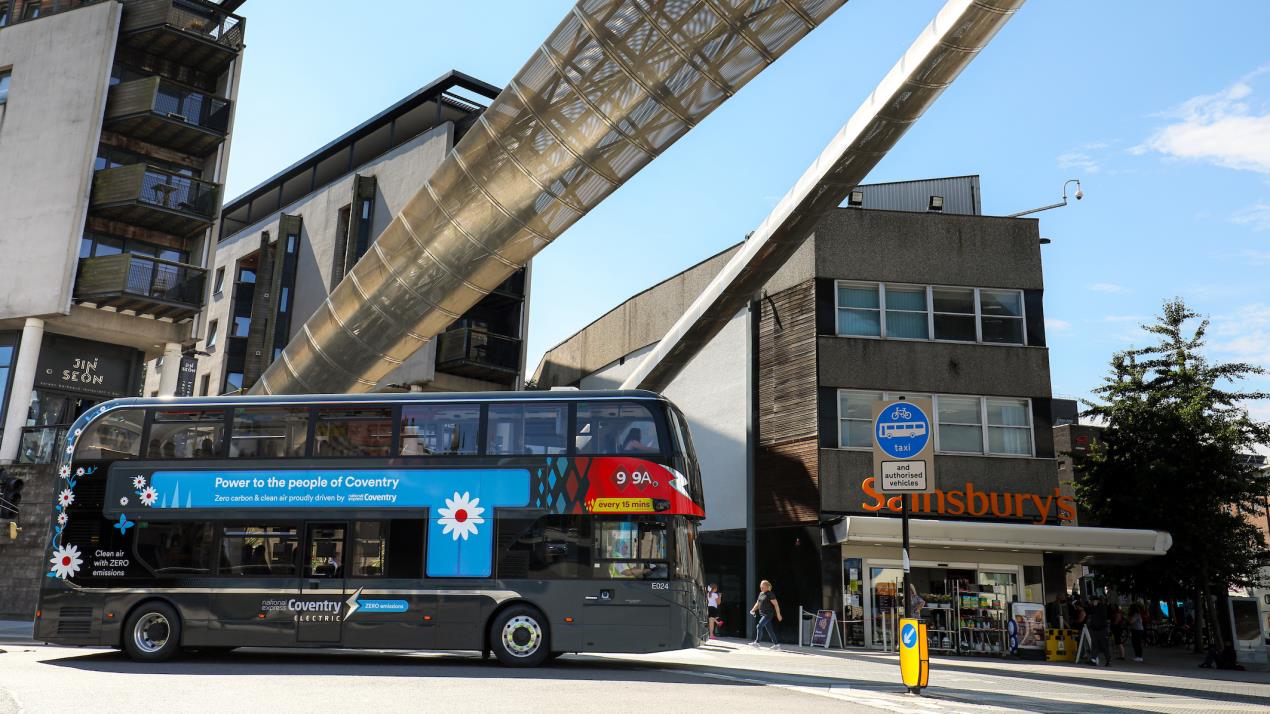
Pollution-busting plans for Coventry to become the UK’s first All Electric Bus City have been backed by the West Midlands Combined Authority (WMCA) leaders today.

Under the ground-breaking project, every bus in the city of Coventry will be electric powered by 2025, leading to improved air quality, reduced greenhouse gas emissions and lower running costs. Approval from the WMCA Board means that £50 million Department for Transport (DfT) funding will now be handed to the region to deliver the project.

Transport for West Midlands (TfWM), which is part of the WMCA, will work with bus operators to replace buses and install charging infrastructure on the streets of Coventry. This includes pantograph, or overhead, charging points which will be available to all bus operators. Mayor of the West Midlands Andy Street, who chairs the WMCA, said: “It took a lot of lobbying and persuading, but I am delighted we won the Government’s national competition to turn Coventry’s bus fleet all electric.

“It was great to welcome the Prime Minister to Coventry this week to talk about our all-electric plans, and crucially today’s confirmation by the WMCA board now unlocks his Government’s £50 million investment, meaning we can get on with rolling out the clean, green, electric buses onto the city’s roads. Not only will the clean bus fleet improve the public transport offering in Coventry, but it is also another step towards tackling the climate emergency and helping to attract people to leave their cars at home in favour of taking the bus.

“This is a great time for bus users in Coventry, with our newly refurbished Pool Meadow bus station, the trial of West Midlands On Demand buses serving the University of Warwick campus, as well our wider investment in fare-capping and better value fares, bus priority measures, real-time travel information and on board facilities like wi-fi and USB charging. It is a bus revolution here in the West Midlands, and Coventry is right at the heart of it.”

Transport Minister, Baroness Vere, said:  “Our £50m investment will see Coventry’s entire fleet of buses replaced with new, all-electric vehicles. This will have a profoundly positive effect on air quality and emissions in the area and reduce noise pollution. This Government is committed to decarbonising the transport network across the UK, as we build back greener and strive to achieve net zero by 2050.”

Councillor Jim O’Boyle, cabinet member for jobs and regeneration at Coventry City Council, said: “We have finally got this over the line after we were able to convince the government that this city is the ideal location and this will make a major dent in addressing air pollution.

“We already have a range of schemes to improve air quality and this will help exceed our targets. We have great working relations with bus companies in the city and these are exciting times for all of us. The hard work starts now.” TfWM will lead the project in partnership with Coventry City Council, Warwickshire County Council and local bus operators – who are together paying 25% of the added costs of electric vehicles over diesel and charging infrastructure.

This is a major project for bus operators across Coventry, and attracts significant investment from them to replace every bus in their fleet within five years. Operators, including National Express Coventry, which launched 10 electric buses in service last summer, and Stagecoach, will also ensure the new buses offer customers the best in on-board comfort and technology, as well as being good for the environment. 

The clean air benefits will be felt beyond the city boundary, as many services which start or finish in Coventry serve Warwickshire, Solihull, Birmingham, Rugby and Leicester. This will support the #WM2041 target for the region to be net-zero carbon within two decades

Coventry was selected to be the UK’s first All Electric Bus City following a successful bid to the DfT. Applicants were required to demonstrate support from stakeholders in their local areas, outline existing plans to reduce greenhouse gases and improve air quality, and show how the plan would tackle an existing air quality problem.

This year TfWM is already on target to for buses to be Euro-VI compliant low emission vehicles – but this plan sets the region well on the road towards a zero-emission bus fleet.

Following months of planning and a period of interviews, The Black Pounds Project is thrilled to announce the names of the first Black owned SME businesses in the West Midlands to benefit from the organisation’s free mentorship programme. The Black Pounds Project (BPP), founded by Birmingham playwright CJ Webley in 2020, aims to help Black businesses who have been severely hit and at risk because of COVID-19, continue to contribute to the regional economy.

Sue Bedward founder of Midlands Business Leadership Academy and member of the interview panel said: “In the current climate we are delighted to welcome onboard our first cohort of eight-businesses, who will receive mentoring, coaching, workshops, business support and advice services through the BPP. The high calibre and the diverse range of products and services they offer is exceptional and we look forward to helping them take their businesses to the next level in building capability, capacity and a stronger local economy for the West Midlands, #blackbusinessmatters.” Those announced were amongst thirty businesses to make it to the shortlist.

The West Midlands-based businesses confirmed are: Fiona Morrison, Fegus Designs offering a range of eye catching and vibrant merchandise and art for children, with a strong emphasis on diverse characters; Craig Markham, Bubble Bar a full service bar with a full range of local beers, ciders, wines, guest cocktails, gins and soft drinks served from a vintage caravan; Christianne Lee, Broke and Beautiful UK creating a brand for girls  who want a luxury handbag on a budget and on-trend for each season; Dave Daniels, Ms Tita Coffee a distinct, luxury and hearty coffee brand, born in the Jamaica Blue Mountain region; Ebony Hemmings, Breathe in Media helping businesses to maximise their digital platforms and engage with their audience through social media, video and content marketing; Kenya Mcfarlane, Natju  providing a range of freshly made natural juices, teas and a popular detox programme to suit all budgets; Ayisha Hamilton-Amos, Yeesh LTD a skincare and haircare beauty brand that specialises in naturally sourced products allowing men and women to take back control of what they allow on their skin and crown and Cleo Wright, Cleo’s Kitchen providing tasty healthy, vegan desserts and treats.

Founder CJ Webley said: “This Mentorship scheme will offer access to a pool of professional advisors who are dedicating their services for free to help kick start the businesses for when we come out of lockdown.  Topics covered will include professional development coaching and training in becoming legally and regulatory compliant across all areas and, where necessary, funding to help with digital and branding strategies, marketing materials, set up costs, graphic design and finance management.”


The BPP will support each business over a twelve-month period and, as the project develops, the team will compile a directory of high quality, professional Black owned businesses that everyone can benefit from.

The Black Pounds Project launched its fundraising page in June 2020. For the project to support as many Black businesses as possible during this time, further funding is desperately needed.

The government is to cut grants aimed at encouraging people to buy electric vehicles in a move that has been criticised by the motor industry.

The Department for Transport will reduce the grant from £3,000 to £2,500 and restrict it to cars under £35,000. But Society of Motor Manufacturers and Traders (SMMT) said it is "the wrong move at the wrong time".

It said the decision goes against the government's zero emissions ambitions. SMMT chief executive Mike Hawes said: "This sends the wrong message to the consumer, especially private customers, and to an industry challenged to meet the government's ambition to be a world leader in the transition to zero emission mobility."

The government said that higher-priced vehicles are typically bought by drivers who can afford to switch to electric vehicles without a subsidy. It said the changes will allow funding for the grant to go further.

Transport minister Rachel Maclean said: "We want as many people as possible to be able to make the switch to electric vehicles."

"The increasing choice of new vehicles, growing demand from customers, and rapidly rising number of charge-points means that while the level of funding remains as high as ever, given soaring demand, we are re-focusing our vehicle grants on the more affordable zero emission vehicles."

The government will also alter how it calculates the plug-in van grant, and change the eligibility for grant to vehicles that are able to travel for 60 miles without any emissions. The plug-in car grant was introduced a decade ago, and was designed to reduce the price of electric cars, which generally cost more to make than petrol or diesel equivalents, to encourage more people to buy them.

A Wolverhampton-born community interest company that is committed to eradicating homelessness for women has set out ambitious plans to offer over 2000 beds by the end of 2021. Lotus Sanctuary has moved from a start-up non-profit organisation in 2018 into one of the sector’s fastest instigators of change, offering up to 550-bed spaces for vulnerable women, who are dealing with complex issues or fleeing domestic violence.

The social enterprise has been able to leverage over £30m of private sector investment to lease a mixture of one, two and three-bed properties across the East and West Midlands, the North West, the North East, the South West and Yorkshire and Humber. Driven by a desire to give individuals more than bricks and mortar, the critical service has seen referrals for its wrap-around support surge during lockdown and now has plans in place to quadruple the number of people it can help over the next twelve months.

“There are over 300,000 people currently homeless or living in temporary accommodation, from the rough sleepers who have become a familiar sight in our cities to the hidden homeless, sofa surfers or those living in shelter,” explained Gurpaal Singh Judge, Chief Executive Officer of Lotus Sanctuary. “Combating houselessness is an issue in itself with a shortage of housing in the UK. However, homelessness is something we are only starting to realise is a deeper issue, an issue that sits deep within the hearts and minds of our residents. More than an issue of bricks and mortar, it’s an issue of trust and trauma. A house isn’t always a home.”

He continued: “A woman who has sought drugs as a way to escape the past or ongoing violence, only to find herself in a male dominated hostel or sleeping on the streets needs more than a house or a flat to solve her problems. As a sector we need to realise that it’s homelessness we need to solve by working with our residents to create that same sense of belonging that we all feel at home. That can only be done by a multi-pronged approach - a holistic, person-centred programme, tailored to fit the needs and requirements of the individual.”

Lotus Sanctuary typically provides properties for two years and, during that time, will work with the resident to understand their issues before creating a bespoke pathway to independence, including mental health and specialist support, access to training and a host of volunteering/employment opportunities. Over the last year, the CIC has grown from 24 units in the West Midlands to over 550 bed spaces in seven out of the nine English regions.

This is just the start, with strategic expansion plans targeting 2000 beds by 2022, with the biggest growth being in the Midlands and Greater London. Whilst the focus will still strongly be on supporting vulnerable women, the decision has been taken to create units for mothers with children and separate dedicated properties for men.

Lotus Sanctuary Business Development Manager, Stephanie Knight, added: “Volunteering is another fully fledged provision we are adding, giving volunteers the chance to get involved in supporting our residents. This carries a two-fold benefit of bolstering the amount of support we offer individuals and creating a pathway into employment for the volunteer…a win-win we like to think. Our mission is to eradicate homelessness and to do that we need to be bold and brave.

This means we are exploring financing options to start the purchase of freehold properties for Lotus Sanctuary itself (instead of us leasing) and are hoping to open coffee shops and second-hand furniture stores that can be staffed by our residents. Covid-19 and lockdowns are naturally presenting challenges for our plans, but we are determined as ever to take the Lotus ‘approach’ to as many people as we can.”