Colors: Purple Color

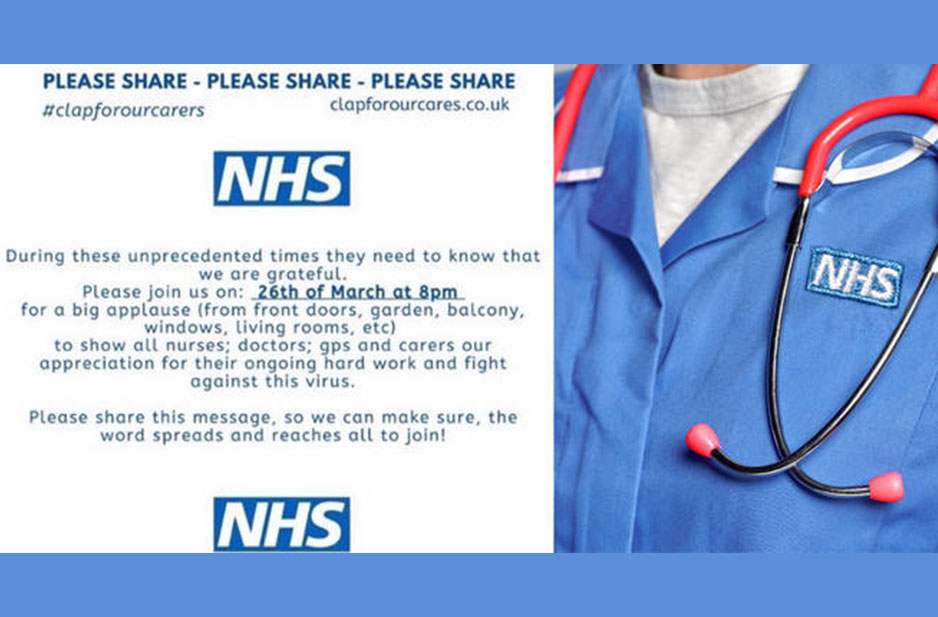
At 20:00 BST on Thursday, households across the UK stood on their doorsteps and balconies and applauded the efforts of the NHS and care workers in treating those affected by Covid-19.

The initiative was devised by Annemarie Plas, from Brixton, south-west London, who was inspired by same event happening in her home country of the Netherlands, and in many other countries.

Annemarie posted details of the event on her social media channels, and enthusiasm for taking part quickly spread across the UK.

"I hope that it creates a positive boost for those on the frontline," she said.

"But also [when] you hear your neighbours applauding you know that we are together in this, because we are currently all in our houses."

Buildings around the UK were also lit in blue - the colour of the NHS logo - to pay tribute to the work of NHS staff, including Wembley Stadium, Belfast City Hall and Blackpool Tower which featured a blue heart.

Firefighters will be able to deliver food and medicines, drive ambulances, and retrieve dead bodies during the coronavirus outbreak in an unprecedented agreement between the Fire Brigades Union (FBU), fire chiefs, and Fire and Rescue Employers.

For the first time, all three stakeholder groups have agreed a joint national approach to the crisis. The fire service organisations say that the measures in the agreement reflect the scale of the national crisis and the urgency of the response required.

Under the agreement, firefighters will be able to:

·         Deliver essential items like food and medicines to vulnerable people

·         Drive ambulances and assist ambulance staff

·         Retrieve dead bodies, should the outbreak cause mass casualties

Firefighters will continue responding to core emergencies, such as fires and road traffic collisions, but under the agreement can now provide additional services specifically related to COVID19. The agreement states that core responsibilities must be maintained throughout the crisis.

The organisations will meet weekly to discuss any additional requests for assistance made by Local Resilience Forums and Strategic Coordination Groups. Any activities considered will be risk assessed with fire and rescue personnel being given any necessary additional training and the appropriate personal protective equipment (PPE).

The additional work taken on by firefighters will be temporary to tackle the COVID-19 pandemic. Initially in place for two months, the agreement can be extended or shortened if agreed between all parties.

The agreement between National Employers, the National Fire Chiefs Council (NFCC) and the FBU follows measures to limit cross-infection between firefighters and the public, agreed earlier this week.

There are around 48,000 firefighters and emergency control staff in the UK.

Matt Wrack, FBU general secretary, said: “We face a public health crisis unparalleled in our lifetimes. The coronavirus outbreak is now a humanitarian emergency and firefighters rightly want help their communities.

“To get through this, we must find ways to work together with other emergency services. Firefighters are fantastic at teamwork, are experienced in driving emergency vehicles and, as a service rooted in the community, may be best placed to deliver essential items to the most vulnerable.

“Many fear the loss of life in this outbreak could be overwhelming– and firefighters, who often handle terrible situations and incidents, are ready to step in to assist with body retrieval.

“Firefighters and control staff have always stepped in when the public has been in danger and this crisis is no different. The strain on all emergency services will be great, but we can and will get through it together.”

Roy Wilsher, Chair of the National Fire Chiefs Council, said: "All fire services are working to protect communities during COVID-19 and they will use their wide-range of capabilities and skills to ensure community reassurance and support; doing what they can to support people through this crisis.

“This joined-up approach is testament to the three organisations working together, to ensure fire and rescue services can be at the forefront of the response to the current situation. I look forward to continuing this joined-up work with the National Employers and FBU.”

Councillor Nick Chard, Chair of the National Employers, said: “We have worked at pace to bring an extra resource to the battle against the impact of COVID 19, working collaboratively with the FBU and NFCC for the benefit of local people.”

“Fire and Rescue has always played its role in meeting seemingly insurmountable challenges and this crisis is no exception.  We can immediately step up our assistance to support our over stretched public sector colleagues, especially ambulance services, with our can do attitude and sense of community spirit.”


The Clap For Our Carers campaign saw people up and down the country step outside their homes to show appreciation for the NHS workers who are working tirelessly during the coronavirus pandemic.

At 8pm on Thursday night, Britons put their hands together after the message was circulated on TV and social media.

Thousands of people from all walks of life including sports stars, celebrities and politicians took part in the show of love.

Boris Johnson tweeted: “On behalf of the whole country, I want to thank all the incredible nurses, doctors, NHS support staff & carers who are working flat out to fight coronavirus.” While Prince George, Princess Charlotte and Prince Louis joined the round of applause from their home in Norfolk which was shared by Kensington Palace.

From everyone at The Phoenix Newspaper we salute all of our NHS staff and all of the essential workers keeping everything moving as normally as possible.

NHS trusts can, from today, release earnings to their staff immediately at no cost to help the country through the coronavirus pandemic. 

The UK’s leading income streaming provider Wagestream has waived all fees to both NHS employers and staff to allow as many key healthcare workers as possible to get hold of their pay when they really need it. 

Tens of millions of people nationwide will be facing unexpected expenses as coronavirus takes a wrecking ball to the economy. 

It usually takes Wagestream three weeks to perform a full integration with an employer’s payroll software but as part of emergency measures the firm can now launch the service for any employer in just 24 hours. 

Tens of thousands of doctors and nurses already use Wagestream — current clients include Frimley Health NHS Foundation Trust, Buckinghamshire Healthcare NHS Trust and Royal Surrey NHS Foundation Trust.

As part of Wagestream’s package of special measures, trusts can give workers access to an immediate relief fund specified by them. 

Caps usually apply to the percentage of earned pay that staff are allowed to draw down but, during the crisis, any shift tagged as related to Covid-19 on the Wagestream portal will be automatically eligible for fast, same-day payment of 80% of money earned once that shift ends. 

This will help prevent labour shortages by helping medical staff and other key workers deal with extra expenses they may face by working additional shifts. 

The platform will also facilitate automated daily payment of statutory sick pay where trusts upload the names of those employees who are unwell and self-isolating. 

In the last week, Wagestream has seen many employers remove caps on the number of times their staff can use Wagestream in a single month altogether. 

Wagestream typically charges firms at least £1.50 per employee per month for the service, and staff a flat fee of £1.75 per withdrawal — but both fees have been slashed to zero to help the NHS navigate the Covid-19 crisis. 

Peter Briffett, CEO and Co-Founder of Wagestream, commented: 

“We’ve all got to do our bit during this crisis, and we find ourselves able to provide NHS workers and employers with a service that is a uniquely invaluable weapon right now. 

“Everybody faces unbearable uncertainty at the moment and this misery will be compounded by unexpected expenses. We’re waiving all fees to ensure these vital workers can get at their pay when they need it. 

“We’re just not going to focus on our own income at a time like this. Whatever we can do for frontline healthcare workers, we’ll do.”


The mental health needs of some of Birmingham’s most vulnerable people are being given extra support after NHS Birmingham and Solihull Clinical Commissioning Group (CCG) secured £2.5m from NHS England.

The funds are being used as part of a five-year scheme to support the mental health of the city’s rough sleepers, in a project being led by Birmingham and Solihull Mental Health NHS Foundation Trust (BSMHFT) working in partnership with Birmingham City Council’s Rough Sleeper Taskforce.

The project will see a specialist Rough Sleepers Mental Health Team working on the streets, providing assessment and treatment of poor mental health for men and women over the age of 16 years old sleeping rough in the city. By supporting their mental health, it is hoped these rough sleepers will be healthier and more receptive to receiving other support, such as hostel accommodation.

The team will be made up of a consultant psychiatrist, a consultant psychologist, a clinical psychologist/psychotherapist, and community mental health nurses. A clinical team manager and administration support will also be provided.

The Rough Sleepers Mental Health Team is also working with organisations such as hostels and drop-in centres that support the homeless. The team is advising these providers on how to be more aware of homeless people’s mental health needs; creating more psychologically-informed environments, with the objective of breaking the cycle of people leaving accommodation and becoming rough sleepers because of a lack of awareness of their mental health needs.

The project will complement the services already provided by GPs and nurses at the Health Exchange, a GP practice that works with people and communities who are homeless to achieve better health and wellbeing, and BSMHFT’s long-standing Homeless Community Mental Health Outreach Team.

The Birmingham Rough Sleeper Outreach Team has been in place for several years. However, last December, a new provider was commissioned. Simultaneously, the service was expanded in terms of the number of outreach workers (from four to 12) and the area which they cover expanded from the city centre to city-wide. As part of the team’s activity, a daily tasking meeting takes place which is attended by representatives of the council, the police, Trident Reach, and the Change, Grow, Live drug and alcohol service, as well as the nurse practitioner attached to the team.

Joanne Carney, NHS Birmingham and Solihull CCG’s Director of Joint Commissioning responsible for mental health, said: “I am delighted we have managed to secure this substantial funding from NHS England funding targeted specifically to address rough sleeping.

“The new team provides an innovative way of supporting rough sleepers. By working closely with our partners in the city, we can reach out directly to those with mental health needs, provide assessment and link in with GP practices around treatment needs.

“This support will increase the likelihood of rough sleepers moving into accommodation and hopefully being able to live a healthier life.”

Giles Tinsley, programme director for mental health at NHS England and NHS Improvement in the Midlands said: “While the NHS cannot solve homelessness on its own, it is working hard to make sure rough sleepers have easy access to services that are built and designed around their needs – putting an end to the revolving door of trauma care.

“Many rough sleepers have been through incredibly traumatic experiences which can cause mental ill health or exacerbate problems – often impacting on the type of support they need and this is about stopping people slipping through the net.”

Vanessa Devlin, Executive Director of Operations, Birmingham and Solihull Mental Health NHS Foundation Trust, said: “Receiving this extra funding is great news and means we can give more resources and time to the city’s rough sleepers, focusing on improving their mental health and supporting them on their journey to recovery and a more stable lifestyle. We already work very closely with this community and have a good understanding of the issues they face. We’re very happy to be leading on this innovative work with our partners.”

Cllr Sharon Thompson, cabinet member for homes and neighbourhoods, Birmingham City Council, said “Our approach to supporting rough sleepers in Birmingham is to be as flexible as possible. This means listening to them and understanding their needs and from there, changing our services to best support them. With mental health at the forefront of these needs, I’m absolutely delighted that we have been granted additional funding to further expand the help available.”


 Wolves fans are looking to give ‘one of their own’ a helping hand to access potentially life-saving cancer treatment at a special event this Saturday.

200 supporters of the Gold & Black will descend on the Duke of York for a special ‘Race Night’ to raise money for Claire Elliott, who only has eight months to live.

The former nurse turned lawyer is currently undergoing chemotherapy to help shrink a huge 12.5cm tumour that is pressing against her abdomen in the hope that she is well enough to undergo Pembroluzimab, an immunotherapy agent that is currently not available for her type of cancer in the UK.a

It is the third time the 51-year-old has had to fight the disease, but despite the illness it has not stopped her and husband Greg following Wolverhampton Wanderers all over the country, Europe and even China for pre-season.

“It’s a guess, but I reckon I’ve seen over 1500 Wolves games home and away since the mid-eighties…I love it and it’s a great distraction from my ongoing battle with cancer,” explained Claire, who also follows England overseas.

“My diagnosis in 2016 was delayed after my GP treated me as if I was peri-menopausal and, by the time I found out, it was apparently too late. I didn’t want to give up so started an extensive 7-week period of chemotherapy and radiotherapy and amazingly got the all-clear.”

She continued: “Unfortunately, it came back and I beat it again, only for the cancer to return in March 2019. The hospital said they couldn’t do any more and I’ve currently been given between two and eight months to live.

“Pembroluzimab, an immunotherapy agent, is realistically the only option left. It is not licenced in the UK for my particular cancer, but infuriatingly is for head and neck, prostrate and some types of lung cancer. This means we need to raise money so I can try the treatment in Asia, Ireland or the US.”

The treatment costs £3200 per cycle and Claire will need a minimum of five to assess if it is having any impact and, if successful, up to thirty-five cycles in total.

When combined with Caris tumour testing, this means a total of £120,000 could be needed and that is why family, friends and Wolves fans from across the UK have joined forces, starting with the Race Evening being held at the Duke of York on Saturday.

ABC Cars, M Security Services and Hatherton Wolves are kindly sponsoring the evening, meaning everything raised will go towards supporting Claire’s treatment. Entry is £20 and there will be a host of cash and beer prizes, not to mention a special sporting memorabilia auction being held.

“Greg and I have been overwhelmed by the support we have received over the last four years, especially from Wolves fans…we really are ‘one pack’,” added Claire.

She concluded: “I’ve beaten it twice, so hopefully, if I can access this specialist treatment, I can do it again…after all we’ve got the Europa League to win!”

A recruitment consultancy based in Solihull will take on Alzheimer’s Society’s GLOW Memory Walk in support of the company’s founder who is living with dementia after being diagnosed with the disease in her mid-50s.

Karen Tirebuck, now 61, founded Tirebuck Recruitment in 2000. The Knowle-based consultancy went from strength to strength with her being awarded the accolades of ‘Solihull Businesswoman of the Year’ and ‘Solihull Times’ Best Business Award’.

Her daughter, Emily, 32, made the decision to join the family business five years ago after her mum’s diagnosis and has rallied her team, friends and family to walk in support of her mum and others living with dementia, and raise money for Alzheimer’s Society at the GLOW Memory Walk in Warwick on Saturday 21st March.

Following the popularity of Alzheimer’s Society’s three GLOW events last year, it has grown to 12 walks across the country in 2020. The exciting new night-time event is a Memory Walk with a twist. The walk encourages people to dress up with glow sticks, glitter and neon, so that everyone can ‘glow’ the distance to shine a light on dementia.

Emily says: “Mum was always a big character – she was very personable and always enjoyed dancing, singing, having a good time with friends and family and she built a successful recruitment company with a fantastic reputation.

“But in her mid-50s, mum started to show the first signs of dementia and struggled with even the most basic of tasks, she eventually lost the ability at times to even write an email or make a phone call.

“Mum went to the doctors and they initially thought her symptoms were the result of HRT due to the menopause. But then mum lost her peripheral vision and went to the opticians who then suggested she go back to the doctors. It was such a rigmarole to get the diagnosis of dementia.

“Since the diagnosis, mum’s decline has been rapid, and she’s had to stop working. My dad has had to give up his job as a plumber to care for her full time. All the family pitch in where we can to support my dad, in order to give him some much-needed respite. My mum has now lost the ability to read, write and most recently follow a storyline on the television, it’s heart-breaking to watch the Alzheimer’s take hold and strip her of her independence.

The support mum has received from Alzheimer’s Society has been incredible. My dad takes mum to a number of clubs, including a monthly support group in Warwick called “The Young Ones” set up for younger people living with dementia and mum has made some great new friends. It’s also been a great support network for my dad as well and last year Tirebuck Recruitment paid for the group’s Christmas lunch because we were so grateful for the support that’s been given to mum.

“But I decided last year that I wanted to do more to help and wanted to get the business involved with fundraising for Alzheimer’s Society. Since then we’ve taken part in Cupcake Day and we delivered cakes to our clients to help raise awareness and encourage people to visit the charity’s website and find out more about dementia.

“I read about the GLOW Memory Walk on social media and it looks really fun and a bit different. I’m encouraging the team, my friends and family to dress up and wear glow face paint and neon clothing. There are 10 of us from Tirebuck Recruitment taking part, as well as my family, friends and mum’s going to come along to the walk as well.”

To support Emily and make a donation visit her Just Giving page: www.justgiving.com/fundraising/mw519985

Ryan Stanley, Community Fundraiser for Solihull and Warwickshire said: “Every three minutes someone in the UK develops dementia and there is currently no cure. But fundraising can change this, by walking to defeat dementia at GLOW.

“Research will beat dementia and that’s why Alzheimer’s Society has pledged to invest £150 million over the next decade to find better treatments for dementia and work towards a cure.

“Dementia is now the UK’s biggest killer with 850,000 people affected by the cruel disease. There are more than 3,400 people in Solihull living with the condition.

“Every pound raised at the GLOW Memory Walk will go towards funding research and providing support to people affected by dementia.

“We’re calling on people with dementia, family, friends and teams from across Solihull, Warwickshire and the West Midlands to get ‘glowing’ this March and join us at Warwick Racecourse for a Memory Walk with a twist.

“Get together with your colleagues, your friends and the whole family and make new memories together at GLOW to take a stand against dementia.

“Dementia devastates lives; it slowly strips people of their memories, relationships and identities. Every pound raised at GLOW will help Alzheimer’s Society provide vital information and support, improve care, fund research and create lasting change for people affected by the condition.

“We are urging people to help put dementia to bed by taking part in GLOW and walking after dark. Walk with us and raise funds for research, sign up now at: memorywalk.org.uk/glow.”

Alzheimer’s Society is here for anyone affected by dementia, whatever you are going through, you can turn to us for support, information and advice.


 

Birmingham City University has an academic available to comment on the challenges women with endometriosis face, following the news that women with endometriosis feel they are ‘finally being believed’.

Dr Annalise Weckesser, Senior Research Fellow at Birmingham City University said: “The news that women living with endometriosis feel that they are finally being believed and listened to through the creation of the All Party Parliamentary Group is promising. 

“Women currently face a 7 - 10 year journey to diagnosis.  Our research shows that many such women also face an additional battle in finding and receiving adequate treatment to manage their endometriosis symptoms.

“On the 26 and 27 March, we will be holding the UK’s first social research symposium on endometriosis in Birmingham, marking a possible shift in endometriosis awareness.”

Diabetes UK is looking for healthcare professionals from across the Midlands to lead improvements in diabetes care. The charity is searching for healthcare professionals with a special interest in diabetes to take part in its Clinical Champions programme.

The award-winning initiative launched in 2014, in partnership with Novo Nordisk, to address the significant variation in patient care and treatment for people living with diabetes in the UK.

Since the programme began, 105 clinicians have been recruited to develop their leadership skills and become champions for improving diabetes care. Between them they have trained thousands of other healthcare professionals, developed innovative new clinics, reduced medication errors and increased the number of people getting the appropriate treatment for their diabetes.

The new champions will be selected based on their leadership potential, clinical expertise and a demonstrable passion for transforming care for people with diabetes. They will be supported with two years of training alongside their clinical work, to help them become strong leaders, identify improvements and drive vital change in diabetes services in their local areas.

Peter Shorrick, Midlands and East Regional Head at Diabetes UK, said: “Diabetes is the most devastating and fastest growing health crisis of our time, affecting 4.7 million people.

“When diabetes is not well managed, it is associated with serious complications including amputation, sight loss, stroke and kidney failure.                                        

“The Clinical Champions programme is not about parachuting in external experts who don’t understand local needs, but about empowering clinicians in the local area to lead on delivering the best possible care for people living with diabetes. This is the sixth year of the programme and we are looking to expand our reach further to recruit the diabetes leaders of the future to transform the care and lives of people living with diabetes.”

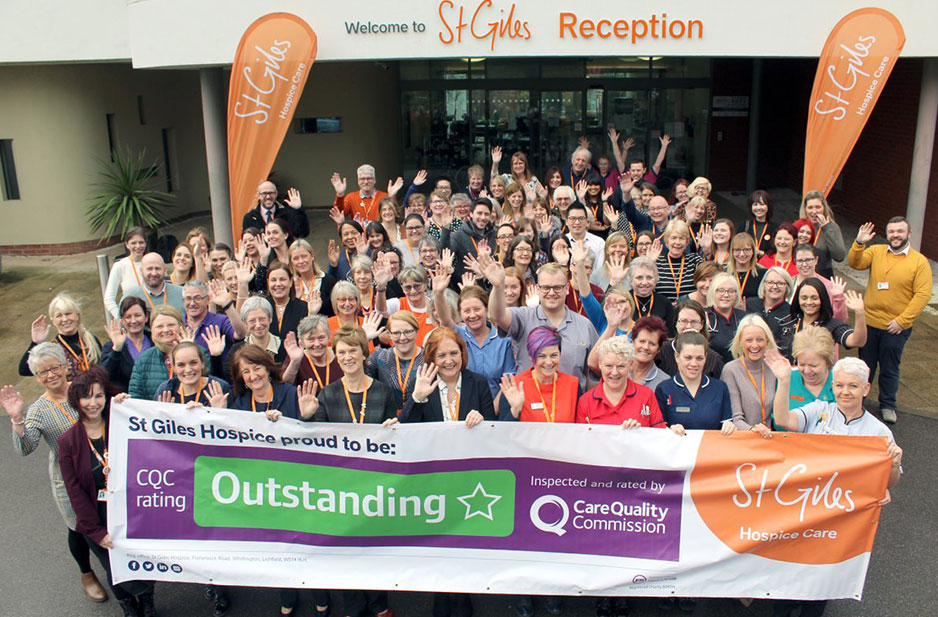
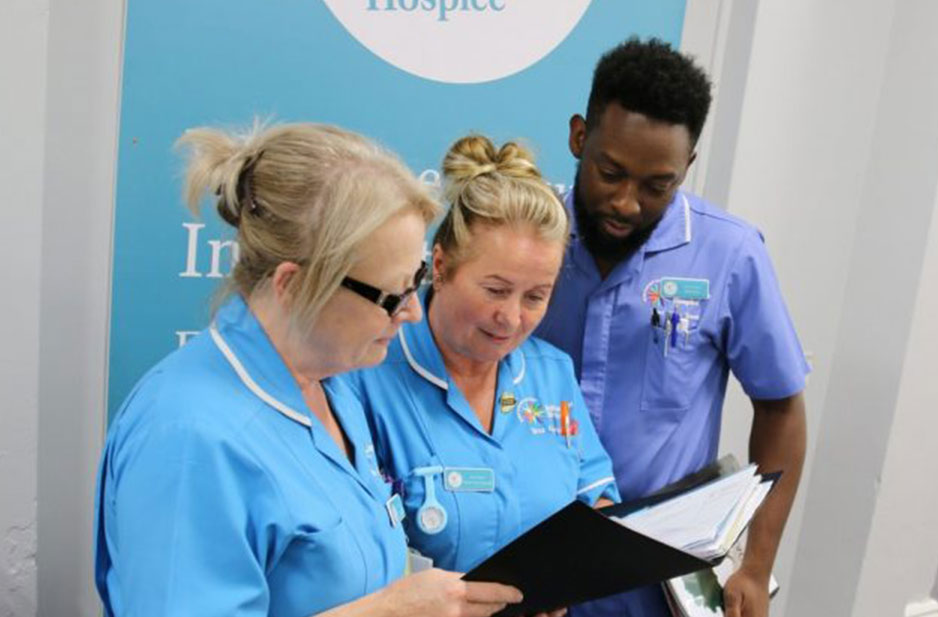
At the turn of the year, staff and volunteers at St Giles Hospice have been on a high after receiving an ‘Outstanding’ rating from the Care Quality Commission (CQC) – the independent regulator of health and social care services in England.

St Giles Hospice, which provides individually-tailored care both on-site and in patients’ own homes, is one of just a handful of hospices to ever have been awarded the highest possible accolade.

Under the new CQC inspection regime, hospices are also subject to the same level of scrutiny as hospitals, making this ‘Outstanding’ rating incredibly special.

Publishing the full report on its website, the CQC praised St Giles for its “compassionate” range of speciality services.

Inspectors highlighted how staff treated patients, families and their carers with dignity and kindness, stating: ‘People were truly respected and valued as individuals. They were empowered as partners in their care, practically and emotionally, by an exceptional and distinctive service’.

Jo Maidment, Chair of Trustees at St Giles Hospice, said: “We know that our staff and volunteers strive to deliver outstanding care every day, but to have this acknowledged by the CQC is truly wonderful and a very exciting start to 2020!

“On behalf of our Senior Management Team and Board of Trustees, I would like to say a massive thank you and congratulations to each and every member of our St Giles family.”

Helping more than 7,000 people a year facing the challenges associated with a potentially terminal illness, St Giles staff was also commended for aiming to “make every day meaningful for people who used the service” and “consistently displaying determination and creativity” in delivering care.

The hospice was noted for going “over and above what was expected of them”, having previously hosted several weddings and arranging for a patient’s pet horse to visit, with one member of staff spending three days of her own time writing family ‘goodbye letters’ for a patient who was unable to.

Chief Executive of St Giles Hospice, Emma Hodges, said: “I am absolutely delighted that everyone involved in making St Giles such an excellent charity has received the recognition they deserve from the CQC.

“This fantastic achievement is testament to the hard work, compassion and unwavering commitment of our staff, volunteers and not forgetting, our loyal supporters – without whom this would not have been possible.”

“We’re outstanding, because you’re outstanding. Thank you!”

Sandwell Council has approved a new cycling and walking plan – to get more people active and healthier and help tackle pollution and reduce congestion on the roads.

The Cycling and Walking Infrastructure Plan has been approved by the council’s cabinet and proposes to provide a safe and convenient network of routes.

The proposals include cycle and walking routes to provide cost effective and sustainable access to public transport hubs, education, jobs and services throughout Sandwell.

Councillor Jackie Taylor, Sandwell Council’s cabinet member for sustainable transport, said: “It is vital we do more to encourage people to cycle or walk to work, school or leisure activities in a bid to improve people’s health and reduce pollution-producing car journeys in the borough.

“Walking and cycling are some of the cheapest ways of moving around and we have come up with a plan to spread the routes across the entire borough to benefit as many Sandwell people as possible.”

Councillor Taylor said inactivity could lead to poorer health, less productivity at work, a more isolated society and to reduced educational attainment.

The new plan has been drawn up as a long-term approach to developing local cycling and walking links, ideally over a 10-year period, to increase the number of trips on foot or by cycle.

The plan was approved by the council’s cabinet earlier this month (5 February).

 A national campaign aimed at preventing child abuse is being supported by Birmingham City Council and Birmingham Children’s Trust.

‘Together We Can Tackle Child Abuse’ is run by the Department for Education and aimed at informing people about the different types of child abuse and the signs to look out for.

Councillor Kate Booth, Cabinet Member for Children’s Wellbeing, said: “Safeguarding children is everyone’s responsibility and we can all look out for signs of abuse. As well as educating people about the issues this campaign offers reassurance about how the reporting process works and the support offered throughout.

“One of the key messages of the campaign is that a fear of being wrong should not prevent anyone from reporting their concerns. Don’t forget, child abuse comes in many forms and doesn’t always leave a mark that you can see.

“So if anyone is worried that a child is in danger, please report it, it can be done anonymously.

“If you think it, report it, and together we can tackle child abuse.”

 Birmingham’s John Taylor Hospice is aiming to ensure more people can benefit from expert end of life care with its new three-year strategy.

Published in January 2020, Making Every Moment Matter: Our Three-Year Strategic Plan 2020-23 sets out ambitious plans for the hospice to provide more care into the future.

Launched during the hospice’s 110th anniversary year, it aims to build on John Taylor’s unique legacy of caring for generations of families.

The strategy had three priorities – consolidating the current business, extending clinical services and maximising income.

Within these streams are a host of aims including extending the community-based Hospice at Home service so it is available round-the-clock, improving care for people with dementia and continuing to develop personal health budgets for more people as they approach the end of their lives.

The hospice also plans to open more shops to raise income, to make increased use of technology and to continue to develop partnerships with other organisations. John Taylor Hospice is working closely with Birmingham and Solihull Clinical Commissioning Group, Birmingham and Solihull Sustainability and Transformation Partnership and other hospices to ensure end of life services are available for patients when, how and where they need them.

CEO Penny Venables said: “It has been nearly ten years since John Taylor Hospice left the NHS and today we are a charity caring for around 2,000 people each year as well as providing help and support for their family and friends.

“As we begin our 110th anniversary year it is important that we build on John Taylor’s special legacy of care in our plans for moving forward. When we opened in 1910 we were only able to provide care for a handful of patients – today we are not only supporting hundreds of people but also ensuring their care is specialised and tailored to their needs.

“Our strategy will ensure we continue to grow John Taylor Hospice so that we can achieve our mission – a compassionate and dignified death for all.”

 Over 300 high-street heroes across Birmingham and Solihull are ready to help people take the drama out of nasty winter illnesses such as colds, itchy eyes, upset tummies, sore throats, coughs and earache.

The advice given by pharmacists can help people of all ages stay well, prevent an illness getting worse, take the best course of action, and get well sooner.

Across Birmingham and Solihull there are 330 pharmacies of all sizes, which offer different opening hours.

Their trained pharmacists are on hand to provide the best clinical advice and over-the-counter treatment to safely manage unpleasant but minor illnesses. People just need to step through the door and ask – there is no need for an appointment, and a confidential consultation room can be used if required.

If symptoms suggest it’s something more serious, pharmacists have the clinical training to ensure people get the help they need immediately and can refer patients to a GP or A&E when necessary.

Every pharmacist trains for five years in the use of medicines before they qualify, and they are also trained in managing minor illnesses and providing health and wellbeing advice.

Professor Mark Dasgupta, Birmingham and Solihull CCG’s Associate Director, Medicines Management, said: “Winter is a time when a broad range of illnesses and conditions make people feel unwell, miserable and uncomfortable. Our pharmacists are primed to help people manage these illnesses and relieve their symptoms, which are horrible but can often be treated with over-the-counter products.

“Pharmacies are fast and convenient to access. Most people live within easy reach of one. Nine out of 10 people live less than a 20-minute walk away from their local pharmacy and many of these offer extended opening hours in the evenings and at weekends. Using a pharmacy also takes pressure of GP practices, enabling them to focus on treating people who may have more serious and complex conditions.”

Having a dog in the office can dramatically improve employee productivity and wellbeing while at work, research conducted by flexible office specialist, Workthere, reveals.

Workthere conducted research to determine UK office workers attitudes towards having a canine companion at their place of work and found that almost half (44%) think having a dog in the office would be beneficial to their productivity. What’s more, a third (34%) believe a workplace pooch would make them happier, and a quarter (25%) think it would improve their work/life balance.

Delving further into the research findings, Workthere also found that it is, in fact, the younger population that are most in favour of having dogs at work, with nearly half (43%) of 18-24-year old’s admitting they would be more likely to apply for a job that allowed dogs in the office.

Alternatively, while the survey found that two in five (41%) of 45-54-year olds currently own a dog, the highest of any other age range, a vast majority (80%) have never worked somewhere that allows them to bring their dog to work.

 When it comes to the gender divide, it seems dogs aren’t a man’s best friend - they’re a woman’s! The research found that a third (32%) of women would be more attracted to a workplace that allowed dogs, compared to just a quarter (24%) of men.

Commenting on the research findings, Cal Lee, head of Workthere, says: “Whilst having a dog in the office may not be for everyone, and you must understand the needs and consensus of your employees, it is clear that a canine colleague can boost overall productivity, mood and happiness, while reducing stress. It could therefore be a great consideration for employers to bear in mind looking forward.”


Community organisations from around the city came together to showcase the work they do for the city’s youngsters and their families as part of the HeadStart Wolverhampton programme.

The showcase, named ‘Reclaiming Our Community’ saw representatives from HeadStart’s providers in its four city areas tell stakeholders, including city councillors, about the activities and support they offer on a daily basis to improve the emotional wellbeing of young people in the city.

The event was opened by Councillor John Reynolds, Cabinet Member for Children and Young People, and saw stakeholders watch videos, musical performances and listen to first-hand experiences from young people discussing the impact the HeadStart programme has had on their life and emotional wellbeing.

During the event there was also a presentation from three of HeadStart’s parent champions, who each gave an emotional account of the help that HeadStart have offered to them – ensuring not only their children but they themselves have a brighter future.

At the end proceedings there was a market place session where stakeholders could find out more about what activities organisations hold as part of the lottery-funded programme - as well as opportunities to meet the young people who benefit directly from them.

Councillor Reynolds said: “This event has shown first-hand the immense impact that HeadStart has had on young people and their parents across Wolverhampton. It has been fantastic to hear all of their experiences and how the programme has changed their lives for the better.

“Young people will shape the future of our city and it is vital that there are programmes like HeadStart to ensure they have the best possible start in life.”

HeadStart Wolverhampton, part of a £56 million National Lottery funded programme set-up by the National Lottery Community Fund, is designed to improve the emotional mental health and wellbeing of children and young people aged 10 to 16 by giving them the skills they need to cope with the challenges of modern life.

HeadStart Wolverhampton runs a series of specific programmes in its four key target areas: Low Hill, The Scotlands and Bushbury South; Heath Town, Park Village, Eastfield, Springfield and Old Heath; Bilston East; All Saints, Blakenhall, Parkfields and Ettingshall. Citywide help is available through the HeadStart Wolverhampton Support and Guidance Directory at http://support.headstartonline.co.uk which provides emotional mental health and wellbeing resources from different organisations, including information targeted at young people, parents and carers, and professionals.

To find out more about HeadStart, please visit www.headstartonline.co.uk, follow @headstartfm on Twitter or Instagram, or find HeadStart on Facebook at www.2343ec78a04c6ea9d80806345d31fd78-gdprlock/headstartfm.