Colors: Blue Color

Children and young people were front and centre as The Duke and Duchess of Cambridge visited Wolverhampton to find out about local organisations which support children and young people.

The visit, which took place onThursday May 13, as part of Mental Health Awareness Week, saw Their Royal Highnesses visit The Way Youth Zone, Base 25 and Hugglepets. During their time in the city, The Duke and Duchess met young Wulfrunians including HeadStart Wolverhampton and #YES Ambassadors Melissa Page, David Omorehiomwan, Keisha Riley, Harman Kambo and Safira Palmrira who gave them a guided tour of The Way and joined them in a series of activities.

The tour of the popular Youth Zone, which is part-funded by the City of Wolverhampton Council, also saw the ambassadors accompany Their Royal Highnesses in a wellbeing workshop with Year 8 pupils from Moreton School. The workshop was led by a HeadStart Wolverhampton Wellbeing Navigator with the participants involved in a discussion and 'mind-mapping' activity focusing on mental health and wellbeing.

The Duke and Duchess then joined pupils from Long Knowle Primary School to plant fruit and vegetables in The Way's garden, and were shown an urban nature graffiti wall which is being created by young people who attend the Youth Zone. The Royal couple also got to meet young people from Stowlawn Primary School who were taking part in a football coaching session provided by the Wolverhampton Wanderers Foundation.

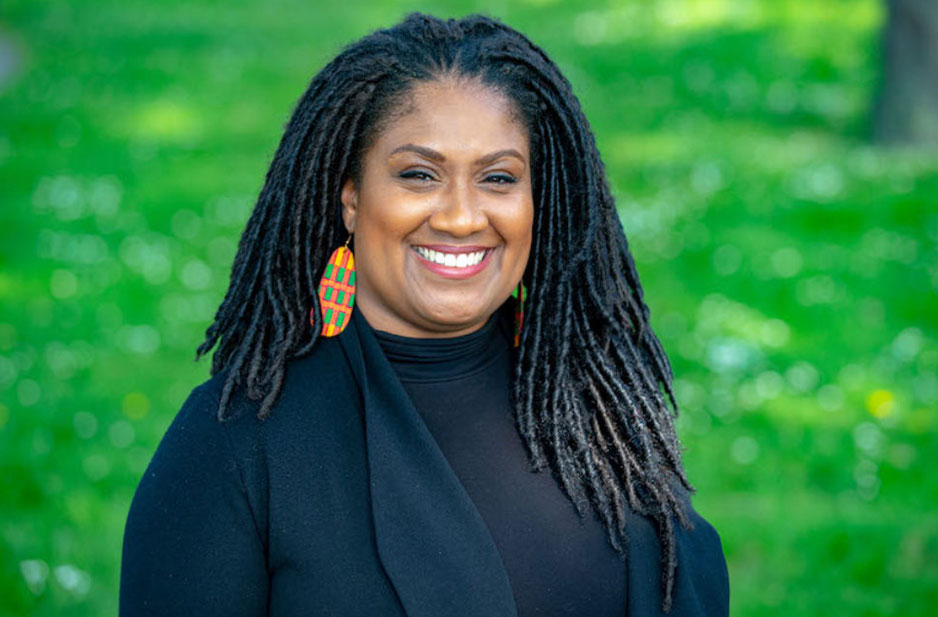
Kush Patel, the City of Wolverhampton Council's Children's Innovation Lead, was among those in attendance. She said: "It was brilliant that The Duke and Duchess of Cambridge were able to spend time and take part in activities with our children and young people during their visit to The Way.

“The young people were shocked when they found out who were attending and they had an amazing experience which they’ll remember forever. It was a wonderful day for everyone involved and we were proud to be able to share some of the great work which is taking place in Wolverhampton to support good mental health and wellbeing among our children and young people."

David Omorehiomwan, HeadStart Ambassador and Year 10 pupil at Colton Hills Community School, said: “It was amazing to meet The Duke and Duchess of Cambridge. I was shocked at how easy it was to speak to them – it was like speaking to friends I have known for a long time.

“I’m glad they came to Wolverhampton. It is a very diverse place with many different cultures and many different approaches to mental health.

“They asked me about my lockdown experiences and how I use nature to benefit my emotional wellbeing. I told them how I had coped during the pandemic and how I make sure I enjoy nature to ensure that my mental health is my main focus.”

Colton Hills Headteacher Andrea Stephens said: “We were thrilled to learn that three of our students had the opportunity to meet with The Duke and Duchess of Cambridge.

“We already knew what amazing ambassadors they are for Colton Hills Community School and it filled us with great pride to see them representing Wolverhampton in such a wonderful way. Thank you to The Way and HeadStart for offering them this once-in-a-lifetime experience, and for all of the help that they provide to support young people in our community.”

Long Knowle Primary School Headteacher Karen Elliot added: “It was a delight to see our pupils chatting so confidently and eloquently with Their Royal Highnesses. It was an experience they will remember for the rest of their lives.

“They shared their lockdown experiences and talked about how being outside and connecting with nature had supported their wellbeing. One pupil even encouraged The Duke to try growing chillies to use in his home cooking!”

Established by The National Lottery Community Fund, HeadStart is designed to improve the resilience and emotional wellbeing of children and young people by giving them the skills they need to address the challenges of modern life.

Blondel Cluff CBE, Chair of The National Lottery Community Fund, said: “The mental wellbeing of children and young people remains of vital importance after this challenging year.

"It was an honour to meet The Duke and Duchess of Cambridge and show them some of the work that HeadStart Wolverhampton makes possible for local young people to help improve their mental health, wellbeing and resilience. Thanks to National Lottery players through the UK we are able to help fund this essential work in our communities.”

#YES is Wolverhampton’s Youth Engagement Strategy, launched in 2020 to young people across the city, focussing on three themes – Being Healthy, Being Connected and Being You.

Artists were kept busy transforming the centre of Coventry ahead of its year as City of Culture 2021 - the year-long cultural programme that started yesterday.

With organisers having faced huge challenges – due to the Covid pandemic - hopes that events can help rejuvenate the arts sector remain the driving force as street art transformed the West Midlands city ahead of its year in spotlight.

While the year will embrace and celebrate its history, the focus of ‘Coventry Move’ will be on how the city sees itself moving forward with a celebration of dance, music, art and cultural activities to bring the city into the spotlight and show-off its importance of a leading city in the UK with a programme that will draw in all corners of the city and beyond.

Creative Director, Chenine Bhathena said: “The city is transforming around us and I think it will be really important to build pride for people here, and to be able to show off on a national stage, to help people understand the city as it is now.

“After Covid, the City of Culture is more important than ever. I think in a lot of cities around the UK where there’s a huge amount of history, people do look back a lot, and that’s great, but there’s also a need to understand and celebrate the role the city will play in the future of the world.”

A city where movement began - as all eyes are on the city, Coventry is looking forward to welcoming the world to share its culture.

To mark the 100th anniversary of the Royal British Legion (RBL) Wreaths have been laid at the Cenotaph, in London. The charity marked the exact moment it was formed with the laying of wreaths at Whitehall in London and other parts of the UK.

Led by retired Lieutenant General James Bashall, national president of the RBL, The Prince of Wales hailed the service it provides to the Armed Forces calling it "life-changing and often life-saving." Also present was Prince Charles, who said that the RBL provided a constant and reassuring presence and an unending commitment.

He also said that he had the utmost admiration for the RBL's ability to rally support for the Armed Forces and help grieving families.

Offering his gratitude to those who helped build the charity he said: "For 100 years, the RBL has been a constant.

"Those who have served have an organisation that provides life-changing and often life-saving support, an organisation that speaks up on their behalf and an organisation that ensures their sacrifices shall never be forgotten."

The Royal British Legion's director general, Charles Byrne, said: "We remain committed to our mission to ensure that those who have given so much for their country get the fair treatment, support and recognition they deserve."

With lockdown easing, forward-thinking charities have been positioning themselves to be more resilient, service focused, strategically connected and relevant in the post-Covid world.

As cuts in public spending have been witnessed, reductions in the grants and other funding that became available for businesses and the third sector to reach out to the most disadvantaged communities, the landscape is changing. There is now a greater need to build on existing partnerships, given that interfacing with government agencies and other supporting organisations is crucial to innovating further solutions for communities affected by the pandemic.

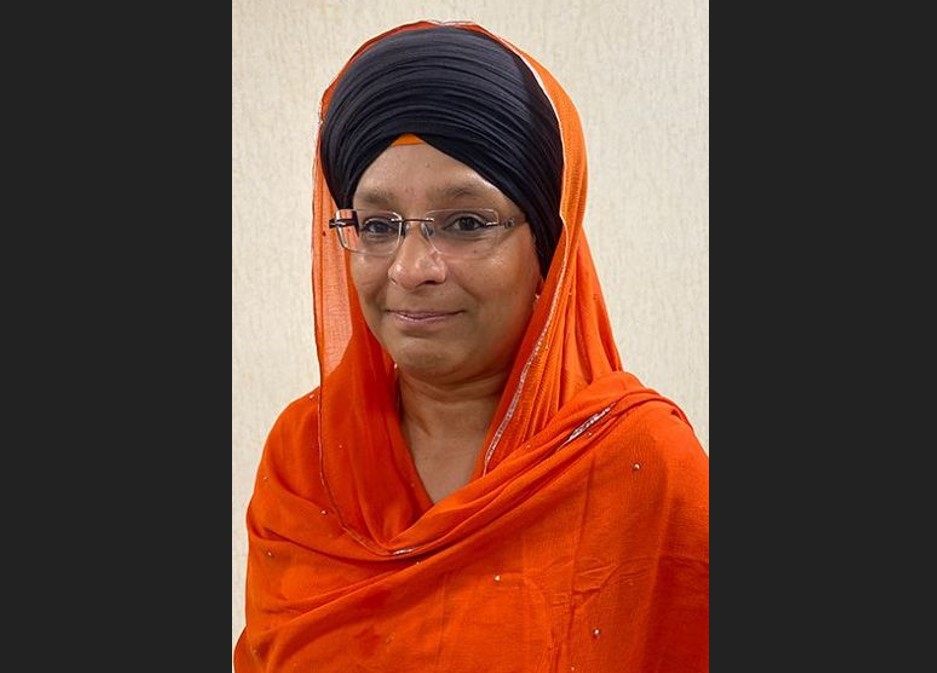
Birmingham based Nishkam Civic Association (NCA), also known as the Nishkam Centre, is now strategically positioning itself for the challenges ahead. It has announced the appointment of Amrick Singh Ubhi to a newly created senior executive position of Director of Nishkam Civic Engagement and Partnerships to guide the strategic development of the charity and its sister group of organisations over the challenging years ahead.

An essential element of this new role will be to ensure that the spotlight placed on the humanitarian work of faith and business communities during the pandemic is supported, recognised and strengthened. The Nishkam Board is also pleased to announce the promotion of Ajit Singh to the position of Nishkam Civic Association Director.

Bhai Sahib, Bhai Mohinder Singh, Chair of the Nishkam Civic Association, said: “We have appointed Amrick Singh to this post in recognition of his dedication and hard work over the past fourteen years.

“We also thank him for overseeing the Charity’s response to the Covid-19 pandemic and for his support to many mutual aid projects and initiatives across the City and beyond. He has played a pivotal leadership role in linking faith communities together with multi-agency strategic teams during these challenging times. We know that, with Ajit Singh heading the NCA, the team will position the services to meet the new challenges that the sector and its communities will be encountering over the next three post-Covid years.”

Amrick has led the NCA team since 2007 and – in the spirit of nishkamta or selflessness - has made outstanding contributions in the fields of community service, the development of interfaith relations and engagement, supporting the work of charities and cohesion-building.

He has taken on many voluntary Board roles to support other organisations and to assist them where he can in building meaningful and productive partnerships. For many, Amrick’s drive to connect communities - and to strengthen and support many positive initiatives being generated locally, nationally and internationally - has been inspirational.

On his new appointment, he said: “I am delighted to be given an opportunity to consolidate the last fourteen years’ work with key local, regional and national civic, community and business organisations.

“We now need to guide the group of organisations to further develop strategic partnerships, to plan their growth in line with the highly dynamic new landscape whilst we bring to fruition the long-term strategic deliverables. I look forward with optimism to spending more time with faith, business, third sector and political leaders as we plan for an uncertain future, aiming to serve the most disadvantaged and to create a fairer, more just society.”

As Ajit Singh takes on the Nishkam Civic Association Director’s role, the team will also see a number of new posts being created to support the delivery of NCA’s exciting Strategic Plan for 2021 – 2024. Ajit has served as Operations Manager and, more recently, the Contracts Manager at the NCA for the past ten years. He has made a significant contribution to the design, delivery and management of many services which benefit local and regional communities. “I’m thrilled to be promoted to the role of Director, leading the next phase of our development. The pandemic has enabled us to reflect and realign our priorities over the coming months and years – we see exciting and challenging times ahead.”

A project to make Birmingham’s Council House fit for the 21st century will create a range of jobs and opportunities for local people, including long-term unemployed and apprentices.

Details of the commitment are set out in the full business case for the extensive electrical works to be discussed by the council’s Cabinet next week (May 18).

The £32.5m scheme will see the Council House, the Council House extension and part of Birmingham Museum and Art Gallery undergo extensive electrical refurbishment to both modernise the building and ensure the safety of councillors, staff and visitors who use the different parts of it.

Under the Birmingham Business Charter for Social Responsibility, contractor ISG has made a series of commitments to ensure local businesses, people and schools will also benefit from the project, in particular those within the Ladywood and Bordesley and Highgate wards which cover the city centre.

These include:

  • To employ six local people to work on the construction phase for over 12 months
  • Employ a further five people who are long-term unemployed
  • Provide a range of apprenticeships to support young people
  • Use local sub-contractors and honour a ‘buy local’ commitment
  • 144 hours of staff hours to work with the local community (engaging with schools, offering virtual and face to face work experience)

Under the Charter, there is also a commitment to support a green, sustainable environment through reducing carbon dioxide by 21 tons during the project.

Councillor Tristan Chatfield, Cabinet Member for Finance and Resources, said: “Ensuring local people and businesses can benefit from projects which bring employment and education opportunities to our city, is a key undertaking of Birmingham’s Business Charter for Social Responsibility.

“This scheme will create at least 11 jobs – five of which will provide opportunities for people in long-term unemployment – as well as apprenticeships and ensuring materials and support are all sourced locally. So not only is this project making this iconic building fit for the 21st century, it’s also helping provide future employment for our citizens as well.”

Friday 21 May 2021 marks Midlands Air Ambulance Charity’s official Air30 30th anniversary and the vitally important pre-hospital service is encouraging everyone in the West Midlands to Go Red for the day to commemorate the milestone.

As well as the 30 ways of supporting the charity, featured at: midlandsairambulance.com/30ways – Midlands Air Ambulance Charity is keen for the people of the West Midlands to show their support by simply choosing to Go Red on May 21.

This could be something as simple as wearing red on the charity’s birthday. If red is not your colour, styling your outfit with red accessories and shoes could work as an alternative. Or you could make a red hanging basket or plant some red flowers to celebrate and bring a pop of colour into your garden. Another idea is to bake and decorate a cake which several supporters chose to do on the charity’s 29th anniversary.

To help fund future lifesaving missions in the area, the charity is asking everyone who chooses to Go Red to simply donate by texting MissionPossible (as one word) and the amount of their choice to 70085.

Emma Gray, chief operating officer for Midlands Air Ambulance Charity said: “2021 continues to be an important milestone year for the charity, despite the past 12 months being exceptionally challenging due to the demand for our service and significant reduction in fundraising. We are determined to commemorate our Air30 year with the communities we serve and thank them for their unfaltering support, past, present and in the future.

“We would love our loyal supports to Go Red on May 21, donate what they can and share their support on social media in recognition of the last 30 years of advanced lifesaving care across the Midlands.” You can find out more about Midlands Air Ambulance Charity’s Go Red on their website and follow the service on social media for birthday updates.

As the Blessed Holy Month of Ramadan came to an end, under current coronavirus restrictions, large celebrations were not allowed, so although restrictions are soon due to ease, people were being reminded to follow the rules to limit the spread of the virus.

While Eid al-Fitr marked the end - where people would traditionally be getting together to celebrate the end of dawn-to-dusk fasting with large scale events, festival food and prayer - in sport, the effect of continuing to fast while competing is fast making people more accepting and compassionate for religious beliefs and followers. In Premier League football, a Muslim presence is fairly prominent as follows:

Champions-elect Manchester City have Benjamin Mendy, İlkay Gündoğan and Riyad Mahrez  Sadio Mane, Naby Keita, Xherdan Shaqiri and Mohamed Salah of Liverpool, Shkodran Mustafi, Sead Kolasinc,, Mohamed Elneny and Granit Zhaka of Arsenal, Aston Villa’s Ahmed El Mohamady, Anwar El Ghazi and Mahmoud Hassan Trezeguet, Alireza Jahanbaksh and Beram Kayal at Brighton, Chelsea’s Antonio Rudiger, Kurt Zouma, N’Golo Kanté, Crystal Palace’s Mamadou Sakho, Cheikou Kouyate and Jordan Ayew, Djibril, Cenk Tosun and Oumar Niasse at Everton, Leicester City’s Eldin Jakupovic, Caglar Soyuncu and Rachid Ghezzal, Manchester United’s Paul Pogba, Sheffield United’s Muhamed Besic, Southampton’s Mohamed Elyounoussi, Moussa Djenepo and Sofiane Boufal, Tottenham Hotspur’s Serge Aurier and Moussa Sissoko and West Ham United’s Issa Diop. Each one endeavouring to excess for their respective clubs, whilst keeping their faith and values in tact for the world to see.

Lowe down the football ‘food-chain’, those (faith and sporting) values were equally highlighted in Birmingham, in the UK. During Ramadan Saltley Stallions Football Club offered matches every week to Muslims to get together to play football late at night after the daily fasting. The league was launched in 2018 and this year the games were played outside for the first time.

The Club’s founder, Obayed Hussain, who also the founded the Midnight Ramadan League, said: "Ramadan was a time to concentrate on wellbeing and fitness, so we wanted to provide a regular outlet and space for our players to socialise safely. It was a pleasure to lead and watch everyone dedicate themselves to fasting and training during this special month.

"Our sessions were framed around positive mental health and to encourage those from all backgrounds and ability to come and enjoy the game after fasting. We worked with EA Sports for this year’s Midnight League, taking inspiration from its Volta initiative to encourage players to think about the game away from big stadiums, bringing it back to the grassroots foundations of the club.

“Being able to showcase the skills our communities have at their feet against the best influencers and legends of the game was a great endorsement for us."

Eid al-Fitr began in the evening of Wednesday, May 12 and ends yesterday evening (Thursday May 13). Ramadan began on the evening of Monday April 12 in the UK, and end on the evening of Monday May 12. 

During the Spring 2020 lockdown volunteers from across the nation plotted a network of walking routes that connect all of Great Britain’s towns and cities.

Without leaving home over 7,000 ‘Slow Ways’ walking routes were mapped using existing paths, trails and roads. Combined, the routes stretch for 100,000km and lap the equator twice.

The team behind Slow Ways is now looking for people from every town and city in Great Britain to walk and review the routes to make sure they work in practice.

Dan Raven-Ellison started the Slow Ways initiative just before the country went into lockdown at the start of last year.

He said: “The Slow Ways walking network will be something we can all enjoy for generations to come. Working from their living rooms and kitchens, volunteers have done an incredible job of drafting the network, but now we need to make sure it works on the ground, quite literally.

“To do that, we really need people to head out and walk all the proposed routes to check them. Making use of country paths, under-used ways and city streets, the idea is to make it easier for people to plan walking journeys between neighbouring places and combine routes to go on longer distance walks.

“Some people will use Slow Ways to simply see friends in neighbouring towns. Others will use them to get to a festival, for a walking challenge to raise money for charity, or as time to reflect while exploring nature. Millions of us love walking - it’s such a simple thing, and it benefits so many of us in so many different ways.

“What if we had a proper national walking network that inspired more people to walk more often, further, and for more purposes?” Thousands of people are needed to put the Slow Ways network through its paces whilst assessing routes for accuracy, safety and accessibility.

To find out more and to help simply visit the Slow Ways website, choose a route, walk it and leave a review. All of the kilometres walked and feedback shared by users will help to establish a network that’s not only trusted, but widely used to connect people and communities across Great Britain.

Countryfile presenter and walking enthusiast Sean Fletcher is inviting people from all over the UK to sign up for Bowel Cancer UK’s Walk Together fundraiser, to help support the charity’s vital services and lifesaving research.
 

Walk Together is a sponsored five-mile walk taking place around the country on June 12 to show support for those undergoing treatment, remember loved ones, and help stop people dying of bowel cancer in the future.


Supporters can walk five miles at their own pace in their local area, with their household or within small socially distanced groups. Those who are unable to do the walk on June 12 can complete it any time throughout June to suit them.


Sean has recorded a video for Bowel Cancer UK, in which he shares how he loves to visit local parks and walk along the River Thames in London. He adds that his favourite place to walk is Wales, where he recently visited Offa’s Dyke Path for ITV series Wonders of the Border.


He says: “My mum sadly died of bowel cancer when she was only 54, which had a huge impact on my life. Bowel cancer is the UK’s second biggest cancer killer, but it shouldn’t be as it’s treatable and curable, especially when diagnosed early.


“Walking can be sociable or solitary, and can increase fitness without being too strenuous. As a proud patron of Bowel Cancer UK, I’d love you to join me in supporting Walk Together by organising your own memorable event.”


Luke Squires, Director of Fundraising at Bowel Cancer UK, says: “We’re really grateful to everyone who is supporting Walk Together this June, and to Sean for sharing the places he loves to walk. 
 

"Whether you're a seasoned hiker or leisurely stroller, put on your walking shoes and walk five miles in a small group, with friends or family, or simply tread your own path this June. Everyone taking part will be walking together across the UK to raise money to help people affected by bowel cancer.”


Bowel cancer is the fourth most common cancer in the UK, with someone diagnosed with the disease every 15 minutes. 
 

Bowel Cancer UK’s vision is a future where nobody dies of bowel cancer but we can’t achieve this alone. The money raised from Walk Together will help stop people dying of bowel cancer by funding the charity’s vital services and lifesaving research. In 2020, hundreds of our supporters took part in Walk Together across the country and raised over £150,000.

A major project to repair and improve a bridge in Great Barr will begin next week. The £3.37million project on Scott Bridge, Newton Road, will begin from 17 May and will last 43 weeks.

This major scheme will involve lane closures on the dual carriageway near Monksfield Avenue and traffic management throughout the project, which should be completed in March 2022. The work is being funded by £2.999m from the Department for Transport Bridges Challenge Fund and £371,000 from Sandwell Council.

The scheme will involve repairs to the bridge deck and structure, waterproofing, new road surfacing and white lines, and the bridge parapets will also be upgraded. During the work there will be lane closures and crossover points installed in the central reservation to allow one side of the bridge to be closed at a time. A compound for workers will also be created.

The need for the work was identified during routine bridge inspections. The bridge, which takes the Newton Road over the Tame Valley Canal, last underwent major repairs around 30 years ago. Traffic management, including signs, lane closures and a contraflow system will be installed throughout the project to guide vehicles safely through the roadworks.

Some delays and disruption will be inevitable during the work. Advance warning signs and notifications will be placed along key routes to reduce the volume of traffic and keep disruption to a minimum. The project is being carried out by R&C Williams Ltd. Letters detailing the works have been sent to local residents.

The temporary traffic measures are scheduled to start mid-May and continue with the lane crossovers mid-August where they will remain for 20 weeks until completion of the works in March 2022. The work will involve the following lane closures and contraflows. Access to properties along the route will be maintained at all times.

·         Road closure in both directions while work is done on the central reservation to allow traffic to crossover lanes – for approximately four weeks from start of work in mid-May

·         Single lane closure in the direction of Scott Arms (eastbound) – for approximately 10 weeks from mid-June

·         Contraflow with westbound carriageway closed – for approximately 10 weeks from mid-August

·         Contraflow with eastbound carriageway closed – for approximately 10 weeks from late-October

·         Single lane closure in the direction of Scott Arms (eastbound) – for approximately 6 weeks from January 2022

·         Lane closures in both directions to reinstate central reservation – for approximately 3 weeks from early-March 2022 to completion of project in late-March 2022.

Sandwell Council’s Deputy Leader Councillor Maria Crompton said: “This is a major piece of work to make vital repairs to the bridge and we apologise for any inconvenience it may cause to residents and drivers.”

Sandwell Council’s cabinet member for sustainable transport Councillor Jackie Taylor said: “We’ll be working closely with the contractor to monitor the work and keep any disruption to an absolute minimum.

“I am delighted that this major work is finally taking place our bridges need to be safe as well as our roads. I understand that there will be some frustration during this time.

“I would encourage you all to give yourselves extra time for travelling of consider different modes of transport for your journey.”  

There have been many outcries of social media platforms needing to do more to stop the anonymous racist abuse that are targeted at our (UK) black football players (current and former).

The two most common outcries are:

  1. platforms should do more to block these comments at source and not place the onus on the recipients to report and block the racist individuals
  2. platforms should not allow someone to create an account anonymously and then post their racist comments, which is a crime under the “Crime and Disorder Act with making racially aggravated comments”, without the ability to identify the individuals

Despite the responses from the platforms such as Facebook (which owns Instagram), and Twitter stating that “racist behaviour, abuse and harassment have absolutely no place on our service”1, the daily (if not hourly) abuse continues and to the wider public - not enough is being done and certainly not fast enough.

Let's start understanding the social media stance and as my professional career is in the IT sector, I will also shed some light from a technological perspective. I will cover the two common outcries, in addition the following points:

  1. what drives the success of social media platforms
  2. can racist comments be blocked
  3. benefits of anonymous accounts
  4. effect of boycotting the platforms
  5. the founders of these platforms

And then finally, my conclusion to “why social media deem it acceptable to allow racial abuse to black footballers”.

1.      these social media platforms are hugely successful

  • the social media platforms’ business (economic) model is to have hundreds of millions of users, spending as much time as possible (24-7) on their platforms and (by any means necessary) the more addicted, narcissistic, outrage and polarised we are – the more we are worth to these platforms. They can then target and customise the millions of adverts to their millions of users and ultimately - make billions of dollars.

2.      ability to block racist comments

  • regardless of what these platforms will lead us to believe, these comments can be blocked at source and filtered out before they become public.
  • To state the obvious...racist comments are racist because of the wording and the context of those words. It is very, very easy to detect these key words (even if there are 10,000s of these racist words) and also the context, using algorithms and machine learning technique (similarly to Grammarly2). Ironically, these very same platforms are quick to boast how intelligent their systems are to perform far more complex processes such as holding conversation (chatbots), yet blocking all these racist comments are beyond them.
  • the best that the platforms are offering, are tools for the user (the black players) to "moderate their replies". This places the onus on the user to block the racist comments and the perpetrators. This of course mean that you (the black players) have to at least read the racist comment and digest the mental pain, before you decide to block/report the perpetrator. Then once you block the perpetrator, he/she simply replaces the blocked (or suspended / deactivated) account and send their next racist comment.

3.      why allow anonymous accounts?

  • while the anonymity emboldens the perpetrators to send their racist comments with impunity, the vast majority are traceability through collaboration with internet providers, telecom (mobile operators) providers and the police. Every internet user has a unique address, call an IP address3 and just like your house address has a door number, street name, town, postcode and country - put them together and they form a unique address so that letters addressed to you, from anywhere in the world, arrives at your doorstep.
  • the response from the platform representatives is the need to provide anonymity for users in oppressive states and regimes, victims of crimes, whistle-blowers etc – giving them a voice without repercussion from their oppressors, companies etc (legitimate protests are usually organised using social media platforms) and all right-minded individuals would support this argument.
  • more to the point, disallowing anonymous accounts would significantly reduce the user base of the platforms and ultimately reduce their profitability and possible their viability.
  • a new approach is needed on how we communicate online and, remove the toxicity and protection of anonymous account which these racist perpetrators rely on (will the forthcoming UK Online Harms Bill4 remove anonymity).

4.      what effect will boycotting have on these platforms?

  • from time to time, many (major) advertisers (Coca-Cola) and players (Thierry Henry) have boycotted these platforms.
  • government representatives are suggesting they will face “severe sanctions” through fines.
  • platforms want absolution of any responsibility for the posted comments and are resisting all attempts to be classified as publishers and regulated by Ofcom5 (similarly to newspapers and television broadcasters).
  • boycotting will not stop or reduce the abuse but it does keep promoting these platforms at the top of the news agenda.

5.      the platforms are founded and run by white men

  • while I am not accusing these founders, in and of themselves, being racists or uncaring, they however, cannot begin to imagine or understand the damaging and long-lasting distress of racial abuse, racial discrimination or racial violence as they (literally) have no “skin in the game” (men will never experience labour pains…right?)
  • putting forward defensive arguments such as “freedom of speech / expression” and “censorship” are predictable – although it simply allows perpetrators to racial abuse black people with impunity. Black people, for centuries have uniquely (and deliberately) been subjected to racial abuse, racial discrimination and racial violence. However, throughout those centuries, black people have not uniquely evolved to grow extra (thicker) layers of skin to protect and harden their feelings, sensitivity and mental well-being. Race-ism is the worst of all the -isms, because, black people cannot wake-up next day and change their skin colour like a “chameleon”, but instead, they have to overcome the daily trauma of racism and not let it dictate how they live their lives.
  • it would be a very different proposition and approach if the founders were black because, when racism is perpetrated against a black person, it would also (indirectly) be abusing and offending the founders, would not be tolerated and defended as “freedom of speech”– why should anyone have the freedom to make racist speech against black people with impunity?
  • The founder of Facebook, Mark Zuckerberg, who is Jewish, as his surname indicates, could easily and legally change his name to, for example, Mark Williamson - masking his identity and possibly, a life-time of anti-Semitic attacks, and just “look-like” another privileged “all- white” male. On the other hand, black people do not, regardless of any adaptation of Anglicised naming, assimilation or attainment, do not have the option to change their skin colour, thus avoiding identification and a life-time of racism. Furthermore, societies around the world have been structured throughout its institutions (government, religious, education, financial, legal, media etc), to dehumanise and discriminate against black people – there is absolutely no refuge.
  • watch Ian Wright (a “much-loved” black footballer) and Alan Shearer (white footballer) share an honest conversation about the impact of racist online abuse. https://www.bbc.co.uk/sport/av/football/56949360

With all that said and done, the platforms will view the racial abuse “in the grand scheme of their operation and business model” and, it is a very small (minuscule) percentage, less than a fifth of, point one of a percent (0.02%), of the football comments posted6.

However, while the platforms deliberate on what (further) actions to take, it is clear they have little appetite to:

  1. eradicate these racist comments at source so they are not publicly
  2. disallow the creation of anonymous accounts as it would threaten their profitable and viability
  3. bow to pressure of boycotts from other companies and individuals.

The conclusion, from a black person’s perspective is…

Due to the “glacier crawl” and ineffective actions (so far) of the people responsibility for running these social media platforms, they seem to have deemed it acceptable that, racist abuse to black people are an acceptable trade off within their operation and business model and as I stated earlier, they have “no skin in the game” and defend it as “freedom of speech” and “censorship”, despite it being a crime in the “eyes of the law”. Of course, racist abuse is not only confine to black footballers, but to many other black members of other online groups on their platforms. With black people accounting for approximately 17% of the world’s population (1.3 billion)7, that is a lot of people directly and indirectly, being abused and offended and - deemed acceptable.

However, the outcries are not only from black communities, but there have also been many public statements from white community members that “racist behaviour of any form is unacceptable and cannot be allowed to continue”8.

We now await the UK Online Harms Bill as it is intended to set out a new regulatory framework to ensure people are safe online and establish a statutory duty of care for online companies to their users, which will be legally obliged to identify, remove and prevent anything illegal from being shared on their platforms, such as hate speech, child exploitation and suicide material. However, the proposed timeline for the legislation to be implemented is two to three years away (2023-2024)9.


Written By Winston Menzies

---------------------------------------------------------------------

1 https://blog.t7905d1c4e12c54933a44d19fcd5f9356-gdprlocken_gb/topics/company/2020/no-room-for-racist-behaviour-on-twitter-.html
2 https://www.grammarly.com/
3 https://en.wikipedia.org/wiki/IP_address
4 https://www.gov.uk/government/consultations/online-harms-white-paper/online-harms-white-paper
5 https://www.ofcom.org.uk/about-ofcom/what-is-ofcom
6 https://www.cnbc.com/2021/04/30/facebook-instagram-twitter-boycotted-by-british-sport-over-abuse-.html
7 https://en.wikipedia.org/wiki/Demographics_of_the_world
8 https://www.premierleague.com/news/2122300
9 https://www.bbc.co.uk/news/technology-53222665


The winners for the second round of the You Matter Communities Community Fund have been announced.

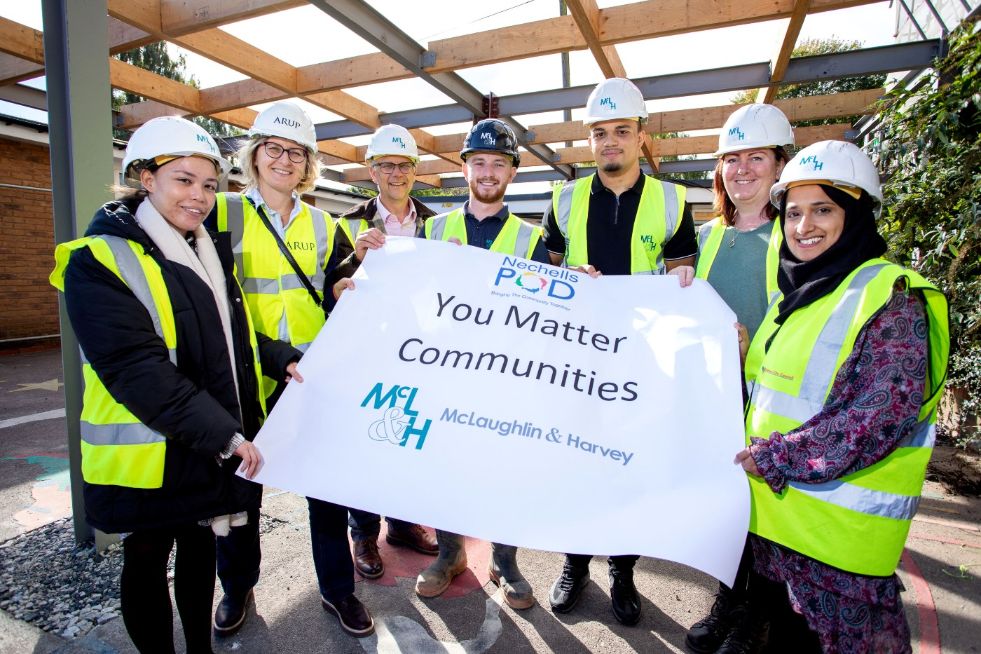
McLaughlin & Harvey, the lead contractor for Birmingham City Council at the Alexander Stadium Redevelopment, has finalised 15 community projects that will each receive a grant of up to £1,000 to support their work within local communities.

Launched last year, McLaughlin & Harvey’s You Matter Communities initiative provides support to local communities through volunteer time, small grants, and the use of excess materials from the construction process.

The initiative is focused on supporting community organisations, in particular those facing disproportionate challenges, to recover from the impact of COVID-19.

Small grants are offered through the You Matter Community Fund and provide a direct way for McLaughlin & Harvey to make a positive impact locally and provide much needed support to communities.

The latest round of successful applicants takes the overall number of organisations to benefit through the Community Fund to 32, with a total of £27,936 awarded.

Projects were selected based on their ability to meet McLaughlin & Harvey’s social value objectives and the Partners in Communities measures of the city council’s Birmingham Business Charter for Social Responsibility.

A further five organisations will receive support via the You Matter Time Bank – through which contractors offer their time to local projects and good causes. In total the number of groups to have benefitted from Time Bank support since the inception of the scheme is five.

Simbi Folarin, Director at Northfield-based GLUE Collective, which has received £1,000, said: “We are passionate about addressing the emerging social, health and economic challenges in our local communities and recognise the power and agency of play for children and connecting people to the natural environment.

“The You Matter Community Fund grant will enable us to provide nature play session for our community, supporting children to access creative and immersive processes and encouraging experimentation of play.”

Valerie Edkins, Treasurer at the Friends of Perry Park, which is set to receive up to four days of volunteer support to clear brambles and vegetation, said: “The You Matter TimeBank support from McLaughlin & Harvey will allow us to provide a rich selection of wildflowers to the Park to encourage insects, birds and more biodiversity.”

Martin Keys, Operations Director, McLaughlin & Harvey for Alexander Stadium, added: “We are delighted that so many local community projects have engaged with You Matter Communities and so impressed by the outcomes that have been achieved in the first round.

“We are looking forward to supporting the second round projects in delivery and to learning about the positive impacts they make for local communities.” 

Cllr Ian Ward, Leader of Birmingham City Council, said: “The redevelopment of the Alexander Stadium is about much more than the delivery of a world-class sporting and community facility.

“Through the council’s spending power on this project, we have secured in McLaughlin & Harvey a construction partner that fully understands the importance of being a good neighbour in the community – not just in Perry Barr, but Birmingham as a whole.

“The You Matter Communities scheme is helping make a positive difference to a wide range of organisations in the city and securing a deeper legacy for the new stadium than just the facilities or events that it stages in future.”

Applications for the third round of the You Matter Community Fund, will be welcome from July 2021. For more details of the scheme please visit the Birmingham City Council website at: www.birmingham.gov.uk/perry-barr-regen.

Unions representing musicians, theatre workers and actors, in Birmingham have, in an open letter to Ian Ward, leader of Birmingham City Council, pressed for a one-year delay in the introduction of Birmingham’s Clean Air Zone and for a support scheme for the cultural sector.

The Covid-19 pandemic has decimated the industry with workers particularly hard hit. Falling between the cracks in government support scheme, nearly half (46%) of freelance cultural workers in the region have missed out. The planned introduction of the clean air zone in June is another threat to already reduced incomes. 

The unions are urging the Council to delay the implementation of the clean air zone by at least a year to provide breathing space for the sector to recover. In addition, the cultural unions are also asking for Birmingham City Council to establish a separate fund to support Birmingham’s cultural workers, especially those from low incomes and disadvantaged backgrounds, to ensure that all cultural workers can continue to gain meaningful employment in the city.

Musicians’ Union Regional Organiser and TUC Midlands Cultural Chairperson Stephen Brown said: “We support measures to reduce climate change and the aims of the clean air zone are laudable. However, the way this is being introduced is ham-fisted. We have consistently raised our concerns about how the practicalities of the scheme will have a negative impact on workers in our sector, but we haven’t been properly listened to.

“The majority of cultural workers are low paid. They only work in the city for a few hours at a time and have to travel by car or van due to equipment requirements. A recent MU survey* revealed that 70% will face being charged, and the nature of their work means that with post-midnight finishes, they’ll get charged twice. It isn’t difficult therefore to see how badly hit they will be.

“Unfortunately, after the pandemic where cultural workers have been too often overlooked this is yet another kick in the teeth. We really hope the Council, even at this late stage, will sit down with us and to devise a scheme that will truly work for all and help us to get on delivering the recovery we are all so desperate to see.”

Severn Trent has supported over 400 non-profit organisations across the Midlands with more than £3.5m funding for the community over the last 12 months. To celebrate awarding its first grant in April 2020, it has today released its first Annual Community Fund Review that showcases the communities supported over the year.

More than £1.5m has been awarded through the Severn Trent Community Fund alone to projects boosting wellbeing, as well an additional £1m donated through its Emergency Coronavirus Fund to help communities deal with the impact of the pandemic. Severn Trent also donated a further £1m to charitable causes across the region last summer too, after it challenged customers to save water to raise money for charity.

Liv Garfield, Severn Trent Chief Executive said: “Being there for our customers and communities this year has been important as ever. That’s why I’m delighted to be able to share our first Community Fund review to showcase the fantastic projects, schemes and charities that do incredible things in our communities that we’ve been so proud to support.

“Our communities really are at the heart of what we do, and we created the Community Fund so we can help make a genuine difference to them. There’s so many absolutely amazing organisations that have ideas for projects that benefit our communities, and those living in them that just needed some extra support, and that’s where we’ve been able to help.”

The review of year showcases the 93 projects, chosen by its customers, that have been supported through the core Community Fund. The projects are set to boost the wellbeing of more than 580,000 beneficiaries, create or enhance over 90 community spaces, and improve or create better access to more than 168 acres of environment.

Two of the biggest projects awarded this year through the fund were to the National Space Centre in Leicester to create a brand new exhibition space benefiting more than 250,000 Severn Trent customers, and to Historic Coventry Trust for their project to transform a large section of Coventry’s derelict former railway ‘Loop Line’ into a walking and cycling route for the community.

Chas Bishop, Chief Executive at the National Space Centre who received £249,860 said: “These have been really difficult times for so many people, but working with the Severn Trent team on such an exciting project gives us plenty to look forward to when we can reopen the doors.  It is great to work with a partner who feels as passionately about the science behind their work as we do, as well as understanding the positive difference their funding can make to support the people living and working within their communities.”

Graham Tait, assistant director at the Historic Coventry Trust who received £198,460, said: “We are really grateful for Severn Trent’s support which allows us to open up a major part of the former railway for public access. It really is a magical place, a stretch of countryside woodland right in the heart of the city.”

The new Annual Review revealed today also shares details of the additional 300+ local causes that Severn Trent have supported with their £1m Emergency Fund, which launched last April to help communities deal with the impact of COVID-19 and aid their recovery.

Over the last year, the Community Fund and £1m Emergency Coronavirus Fund combined has awarded:

·          Central Midlands: £279,126 to 77 organisations;

·          Derbyshire: £248,048 to 55 organisations;

·          Gloucester: £166,129 to 26 organisations;

·          Leicestershire: £559,430 to 48 organisations;

·          Nottinghamshire: £276,766 to 57 organisations;

·          Shropshire: £132,455 to 34 organisations;

·          Staffordshire: £262,961 to 50 organisations;

·          Warwickshire: £423,823 to 51 organisations;

·          Worcestershire: £116,230 to 29 organisations.

Through the £1m water saving charity challenge, the company donated a further £1m to five region-wide causes supporting the most vulnerable of communities – Barnardo’s, Macmillan, Crisis and local branches at Age UK and Mind – to say thanks to their customers for saving water during the hot weather last summer.

Liv added: “We know that especially over the last year, our communities have really needed a helping hand. Whether it’s been through our Community Fund, or coronavirus support, we really are proud to have made a difference. We’re looking forward to providing even more support in our second year to incredible projects that will improve people’s lives, benefit our environments and help people reconnect with nature.”

The Severn Trent Community Fund is overseen by an independent Panel, made up of Severn Trent customers, who review applications and who decide where the money goes. From 2020 it is committed to awarding more than £10m over 5 years to support local charity and community groups to help support projects and ideas that improve wellbeing across three key themes – People, Place and Environment.

Simon Foster begins in his new role as the West Midlands Police and Crime Commissioner, after he succeeds David Jamieson who decided to stand down from the role. The Labour candidate won with a total of 301,406 votes, beating Conservative Jay Singh-Sohal, who achieved 259,839, into second place, after second preference votes were counted.

Following Jamieson, who has retired from the role after seven years, the new incumbent says that tackling knife crime in the West Midlands will be one of the priorities in his new role. He also said that he wants to strengthen community policing, reduce violent crime and domestic violence.

The legal aid solicitor paid tribute to his fellow candidates, following an election that was decided on second preferences, after no candidate secured 50% of the vote through first choices.

“Tackling domestic abuse against women is a priority because home should be a place of safety and security," he said. “It can have devastating and catastrophic consequences for people and families.

“Increasing the number of community police after they had fallen over the past decade is also key.” There have been cuts of over 50% to community policing in the West Midlands between 2010 and 2018 seeing numbers drop from 1,800 officers to just 700.

"It was always my core pledge throughout my campaign and that's why I pledge 450 extra officers in community policing throughout the West Midlands," he said, adding that there had also been a breach on the part of central government over the last 10 years in reducing violent crime, in particular knife crime. He also said that he would work with the West Midlands' mayor and local authorities to restore youth services.

Police & Crime Commissioners are elected to oversee the work of their local police force. The other candidates who stood were Independent Julie Hambleton, Mark Hoath from Reform UK, Liberal Democrat John Hunt and Desmond Jaddoo from the We Matter Party.